
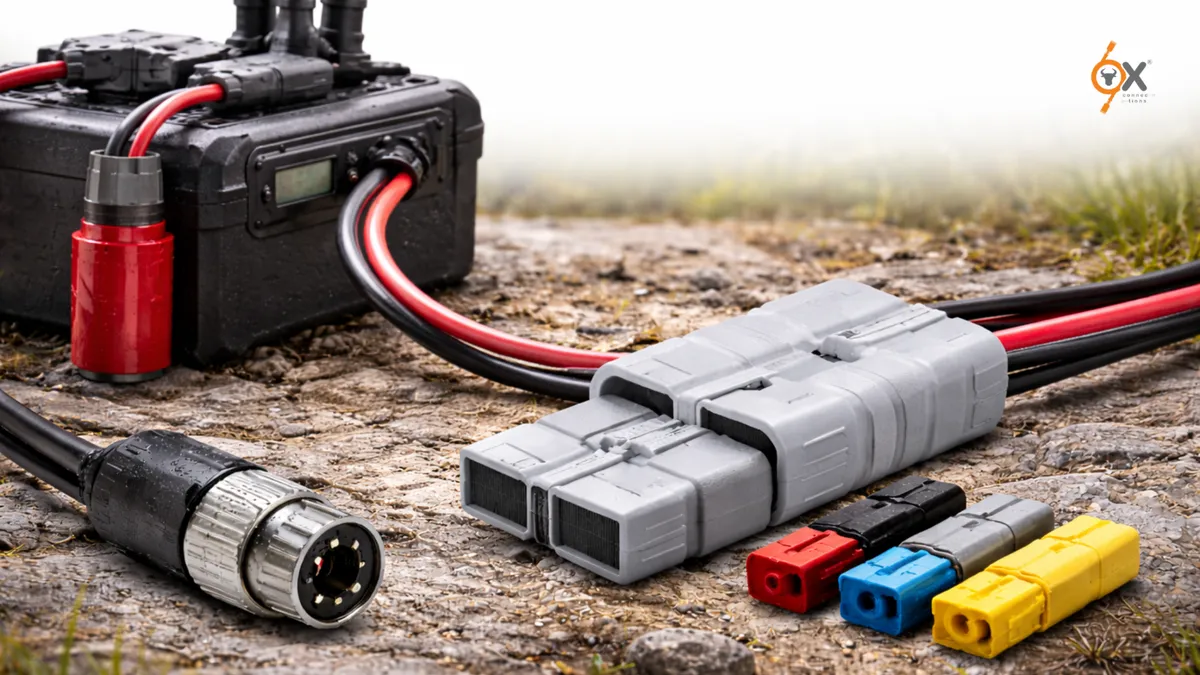
Selecting the right Anderson power connector outdoor battery setup ensures reliable power transfer, reduced energy loss, and long-term durability in demanding environments. This detailed Anderson power connector guide explains what Anderson connectors are, why they are widely used outdoors, and how to choose the best Anderson connector for outdoor systems based on real-world requirements.
Outdoor battery systems have become an essential part of modern power solutions – from solar installations and RV setups to camping, emergency backup, and off-grid living. While batteries, inverters, and panels get most of the attention, one critical component often determines the safety and efficiency of the entire system: the connector.
What Is an Anderson Power Connector?
An Anderson power connector is a high-current, low-resistance DC connector commonly used in battery-based power systems. Designed for modularity and durability, these connectors are widely adopted in solar energy systems, portable power stations, RVs, industrial equipment, and emergency power setups.
One of the defining characteristics of Anderson connectors is their genderless design. Unlike traditional plugs with male and female ends, Anderson connectors use identical housings that mate seamlessly. This reduces wiring errors and simplifies installation, especially for beginners.
Key Features at a Glance
- Genderless, modular design
- High current-carrying capability
- Secure, low-resistance contacts
- Durable housings suitable for outdoor use
- Easy connection and disconnection
These features make Anderson connectors a preferred choice when reliability and scalability are priorities.
Why Anderson Connectors Are Ideal for Outdoor Battery Systems
Outdoor environments expose electrical systems to heat, moisture, dust, vibration, and frequent handling. Standard connectors may loosen, corrode, or overheat over time. Anderson connectors are designed specifically to overcome these challenges.
Reliable Power Transfer
The internal contact design ensures consistent pressure between conductors, minimizing voltage drop and heat buildup. This is especially important for outdoor battery systems where energy efficiency directly impacts performance.
Durability in Harsh Conditions
High-quality Anderson connectors are made using robust thermoplastic housings and corrosion-resistant metal contacts. Many models are suitable for semi-exposed environments, while sealed variants offer enhanced protection against dust and moisture.
Modular and Scalable Design
As outdoor power needs grow, systems often need expansion. Anderson connectors allow easy upgrades without rewiring the entire setup, making them ideal for evolving solar or battery installations.
Understanding Key Specifications Before Choosing a Connector
Choosing the right connector starts with understanding the technical specifications that directly affect performance and safety.
Current Rating (Amperage)
Anderson connectors are available in multiple current ratings, typically ranging from 15A to well over 175A. The connector must be rated higher than your system’s maximum continuous current.
- 15A–45A: Small solar chargers, light DC loads
- 50A–75A: RV systems, portable power stations
- 100A+: Large battery banks, high-power inverters
Always include a safety margin to prevent overheating during peak loads.
Voltage Rating
Most Anderson connectors support common low-voltage DC systems used in outdoor battery setups, such as 12V, 24V, and 48V systems. Ensure the selected connector matches your system voltage requirements.
Wire Gauge Compatibility
Each connector size supports a specific wire gauge range. Using an incorrect wire size can cause loose connections, increased resistance, or premature failure.
Environmental Protection
For outdoor battery systems, environmental resistance is crucial. While standard Anderson connectors handle dust and mild exposure well, sealed or weather-resistant variants are recommended for locations exposed to rain, humidity, or dirt.
How to Choose the Best Anderson Connector for Outdoor Systems
Selecting the best Anderson connector for outdoor systems involves balancing electrical needs with environmental conditions and future scalability.
Step 1: Calculate Your Power Requirements
List all connected devices and determine the total current draw. Add a buffer of 20–30% to account for startup surges and system expansion.
Step 2: Match Connector Rating to System Load
Never choose a connector that operates near its maximum rating continuously. Oversizing slightly improves reliability and extends connector lifespan.
Step 3: Assess the Installation Environment
Ask the following:
- Will the connector be exposed to rain or dust?
- Is the system mobile or stationary?
- Will the connector be frequently plugged and unplugged?
Harsh or mobile environments benefit from higher-grade housings and sealed options.
Step 4: Choose the Right Connector Series
Common Anderson connector families include:
- Powerpole Series: Compact and modular, suitable for low-to-medium current outdoor applications
- SB Series: Larger connectors designed for high-current battery systems
- Sealed Variants: Designed for outdoor use where environmental protection is critical
Each series serves a different application, so understanding your system’s demands is key.
Installation Best Practices
Even the best connector can fail if installed incorrectly. Follow these best practices for safe and reliable operation:
- Use proper crimping tools for secure terminal connections
- Match wire gauge exactly to connector specifications
- Avoid connecting or disconnecting under heavy load
- Secure cables to prevent strain or vibration damage
- Clearly label connections in multi-connector systems
Correct installation significantly reduces resistance, heat buildup, and long-term maintenance issues.
Common Outdoor Applications of Anderson Power Connectors
Solar Power Systems
Anderson connectors are frequently used between solar charge controllers, batteries, and inverters. Their low resistance improves charging efficiency and system reliability.
Portable Power Stations
Many portable power stations include Anderson outputs for connecting external batteries or DC appliances, offering quick and safe connections in outdoor settings.
RV and Camping Systems
In RVs, Anderson connectors simplify battery expansion and DC power distribution while withstanding constant movement and vibration.
Emergency and Backup Power
For emergency response units or temporary field setups, Anderson connectors provide fast deployment and dependable power connections when reliability is critical.
Maintenance and Safety Tips
To maximize connector lifespan and system safety:
- Inspect connectors periodically for wear or corrosion
- Keep contacts clean and free from debris
- Replace damaged housings immediately
- Never exceed rated current or voltage
- Store unused connectors with protective covers
Regular checks help prevent unexpected failures, especially in outdoor environments.
Final Thoughts
Choosing the right Anderson power connector outdoor battery configuration is a crucial step in building a safe, efficient, and long-lasting outdoor power system. From understanding current ratings and environmental conditions to proper installation and maintenance, informed decisions lead to better performance and fewer issues over time.
This Anderson power connector guide has outlined the key considerations to help beginners and experienced users alike select the most suitable option. Whether you’re setting up solar power, RV systems, or emergency backup solutions, selecting the best Anderson connector for outdoor systems ensures reliability and peace of mind.
For projects that require dependable connectivity components beyond standard power connectors, OX Connections offers a broad portfolio of industrial-grade electrical connectors and connectivity solutions. Their range supports power and signal applications across demanding environments, making them a reliable sourcing partner for outdoor battery systems and professional electrical installations alike.