
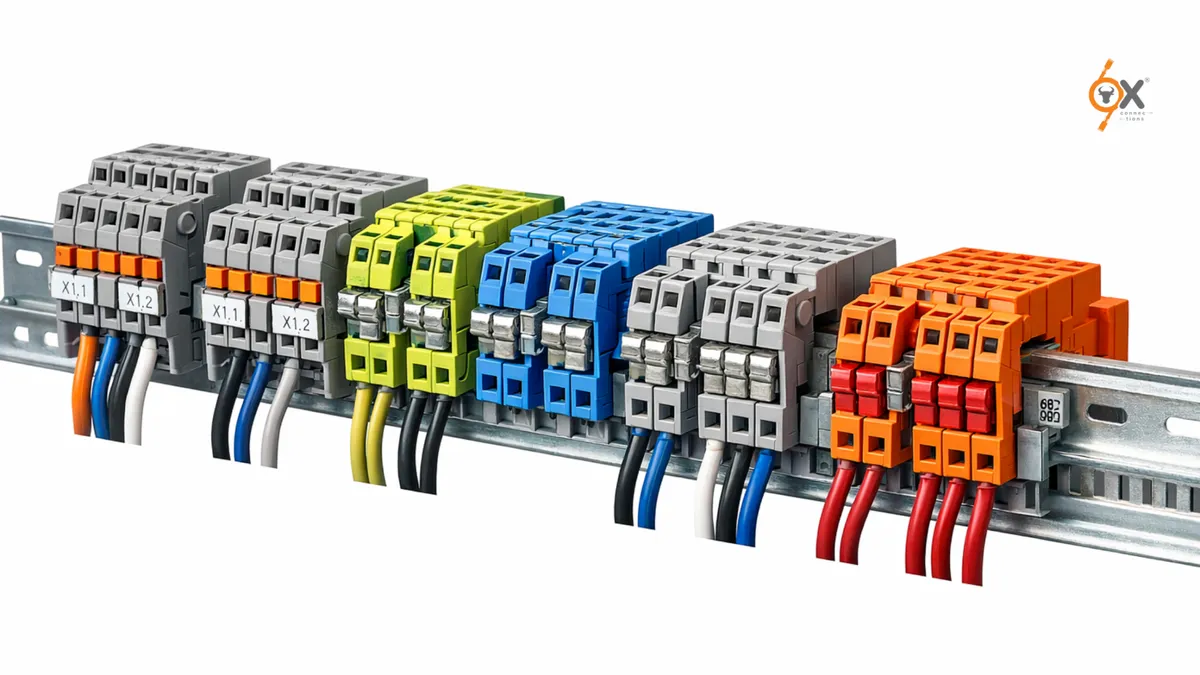
Modern control panels rely on neat, safe, and reliable wiring to function efficiently. As systems become more complex – handling power distribution, automation signals, and communication lines – the role of connectors becomes increasingly important. Among the most widely used solutions are DIN rail terminal blocks, which offer a structured and standardised way to organise electrical connections inside control panels.
This guide explains how to choose the right DIN rail connectors for control panels, covering everything from basic concepts for beginners to technical considerations for experienced professionals.
Understanding DIN Rails and Terminal Blocks
A DIN rail is a standardised metal rail, usually made of steel or aluminium, used to mount electrical components inside control panels. These rails allow components to be installed, removed, or repositioned easily, making panel design more flexible and scalable.
DIN rail terminal blocks are modular connectors that snap onto these rails and provide secure connection points for electrical wires. They act as organised junctions where incoming and outgoing wires are terminated, distributed, or isolated.
Because of their modular design, terminal blocks are widely used in:
- Industrial automation panels
- HVAC control systems
- Power distribution boards
- Building management systems
- Machinery and equipment control panels
Why DIN Rail Terminal Blocks Are Essential in Control Panels
Control panels often contain dozens or even hundreds of wires. Without proper organisation, this can lead to unsafe conditions, difficult troubleshooting, and increased downtime.
Using control panel wiring connectors mounted on DIN rails offers several advantages:
- Improved safety: Secure terminations reduce the risk of loose connections and overheating
- Neat wiring layout: Clear separation of circuits makes panels easier to understand
- Easy maintenance: Faults can be identified and corrected faster
- Scalability: Additional circuits can be added without redesigning the entire panel
- Compliance: Helps meet industry and safety standards
Types of DIN Rail Terminal Blocks
Understanding the different types of terminal blocks is key to choosing the right solution.
1. Feed-Through Terminal Blocks
These are the most common type of DIN rail terminal blocks. They simply connect one wire to another, allowing current to pass through uninterrupted.
Used for:
- Power distribution
- Signal routing
- General wiring connections
2. Ground (Earth) Terminal Blocks
Designed specifically for grounding circuits, these blocks connect wires directly to the DIN rail, which acts as the grounding path.
Used for:
- Protective earth connections
- Safety grounding in control panels
3. Fuse Terminal Blocks
These terminal blocks include a built-in fuse holder, providing circuit protection directly at the connection point.
Used for:
- Protecting sensitive control circuits
- Simplifying fault isolation
4. Disconnect Terminal Blocks
These allow circuits to be safely isolated without removing wires, making testing and maintenance easier.
Used for:
- Commissioning
- Troubleshooting
- Temporary disconnections
5. Multi-Level Terminal Blocks
These stack multiple connection levels vertically, saving space inside crowded control panels.
Used for:
- High-density wiring
- Compact panel designs
Key Factors When Choosing DIN Rail Connectors
Selecting the right DIN rail connectors involves more than just matching wire sizes. Below are the most important considerations.
1. Electrical Ratings
Always check the voltage and current ratings of the terminal block. These must meet or exceed the requirements of your circuit.
- Underrated connectors can overheat
- Proper ratings ensure long-term reliability
- Ratings vary based on block size and design
This is especially important for power distribution and high-load applications.
2. Wire Size and Compatibility
Terminal blocks are designed to accept specific wire sizes, usually defined in mm² or AWG.
Consider:
- Solid vs stranded conductors
- Single or multiple wire connections
- Ferrule compatibility
Choosing the correct size ensures a secure connection and prevents damage to conductors.
3. Termination Method
Different termination styles suit different applications:
- Screw terminals: Reliable and widely used, but require periodic tightening
- Spring clamp terminals: Faster installation and vibration-resistant
- Push-in terminals: Tool-less wiring with reduced installation time
For panels exposed to vibration, spring or push-in designs often provide better long-term stability.
4. Panel Space and Density
Control panels have limited space. Selecting compact or multi-level control panel wiring connectors can significantly reduce panel size.
Ask yourself:
- How many circuits need to be accommodated?
- Will future expansion be required?
- Is wire access still comfortable in dense layouts?
Efficient space usage improves airflow and accessibility.
5. Environmental Conditions
Consider where the control panel will be installed:
- High ambient temperatures
- Dusty or industrial environments
- Humidity or condensation risks
Some DIN rail terminal blocks are designed with enhanced insulation materials or coatings for harsh environments.
6. Standards and Certifications
Ensure the terminal blocks comply with relevant standards such as IEC, UL, or other regional certifications. Compliance ensures safety, quality, and acceptance in regulated industries.
Accessories That Improve Control Panel Wiring
Terminal blocks are often used with accessories that enhance functionality:
- End brackets to secure blocks on the rail
- Jumpers for commoning multiple terminals
- Marker tags for clear identification
- Test plugs for diagnostics
Using these accessories improves clarity, safety, and ease of maintenance.
Common Mistakes to Avoid
Even experienced panel builders can make mistakes when selecting DIN rail connectors:
- Choosing blocks without considering future expansion
- Mixing incompatible terminal block series
- Ignoring environmental factors
- Overcrowding terminals, making maintenance difficult
- Using incorrect wire sizes
Avoiding these mistakes saves time and prevents costly rework.
Best Practices for Control Panel Wiring
To get the most out of DIN rail terminal blocks, follow these best practices:
- Maintain consistent wire colour coding
- Label all terminals clearly
- Route power and signal wires separately
- Leave service loops for maintenance
- Keep spare terminals for future use
These practices result in safer, cleaner, and more professional panels.
Beginner vs Professional: What to Focus On
For Beginners
- Start with standard feed-through terminal blocks
- Choose clearly labelled, easy-to-install designs
- Match wire size carefully
- Follow manufacturer guidelines closely
For Professionals
- Optimise layout for space and airflow
- Select termination styles based on vibration and load
- Use modular systems for scalability
- Ensure compliance with all relevant standards
Why DIN Rail Systems Remain the Industry Standard
The continued popularity of DIN rail terminal blocks is due to their flexibility, safety, and global standardization. Engineers across industries rely on DIN rail systems because they:
- Simplify panel design
- Reduce installation time
- Improve serviceability
- Support long-term system expansion
Whether for simple control circuits or complex automation systems, DIN rail-based connectors remain a trusted solution.
Final Thoughts
Choosing the right DIN rail connectors is a critical step in building reliable and maintainable control panels. By understanding terminal block types, electrical ratings, wire compatibility, environmental conditions, and layout requirements, you can design systems that are both efficient and future-ready.
High-quality control panel wiring connectors not only improve safety and performance but also make troubleshooting and expansion far easier over the lifecycle of the panel. Whether you are a beginner assembling your first control panel or a professional designing complex industrial systems, selecting the right DIN rail terminal blocks ensures long-term success.