
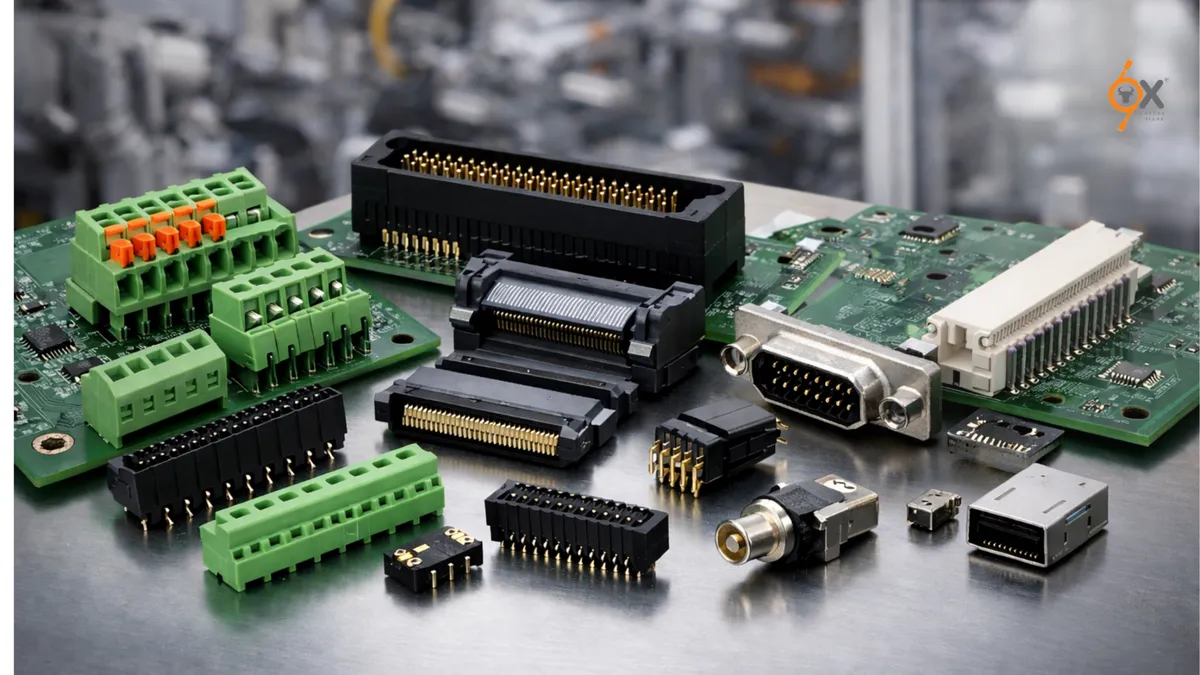
Printed Circuit Board (PCB connectors) play a critical role in industrial electronics. They are the link between circuits, modules, and external systems, enabling power transfer, signal transmission, and data communication. Choosing the right connector is not just a design decision—it directly affects performance, reliability, safety, and long-term maintenance.
Industrial environments are demanding. Exposure to vibration, heat, dust, moisture, and electrical noise means that connector selection must go beyond size and cost. This PCB connector selection guide explains what engineers, designers, and beginners should consider when choosing connectors for industrial applications, ensuring dependable operation across the product lifecycle.
Why PCB Connector Selection Matters in Industrial Applications
Unlike consumer electronics, industrial systems often operate continuously under harsh conditions. A poorly chosen connector can lead to intermittent connections, signal loss, overheating, or complete system failure.
Selecting the right industrial PCB connectors ensures:
- Stable electrical performance
- Mechanical durability under vibration and shock
- Resistance to environmental stress
- Ease of assembly and maintenance
- Compliance with industry standards
Understanding these requirements early in the design phase helps avoid costly redesigns and field failures.
Understanding the Types of PCB Connectors
Before choosing a connector, it is essential to understand the types of PCB connectors available and where they are typically used.
Board-to-Board Connectors
These connectors link two PCBs together within a device. They are commonly used in modular industrial systems and control panels.
Key benefits:
- Compact design
- Reliable internal connections
- Suitable for stacking or parallel board layouts
Wire-to-Board Connectors
These connectors connect external wires or cables to a PCB. They are widely used for power input, sensor connections, and control signals.
Key benefits:
- Secure cable termination
- Easy servicing and replacement
- Flexible wiring options
Backplane Connectors
Used in high-density industrial systems, backplane connectors allow multiple PCBs to plug into a central board.
Key benefits:
- High pin count
- Scalable system architecture
- Common in automation and telecom equipment
Terminal Blocks
Terminal blocks provide a robust method for connecting wires to PCBs, especially for power and industrial control signals.
Key benefits:
- High current handling
- Easy installation and maintenance
- Strong mechanical retention
Electrical Requirements: The First Selection Step
Electrical performance is the foundation of any connector choice. Designers must consider:
Current and Voltage Ratings
Industrial applications often involve higher currents and voltages. The connector must safely handle peak loads without overheating or degradation.
Signal Type
Different connectors are required for:
- Power transmission
- Low-speed control signals
- High-speed data or communication lines
High-speed signals require connectors with controlled impedance and minimal signal loss.
Contact Resistance
Lower contact resistance ensures efficient power transfer and reduced heat generation, which is crucial for long-term reliability.
Mechanical and Environmental Considerations
Industrial electronics face physical challenges that consumer products do not.
Vibration and Shock Resistance
Machinery, motors, and heavy equipment generate constant vibration. Connectors must maintain stable contact without loosening or fretting.
Mating Cycles
Connectors that are frequently plugged and unplugged must withstand high mating cycles without wear-related failure.
Environmental Protection
Consider exposure to:
- Dust and debris
- Moisture or humidity
- Extreme temperatures
- Chemicals or oils
In such cases, sealed or ruggedized industrial PCB connectors are essential.
Mounting Styles and PCB Attachment Methods
How a connector attaches to the PCB impacts both electrical reliability and mechanical strength.
Through-Hole Mounting
Provides strong mechanical anchoring and is preferred for connectors exposed to stress or heavy cables.
Surface Mount Technology (SMT)
Suitable for compact designs and automated assembly but may require additional mechanical support in industrial environments.
Press-Fit Connectors
Eliminate soldering and offer consistent electrical performance, often used in high-reliability industrial systems.
Locking and Retention Features
In industrial settings, accidental disconnection can cause system downtime or safety risks. Locking mechanisms help prevent this.
Common retention features include:
- Latches
- Screws
- Friction locks
- Push-pull locking systems
Selecting connectors with appropriate locking ensures stability even under vibration or operator movement.
Ease of Assembly and Maintenance
Industrial systems are often serviced on-site. Connector design should support:
- Simple installation
- Clear polarity and orientation
- Easy replacement without special tools
Modular designs using standardized connectors reduce downtime and simplify troubleshooting.
Compliance and Industry Standards
Many industrial applications must comply with international standards such as:
- IEC
- UL
- RoHS
- REACH
Using certified connectors ensures safety, regulatory compliance, and acceptance in global markets.
Cost vs Reliability: Finding the Right Balance
While cost is always a factor, choosing the cheapest connector often leads to higher long-term expenses due to failures and maintenance. A reliable PCB connector selection guide prioritizes total cost of ownership over initial price.
Investing in quality connectors reduces:
- Product recalls
- Field service costs
- Downtime in critical systems
Common Mistakes to Avoid
Designers—especially beginners—often make these errors:
- Ignoring environmental conditions
- Underestimating current requirements
- Choosing connectors based only on size
- Overlooking locking mechanisms
- Using consumer-grade connectors in industrial systems
Avoiding these mistakes ensures robust and dependable designs.
How Ox Connections Supports Reliable PCB Connectivity
When sourcing connectors for industrial applications, partnering with a knowledgeable supplier makes a significant difference. Ox Connections offers a wide range of PCB connectivity solutions designed to meet industrial performance requirements.
Their portfolio includes connectors suited for demanding environments, focusing on electrical reliability, mechanical durability, and compliance with industry standards. With a clear understanding of application-specific needs, Ox Connections supports engineers in selecting dependable solutions for long-term performance.
Conclusion
Choosing the right PCB connector for industrial electronics requires careful evaluation of electrical, mechanical, and environmental factors. Understanding the types of PCB connectors, assessing application demands, and following a structured PCB connector selection guide ensures reliable system performance.
Industrial systems depend on stable connections. By selecting high-quality industrial PCB connectors, designers can build products that withstand harsh conditions, operate efficiently, and deliver long-term value. With thoughtful planning and the right components, PCB connectors become a strength—not a vulnerability—in industrial electronics design.