
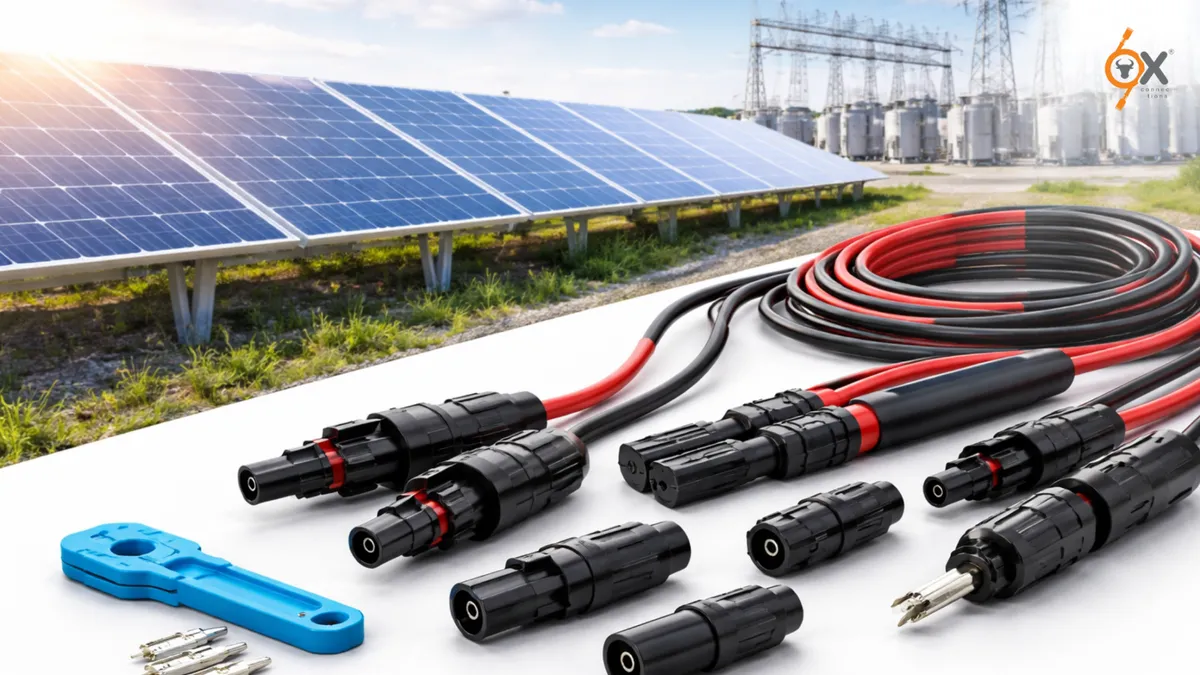
This article explores the key factors engineers, EPC contractors, and solar installers should consider when selecting Right MC4 connector for commercial and utility-scale solar projects.
As solar power projects scale from residential rooftops to large commercial facilities and utility-scale solar farms, the importance of reliable electrical connectivity becomes increasingly critical. While solar modules and inverters often receive the most attention, connectors play an equally important role in ensuring safe and efficient power transmission.
One of the most widely used solutions in photovoltaic installations today is the MC4 solar connector. Designed specifically for solar applications, these connectors have become the global standard for connecting solar modules, cables, and system components.
However, not all connectors are created equal. Selecting the correct MC4 connector cable assembly and using high-quality pre-assembled solar cable solutions can significantly impact system efficiency, safety, and long-term performance.
Understanding the Role of MC4 Connectors in Solar Systems
Before selecting connectors, it is important to understand their role within a photovoltaic system. The MC4 solar connector is specifically designed to create secure electrical connections between solar modules and other system components.
These connectors are used for:
- Connecting solar panels within a string
- Linking module strings to combiner boxes
- Connecting combiner boxes to inverters
- Extending solar cables across large installations
MC4 connectors are engineered to carry direct current (DC) produced by solar panels while maintaining low electrical resistance and strong environmental protection.
In commercial and utility-scale projects, where thousands of connectors may be used, reliability and consistency become essential.
Why Connector Selection Matters in Large Solar Projects
In smaller solar installations, connector errors may only affect a small portion of the system. However, in commercial and utility-scale solar plants, even minor connection issues can lead to major operational challenges.
Poor connector selection or incorrect installation can result in:
- Increased electrical resistance
- Power loss across cable connections
- Overheating and safety risks
- Reduced long-term system reliability
For this reason, solar engineers and installers must ensure they use the right MC4 connector cable assembly designed specifically for the scale and electrical requirements of their project.
Key Factors to Consider When Selecting Right MC4 Connectors
Choosing the Right MC4 Connector involves evaluating several technical factors. These considerations ensure the connector can support the electrical load and environmental conditions of the installation.
1. Voltage Rating
Modern commercial and utility-scale solar systems operate at higher DC voltages to improve system efficiency and reduce cable losses. Many installations today run at 1000 V or 1500 V DC.
When selecting an MC4 solar connector, it is important to confirm that the connector is rated to safely handle the voltage level of the solar array.
Using connectors with insufficient voltage ratings can lead to insulation breakdown and long-term system failures.
2. Current Carrying Capacity
The connector must also support the current generated by the solar modules. Current ratings typically vary depending on cable size and connector design.
Engineers must ensure that the MC4 connector cable assembly used in the project is compatible with the cable gauge and expected current load.
Proper current handling ensures:
- Reduced heat buildup
- Efficient power transmission
- Improved overall system safety
3. Environmental Durability
Solar installations operate in outdoor environments for decades. Connectors must therefore withstand a wide range of environmental conditions.
High-quality MC4 solar connector systems are designed to resist:
- UV exposure from sunlight
- Temperature fluctuations
- Dust and moisture
- Corrosion in coastal environments
Many connectors used in solar installations are rated IP67 or IP68, which means they provide strong protection against dust and water ingress.
Durable connectors are essential for ensuring the long-term stability of large solar plants.
4. Cable Compatibility
Another critical factor when selecting connectors is cable compatibility. Solar connectors must be designed to match the cable diameter and insulation used in photovoltaic wiring.
Incorrect cable matching can lead to poor electrical contact and unreliable performance.
This is one of the reasons many installers prefer pre-assembled solar cable solutions, where connectors are already attached to cables in a controlled manufacturing environment.
Factory-assembled cable systems ensure proper crimping, insulation sealing, and connector alignment.
5. Quality of Crimping and Assembly
Connector performance depends heavily on the quality of the crimping process. Improper crimping can increase contact resistance and create hotspots that affect system safety.
Using professionally manufactured MC4 connector cable assembly solutions eliminates many of these risks.
Factory-assembled connectors are produced using specialized crimping tools and quality-control procedures that guarantee consistent electrical performance.
This level of manufacturing precision is especially valuable in commercial and utility-scale solar installations.
Advantages of Using Pre-Assembled Solar Cables
As solar projects become larger and more complex, installers are increasingly adopting pre-assembled solar cable systems to streamline installation.
These cables come with connectors already attached and tested by the manufacturer.
Faster Installation
Pre-assembled cables significantly reduce the time required for cable preparation and connector termination on site.
Installers can focus on system layout and module installation rather than manual connector assembly.
Reduced Installation Errors
Connector termination errors are one of the most common causes of solar system faults. Factory-assembled cables eliminate the risk of improper crimping and incomplete sealing.
Consistent Performance
Because the MC4 connector cable assembly is manufactured under controlled conditions, each connector meets consistent quality standards.
This ensures reliable electrical performance across the entire solar array.
Connector Standardization in Large Solar Projects
One of the reasons the MC4 solar connector has become widely adopted is its compatibility with many solar modules and PV components available in the market.
Standardization simplifies system design and reduces compatibility issues between equipment from different manufacturers.
For EPC contractors and solar developers managing large installations, using standardized connector systems also helps simplify maintenance and replacement processes in the future.
The Importance of Reliable Connector Manufacturers
While MC4 connectors are widely available, not all products meet the same quality standards. Inferior connectors can compromise system safety and performance.
For commercial and utility-scale solar installations, it is essential to source connectors from manufacturers that follow strict quality control processes and international standards.
High-quality MC4 connector cable assembly solutions ensure reliable current transfer, strong environmental protection, and long service life.
Manufacturers such as Ox Connections focus on delivering dependable solar connector solutions designed for demanding photovoltaic applications. By combining durable materials with precise manufacturing techniques, reliable connector suppliers help support the long-term success of solar energy projects.
Conclusion
As solar energy continues to expand across commercial and utility sectors, system reliability becomes more important than ever. Connectors may appear to be small components within a photovoltaic system, but they play a crucial role in ensuring safe and efficient power transmission.
Selecting the Right MC4 solar connector requires careful consideration of voltage ratings, current capacity, environmental durability, and cable compatibility. High-quality MC4 connector cable assembly solutions help maintain consistent electrical performance across large solar installations.
In addition, the use of pre-assembled solar cable systems allows installers to reduce installation time, minimize errors, and improve overall project efficiency.
By partnering with trusted manufacturers like Ox Connections, solar developers and EPC contractors can ensure they are using connector solutions designed to meet the demands of modern photovoltaic systems. Reliable connectors ultimately contribute to safer installations, improved energy efficiency, and long-term solar plant performance.
FAQs
1. What is an MC4 solar connector used for in solar installations?
A MC4 solar connector is used to connect solar panels, cables, and other components within a photovoltaic system. It ensures safe and reliable electrical connections for DC power transmission.
2. Why are MC4 connector cable assemblies important in large solar projects?
A MC4 connector cable assembly provides factory-terminated cables with pre-installed connectors. This improves installation speed, ensures consistent connection quality, and reduces the risk of electrical faults.
3. What are the advantages of using pre-assembled solar cables?
Pre-assembled solar cable systems reduce installation time, eliminate manual connector termination errors, and ensure reliable electrical performance across solar installations.