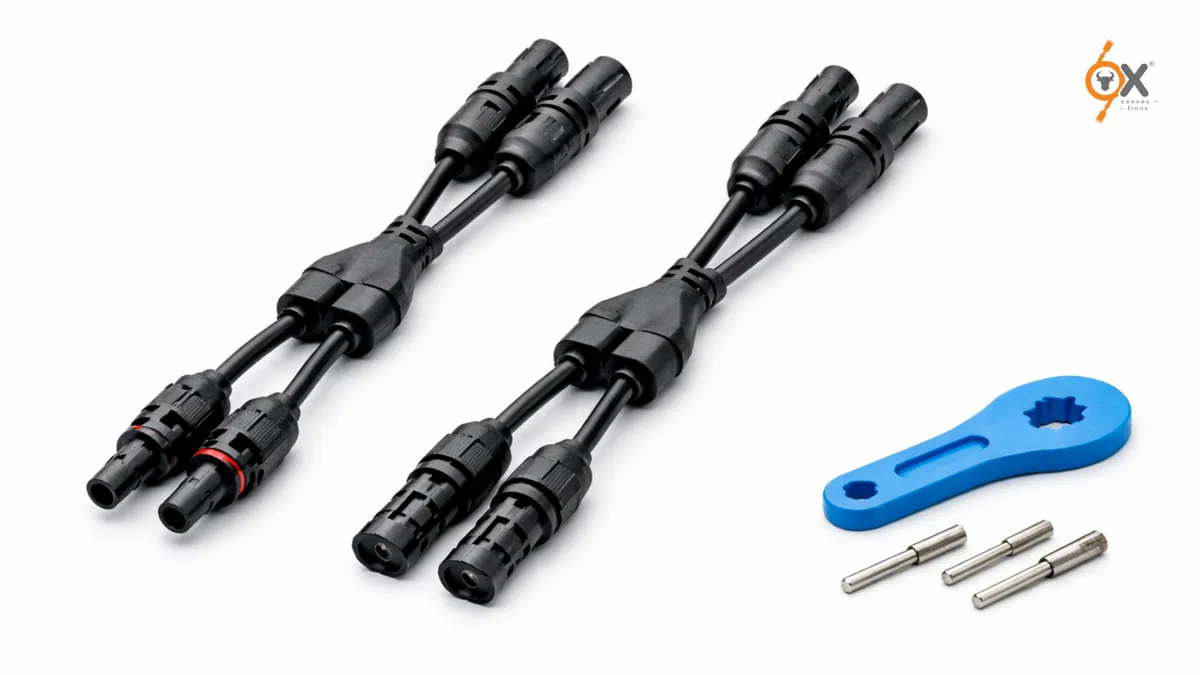
One connector that installers frequently rely on while expanding or optimizing solar arrays is the Y branch solar connector. It might look small, but it plays a big role in connecting panels efficiently without overcomplicating the wiring layout.
Solar installations look simple from the outside – panels on the roof, cables running across the structure, and an inverter managing the energy. But behind that simplicity is a network of components that keep the entire system running smoothly. Among those components, connectors quietly do some of the most important work.
If you’re working in solar installation, procurement, or EPC projects, understanding how this connector works can make system design and installation much easier.
What Exactly Is a Y branch solar connector ?
In simple terms, a Y branch solar connector allows two solar panels to connect into a single line. It’s commonly used when installers want to connect panels in parallel without cutting cables or modifying factory connectors.
Instead of running multiple wires into complicated junctions, the connector simplifies the process. It acts as a clean junction point that maintains electrical integrity while helping installers expand systems faster.
This becomes especially useful in projects where:
- The solar system needs expansion later
- Panels receive different sunlight conditions
- Installation speed matters
- Cable management needs to remain organized
Over time, these connectors have become a practical solution for installers who want efficiency without compromising safety.
Why Installers Use a solar panel Y connector in Real Projects
When solar installations move from planning to actual fieldwork, things rarely go exactly as planned. Roof layouts change, panel positioning adjusts, and installers need flexible wiring options.
That’s where a solar panel Y connector becomes extremely useful.
Instead of redesigning the system wiring every time changes occur, installers can quickly connect panel outputs and maintain a stable configuration. This is one of the reasons parallel connections are commonly used in residential and mid-size commercial systems.
A solar panel Y connector helps in situations like:
- Expanding an existing solar installation
- Connecting additional panels later
- Managing shading conditions
- Maintaining voltage stability in the system
From a practical standpoint, it simply makes installation work smoother.
How the Connector Actually Works in a Solar System
To understand the role of the Y branch solar connector, it helps to think about how solar panels produce electricity.
Each panel generates DC power. When panels are connected together, the installer must decide how the electricity flows – ieither in series or in parallel.
When panels are connected in parallel:
- Voltage stays consistent
- Current increases
- The system becomes more flexible
A Y branch solar connector makes this type of connection possible without complicated wiring.
In most installations:
Two positive cables from panels connect into one output.
Two negative cables connect into another connector.
Both outputs move toward the inverter or combiner system.
This process may sound simple, but the connector must maintain a stable electrical connection while being exposed to heat, rain, dust, and UV radiation for years.
That’s why connector quality matters much more than many people initially realize.
Types of Y Connectors Commonly Used Today
As solar installations have grown globally, connector designs have also improved. Today, installers typically prefer connectors that are compatible with industry-standard systems.
The most widely used option in many projects is the MC4 Y connector for solar panels.
This connector type is popular because it works seamlessly with most solar panel cables already used in the market.
There are generally three variations installers come across.
The first type is the standard two-to-one Y connector used in residential solar installations.
The second is multi-branch connectors used when several panel strings need to merge together.
The third is locking connectors designed to prevent accidental disconnection in outdoor conditions.
Among these, the MC4 Y connector for solar panels has become the preferred solution in many modern installations because of its reliability and compatibility.
Wiring Considerations Installers Should Keep in Mind
While using a solar panel Y connector simplifies wiring, there are still a few important things installers should pay attention to.
One of the most common issues in solar installations happens not because of panels or inverters – but because of poor connections.
Proper wiring typically involves:
Checking cable polarity before connection
Ensuring connectors are fully locked
Using compatible cable sizes
Avoiding excessive stress on cables
Maintaining clean and dry connections
Even experienced installers make it a habit to double-check these things because small wiring mistakes can affect overall system performance.
A properly installed Y branch solar connector ensures the system works exactly the way it was designed.
Advantages of Using Y Connectors in Solar Installations
Over the years, installers have continued to rely on Y connectors because they solve several practical challenges in solar projects.
One of the biggest advantages is installation speed. Instead of building custom cable junctions, installers can connect panels quickly and safely.
Another benefit is system flexibility. If a project requires expansion later, the solar panel Y connector allows that to happen without reworking the entire wiring structure.
These connectors also help maintain a cleaner installation layout. Organized cable routing not only improves system safety but also makes maintenance easier in the long run.
For many installers, using the MC4 Y connector for solar panels has become part of standard installation practice.
Situations Where Installers Commonly Use These Connectors
In real installations, the Y branch solar connector is not used everywhere – but it becomes extremely useful in certain scenarios.
For example:
Small rooftop solar installations
Adding panels to an existing solar system
Projects with irregular panel placement
Temporary solar setups
Commercial installations with modular expansion plans
These connectors allow installers to adapt quickly without slowing down the project.
In many cases, they reduce installation time significantly.
Why Connector Quality Matters More Than Most People Think
One of the realities of the solar industry is that not all connectors available in the market are built to the same standards.
At first glance, two connectors may look identical. But their long-term performance can be very different.
Poor-quality connectors often cause:
- Loose electrical contact
- Heat buildup
- Power loss
- Water ingress
- System failure over time
Since connectors remain exposed to environmental conditions for decades, using reliable components is essential.
A high-quality solar panel Y connector is designed to withstand long operational life while maintaining stable electrical performance.
This is one reason professional installers prefer connectors that meet industry testing and durability requirements.
The Growing Importance of Reliable Solar Connectivity Solutions
As solar installations become larger and more complex, the focus is shifting toward system reliability rather than just installation speed.
Installers and EPC companies are now paying closer attention to connectors, cable assemblies, and system components that support long-term efficiency.
This is where manufacturers specializing in solar connectivity solutions play a crucial role.
A well-designed Y branch solar connector should offer:
- Consistent electrical conductivity
- Secure locking mechanisms
- Weather-resistant materials
- Compatibility with industry standards
- Reliable long-term performance
Solutions like the MC4 Y connector for solar panels are now widely adopted because they support these requirements.
The Role of Ox Connections in Modern Solar Installations
As the solar industry continues to expand globally, installers are increasingly looking for manufacturers that understand the real challenges faced during installation and system operation.
This is where Ox Connections is building its presence in the solar connectivity space.
Rather than focusing only on connectors as standalone products, the company works on developing connectivity solutions that support modern solar infrastructure. Their approach centers around durability, installation efficiency, and compatibility with industry-standard solar systems.
For solar installers, developers, and EPC companies, this becomes important because reliable connectors directly impact system performance over time.
Products such as the Y branch solar connector, cable assemblies, and related solar connectivity components are designed to support real installation environments where reliability cannot be compromised.
As solar adoption continues to grow, the demand for dependable connectors will only increase – and companies like Ox Connections are focusing on meeting that need with solutions built for long-term performance.