
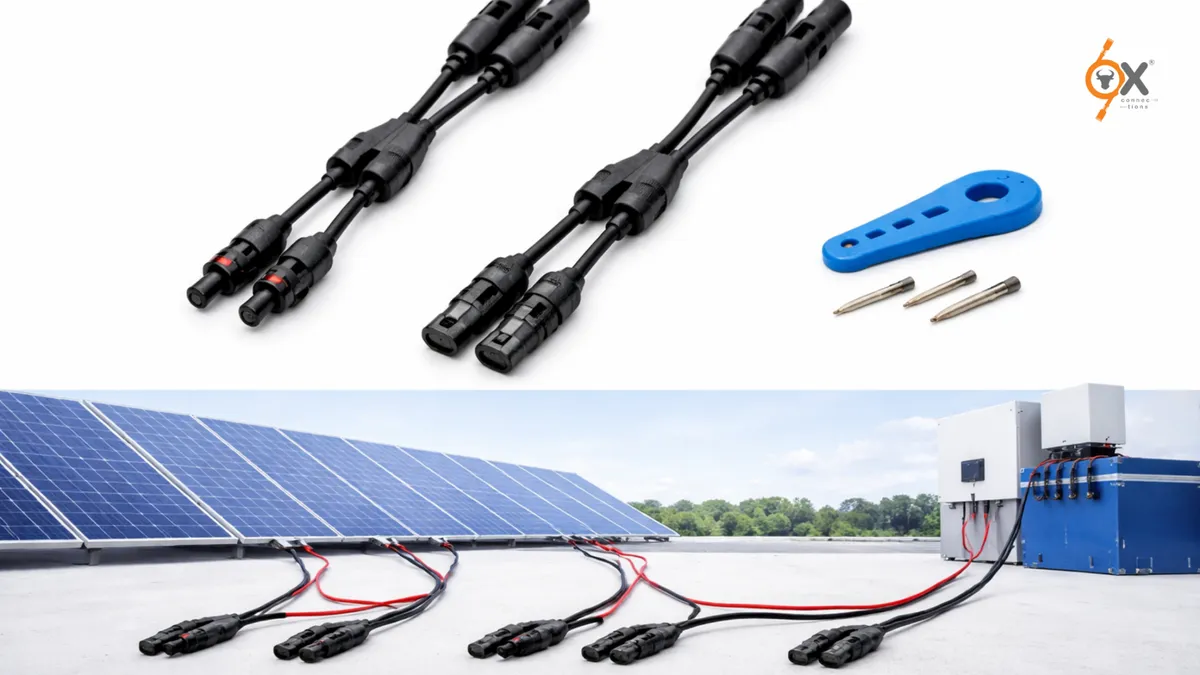
One component that quietly plays a big role in this process is the MC4 Y branch connector. It may look small, but it can simplify the way solar panels are connected, especially when systems need parallel wiring.
Solar installations are becoming more efficient, more modular, and easier to expand than they were a few years ago. Installers today are not just setting up panels – they are designing systems that can grow with future energy needs. That flexibility depends heavily on how well the wiring and connectivity are planned.
If you’re working with solar installations or planning a system expansion, understanding how this connector works – and when to use it – can save both time and effort on site.
What Exactly Is an MC4 Y branch connector ?
In simple terms, an MC4 Y branch connector is designed to connect two solar panel outputs into one cable. It is commonly used when installers want to connect solar panels in parallel without creating complicated wiring arrangements.
Most modern panels already come with MC4-type connectors, which is why this connector has become widely accepted across the solar industry. Instead of cutting wires or building custom junction points, installers can simply plug connectors together and create a reliable electrical pathway.
In real installation environments, this saves time and keeps the wiring layout clean and organized.
More importantly, it helps maintain system efficiency – something that becomes critical as solar systems grow larger.
Why Parallel Connections Matter in Solar Installations
Solar panels can be connected in two main ways: series or parallel. Each configuration affects how electricity moves through the system.
When panels are connected in series, voltage increases but current stays the same. In parallel connections, the opposite happens – voltage remains stable while current increases.
This is where the MC4 Y branch connector becomes useful.
Parallel connections are often used when:
- Installers want to maintain stable voltage levels
- Panels may receive uneven sunlight
- Systems need expansion in the future
- Residential rooftops have layout limitations
Using this connector allows installers to manage these situations without redesigning the entire wiring structure.
It’s one of those tools that makes installation work more practical.
Where the MC4 solar connector Fits Into the System
The MC4 solar connector has become a standard component in photovoltaic installations worldwide. It is designed specifically for outdoor use and long-term exposure to environmental conditions.
In most solar systems, connectors must withstand:
- Heat
- Rain
- Dust
- UV radiation
- Temperature fluctuations
This is why the MC4 design became popular – it offers a secure locking mechanism and stable electrical connection over time.
When the MC4 Y branch connector is used, it works as an extension of this system. It keeps the connection style consistent across the entire solar array.
That consistency is important because mixing connector types can sometimes create safety risks or compatibility issues.
How Installers Typically Use a solar panel MC4 connector in the Field
In actual solar projects, installation conditions can vary quite a bit. Rooftop angles, panel positioning, cable routing, and inverter placement all influence how wiring is planned.
This is where the solar panel MC4 connector becomes extremely useful.
Instead of building new junction boxes or extending cables unnecessarily, installers can connect panel outputs efficiently and maintain proper system structure.
The typical process looks something like this:
Two panel outputs connect into the Y connector.
Positive lines combine into one path.
Negative lines combine into another connector.
The combined output continues toward the inverter or combiner box.
While this sounds straightforward, experienced installers always take extra care during this step because connectors must remain secure for many years of operation.
A well-installed solar panel MC4 connector ensures smooth power flow and reduces the chances of electrical resistance building up in the system.
Compatibility Considerations Installers Should Not Ignore
One thing that often gets overlooked during installation is connector compatibility.
Even though many connectors look similar, not all of them are designed to work together. Using incompatible connectors can lead to loose fits or electrical inefficiencies.
When selecting an MC4 Y branch connector, installers typically check:
- Cable size compatibility
- Connector locking mechanism
- Current handling capacity
- Weather sealing quality
- Certification and reliability
These checks may seem minor during installation, but they can make a big difference in long-term system performance.
Solar systems are expected to last decades, so every connection point needs to be reliable.
Common Mistakes That Happen With Solar Connectors
Even experienced teams occasionally encounter issues related to connectors. Most of the time, the problem isn’t the connector itself – it’s how it was installed or selected.
One common mistake is using low-quality connectors that do not meet solar industry standards. At first, the system may work fine, but over time problems such as overheating or loose connections can develop.
Another mistake is incorrect polarity connections. Solar wiring is sensitive to polarity, and mixing positive and negative outputs can lead to system faults.
Sometimes connectors are not fully locked. With an MC4 solar connector, the locking mechanism is important because it ensures the cable stays secure despite environmental exposure.
Installers also occasionally underestimate cable strain. If connectors are placed under tension, it can reduce their lifespan.
Avoiding these issues usually comes down to careful installation practices and using reliable components.
Troubleshooting Connection Issues in Solar Systems
If a solar system starts showing reduced performance, connectors are often one of the first areas installers inspect.
Problems related to connectors can show up as:
- Unexpected voltage drops
- System shutdown alerts
- Heating at connection points
- Irregular power output
When troubleshooting, installers often check whether the solar panel MC4 connector connections are properly locked and free from moisture or debris.
In many cases, resolving the issue is as simple as resecuring a connection or replacing a damaged connector.
This is another reason why choosing durable connectors from the beginning is important.
Why Quality Connectors Matter More as Solar Systems Grow
As solar installations scale up, the number of connections within a system increases. Every additional panel introduces more wiring and more connection points.
This means connectors are no longer just small accessories – they become part of the system’s reliability structure.
A well-designed MC4 Y branch connector ensures that electrical current flows efficiently while maintaining safety across the solar array.
For installers, this translates into fewer maintenance issues and smoother long-term operation.
Supporting Reliable Solar Connectivity
As the solar industry continues to expand, the focus is shifting toward system reliability and long-term performance. Installers and solar developers are paying closer attention to the components that support these systems behind the scenes.
This is where companies like Ox Connections are contributing to the solar ecosystem. By focusing on solar connectivity solutions – including connectors and cable assemblies – the goal is to ensure installations remain stable and efficient over time.
Reliable connectivity components, including the MC4 Y branch connector, play an important role in modern photovoltaic systems. When connectors are designed with durability, compatibility, and safety in mind, they help installers build systems that are not only efficient today but also dependable for years ahead.
As solar adoption continues to grow globally, dependable connectors and installation-friendly designs will remain a key part of building strong solar infrastructure.