
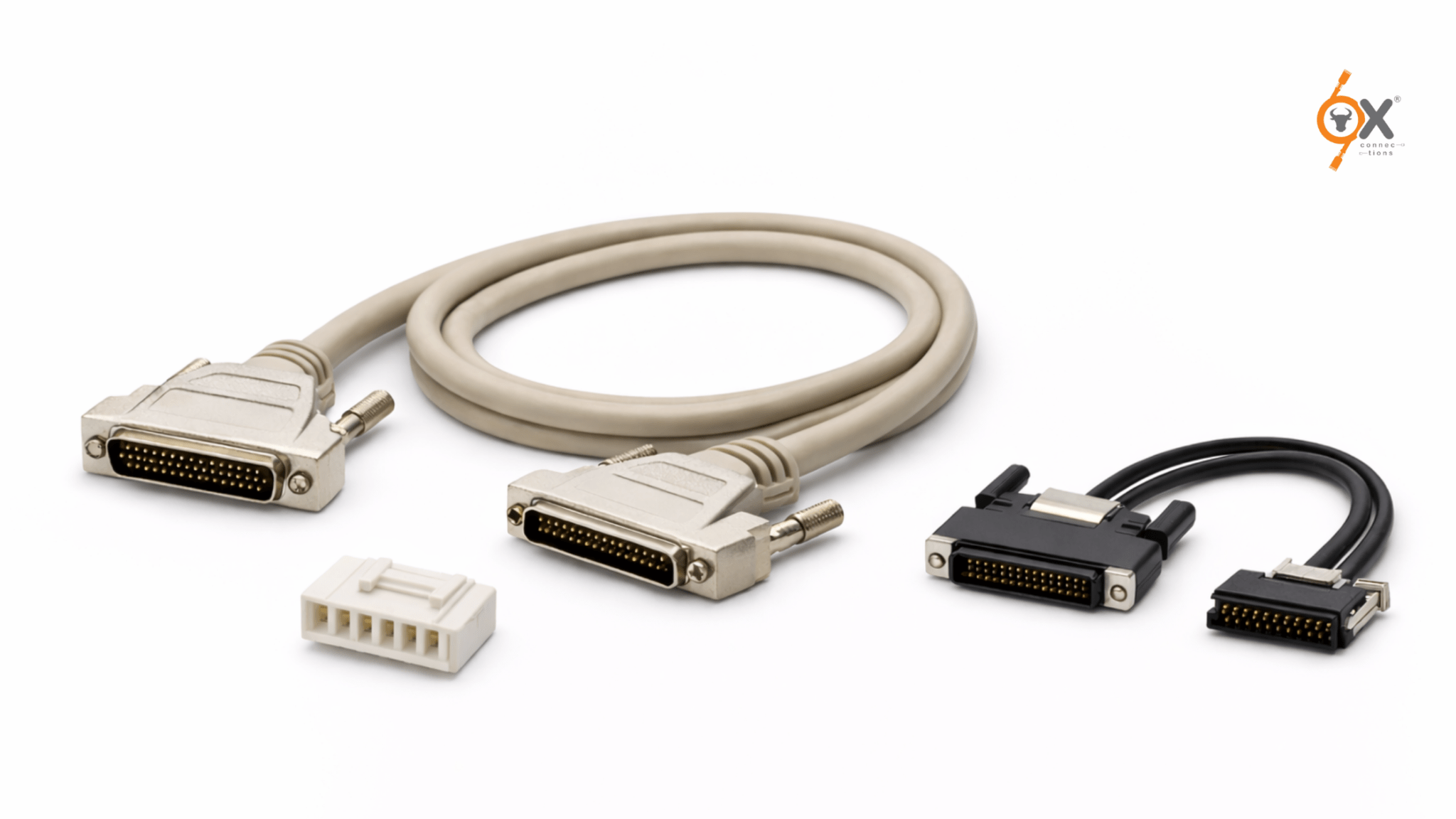
In the ever-evolving world of data storage and connectivity, few technologies have played as foundational a role as SCSI connectors. Once the backbone of enterprise computing, SCSI (Small Computer System Interface) connectors laid the groundwork for modern high-performance storage systems.
At Ox Connections, understanding legacy technologies like SCSI is not just about looking back – it’s about enabling better decisions for today’s complex connectivity needs.
What Are SCSI Connectors?
SCSI connectors are interfaces used to connect computers with peripheral devices such as hard drives, scanners, printers, and tape drives. Known for their high-speed data transfer and reliability, these connectors were widely adopted in servers and enterprise environments long before SATA and USB became mainstream.
Unlike simpler interfaces, SCSI allowed multiple devices to connect on a single bus, making it highly efficient for data-heavy operations.
SCSI Connector History: Where It All Began
The SCSI connector history dates back to the late 1970s and early 1980s, when there was a growing need for a standardized interface to connect multiple peripherals to computers.
Initially developed as SASI (Shugart Associates System Interface), it was later standardized as SCSI in 1986. This marked a major shift in computing, allowing:
- Faster data transfer rates
- Daisy-chaining of multiple devices
- Improved communication between systems and peripherals
For its time, SCSI was revolutionary – bringing enterprise-level performance to computing environments.
Evolution of SCSI Connectors Over Time
As technology advanced, SCSI connectors evolved significantly to meet increasing demands for speed, efficiency, and compact design.
1. Early SCSI (SCSI-1)
The first generation used bulky connectors like the Centronics 50-pin. While effective, these connectors were large and not very user-friendly.
2. SCSI-2 (Fast SCSI)
This version introduced improved speeds and more refined connectors such as:
- DB25 connectors
- High-density 50-pin connectors
It also enhanced compatibility and expanded device support.
3. SCSI-3 and Beyond (Ultra SCSI Variants)
With Ultra SCSI, Ultra2, Ultra160, and Ultra320, the interface saw major performance upgrades. Connector types evolved to include:
- 68-pin high-density connectors
- VHDCI (Very High Density Cable Interconnect)
These versions were widely used in data centers and enterprise storage systems, where speed and reliability were critical.
Types of SCSI Connectors
Understanding the types of SCSI connectors is essential for anyone dealing with legacy systems or specialized industrial applications.
1. Centronics 50-Pin Connector
- One of the earliest SCSI connectors
- Large and robust
- Common in older external devices
2. DB25 Connector
- Smaller than Centronics
- Used in early Apple systems
- Limited performance compared to later versions
3. High-Density 50-Pin (HD50)
- More compact design
- Improved usability
- Common in SCSI-2 implementations
4. 68-Pin Connectors
- Widely used in advanced SCSI versions
- Supports higher data transfer speeds
- Found in enterprise systems
5. VHDCI (Very High Density Cable Interconnect)
- Compact and high-performance
- Ideal for space-constrained environments
- Used in high-speed applications
At Ox Connections, we recognize that even legacy connector types still play a role in maintenance, upgrades, and compatibility solutions.
Why SCSI Was a Game-Changer
SCSI connectors weren’t just another interface – they were a technological leap.
Key Advantages:
- Multi-device support: Connect up to 16 devices on a single bus
- High reliability: Ideal for mission-critical systems
- Performance: Faster than many early alternatives
- Flexibility: Supported a wide range of devices
These features made SCSI the preferred choice for servers, workstations, and enterprise storage for decades.
Challenges and Limitations
Despite its strengths, SCSI connectors had certain drawbacks:
- Complex configuration (termination and ID settings)
- Bulky cables and connectors in early versions
- Higher cost compared to emerging alternatives
- Limited scalability in modern high-speed environments
As newer technologies emerged, these limitations paved the way for more advanced interfaces.
Transition to Modern Storage Interfaces
With the rise of SATA, SAS, and USB, traditional SCSI connectors gradually became less common in mainstream applications.
SATA (Serial ATA)
- Simpler and cost-effective
- Ideal for consumer storage
SAS (Serial Attached SCSI)
- Direct evolution of SCSI connectors
- Combines speed, scalability, and reliability
- Widely used in enterprise storage today
USB and Other Interfaces
- Plug-and-play convenience
- Suitable for general-purpose use
However, the influence of SCSI remains deeply embedded in modern storage technologies – especially in SAS architecture.
At Ox Connections, we help bridge this gap by offering solutions that support both legacy SCSI connectors and modern connectivity standards.
SCSI Connectors in Today’s World
While SCSI connectors are no longer dominant, they are far from obsolete.
Where They Are Still Used:
- Legacy enterprise systems
- Industrial equipment
- Medical devices
- Data recovery environments
Organizations often rely on SCSI-based systems due to their proven reliability and long lifecycle.
This creates a growing need for compatible connectors, adapters, and custom solutions – a space where Ox Connections delivers specialized expertise.
Why Understanding SCSI Still Matters
Even in a world dominated by modern interfaces, knowledge of SCSI connectors, types of SCSI connectors, and SCSI connector history is valuable for:
- System upgrades and migrations
- Troubleshooting legacy hardware
- Ensuring compatibility across devices
- Making informed infrastructure decisions
For engineers and businesses, this understanding can prevent costly downtime and ensure seamless operations.
How Ox Connections Supports Evolving Connectivity Needs
At Ox Connections, we go beyond just supplying connectors – we provide end-to-end connectivity solutions tailored to industry demands.
Our Expertise Includes:
- Legacy connector support (including SCSI connectors)
- High-performance I/O connectivity solutions
- Custom cable assemblies
- Industrial and enterprise-grade components
Whether you’re maintaining older systems or transitioning to modern storage infrastructure, Ox Connections ensures reliability, compatibility, and performance at every stage.
Conclusion
The evolution of SCSI connectors reflects the broader journey of data storage technology – from bulky, complex systems to today’s streamlined, high-speed interfaces.
While newer technologies have taken center stage, SCSI’s legacy continues to influence modern storage systems, particularly in enterprise environments.
For businesses navigating this transition, having the right partner makes all the difference. With deep expertise in both legacy and modern connectivity, OxConnections stands at the intersection of past innovation and future-ready solutions.