
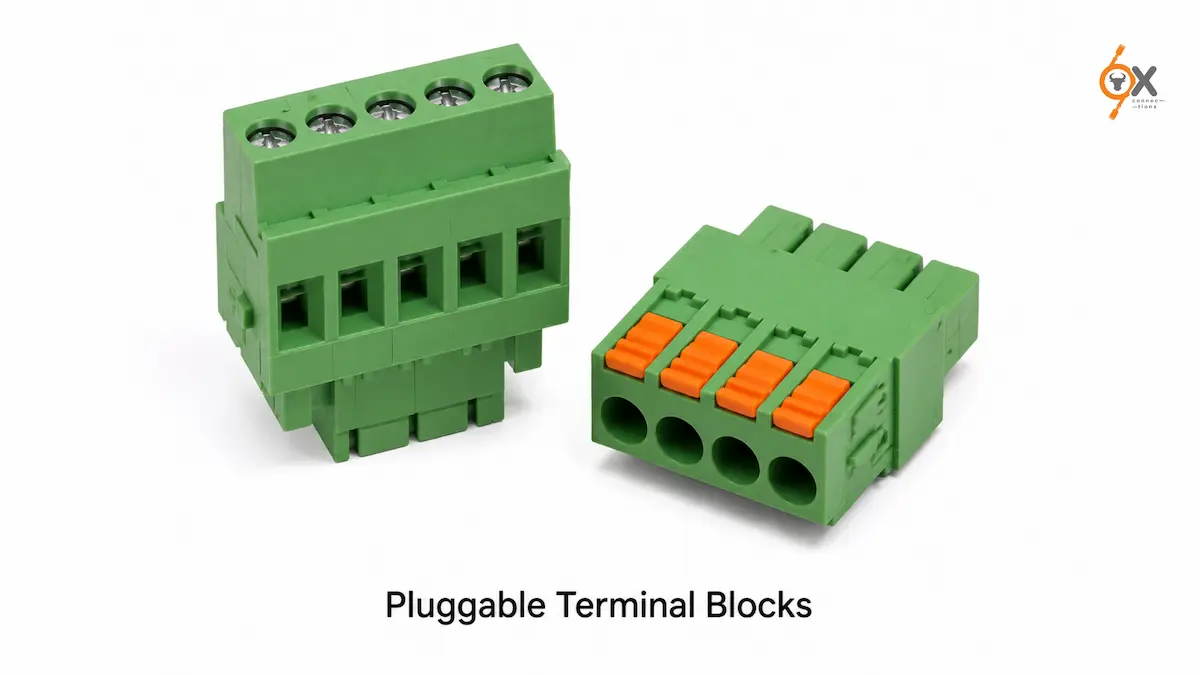
In this guide, we’ll explore how to choose the right Pluggable Terminal Blocks, what procurement teams should evaluate before sourcing them, and why selecting the right supplier is just as important as selecting the right product.
Could the Wrong Terminal Block Be Slowing Down Your Production Line?
Every minute of production downtime comes at a cost. Whether you’re manufacturing industrial control panels in Mumbai, automation equipment in Pune, or electrical systems for renewable energy projects in Gujarat, the reliability of every electrical connection directly impacts your product’s performance.
As India’s manufacturing sector continues to grow under initiatives like Make in India, OEMs, panel builders, and system integrators are looking beyond brand names alone. They need connector solutions that deliver dependable performance, shorter lead times, competitive pricing, and consistent availability.
Globally recognised manufacturers such as Degson have set strong benchmarks for industrial connectivity. At the same time, many Indian manufacturers are also evaluating technically equivalent Pluggable Terminal Blocks that offer the same application performance while improving procurement flexibility and local support.
That’s where Pluggable Terminal Blocks have become an increasingly preferred choice. Designed for quick installation, simplified maintenance, and modular electrical systems, they help businesses minimise downtime while improving service efficiency.
Why Pluggable Terminal Blocks Are Becoming the Preferred Choice
Industrial equipment today is expected to be smarter, easier to maintain, and faster to install. Whether it’s a PLC cabinet, industrial automation system, HVAC controller, or renewable energy installation, engineers are increasingly designing systems that simplify servicing without compromising reliability.
Traditional fixed wiring often requires technicians to disconnect multiple wires during maintenance, increasing labour time and the possibility of wiring errors.
Pluggable Terminal Blocks solve this challenge by allowing the plug section to be disconnected from the PCB-mounted header without removing individual conductors. Instead of rewiring the entire assembly, technicians can quickly disconnect, inspect, replace, and reconnect modules, significantly reducing maintenance time.
For OEMs, this means:
- Faster equipment assembly
- Simplified field servicing
- Reduced installation errors
- Lower maintenance costs
- Improved equipment uptime
As industrial systems become increasingly modular, these advantages make pluggable terminal blocks a practical choice across multiple industries.
Why More Indian Manufacturers Are Looking for Equivalent Connector Solutions
Today’s procurement decisions involve much more than purchasing a component that meets the required specifications. Businesses also consider inventory availability, technical support, pricing stability, and long-term supply continuity.
Global connector manufacturers like Degson have earned recognition for their modular connectivity solutions. However, many Indian OEMs and panel builders are now evaluating technically equivalent connector solutions that provide comparable electrical and mechanical performance while offering responsive local support and improved procurement flexibility.
When selecting an equivalent solution, businesses should focus on technical compatibility rather than brand recognition alone.
Important evaluation criteria include:
- Electrical ratings
- PCB footprint compatibility
- Housing material
- Contact reliability
- Operating temperature
- Product certifications
- Manufacturing consistency
- Supplier support
When these parameters align with application requirements, a technically equivalent connector can deliver dependable performance throughout the equipment’s operational life.
Where Are Pluggable Terminal Blocks Used?
One reason Pluggable Terminal Blocks have become so popular is their versatility. Their modular design makes them suitable for applications where electrical connections require both reliability and serviceability.
Common applications include:
- Industrial automation systems
- PLC and control panels
- Process control equipment
- HVAC systems
- Building automation
- Renewable energy systems
- Power distribution units
- Railway signalling
- EV charging infrastructure
- Medical equipment
- Industrial machinery
- Communication equipment
Across these applications, quick maintenance and dependable electrical connections contribute directly to operational efficiency.
What Should Buyers Consider Before Selecting PCB Terminal Blocks ?
Choosing the right connector involves more than matching the PCB layout. A reliable solution should support the application’s electrical, mechanical, and environmental requirements while allowing for future maintenance.
Here are some of the most important factors to evaluate.
1. Electrical Performance
Every application has unique operating requirements. Before selecting PCB Terminal Blocks, verify that the connector supports the required current and voltage ratings.
Choosing a connector with inadequate electrical capacity can affect long-term reliability and increase maintenance requirements.
2. PCB Compatibility
PCB pitch is one of the first factors engineers should verify.
Selecting an incorrect pitch can complicate assembly, require PCB redesign, and increase production costs.
Ensuring compatibility during the design stage helps simplify manufacturing while maintaining product consistency.
3. Wire Size Compatibility
Industrial applications use different conductor sizes depending on the equipment design.
The selected connector should securely accommodate the intended wire gauge while maintaining stable electrical contact throughout its service life.
4. Operating Environment
Electrical equipment rarely operates under ideal conditions.
Depending on the application, connectors may experience:
- Continuous vibration
- Elevated temperatures
- Dust
- Humidity
- Industrial chemicals
Selecting connectors designed for these environments improves long-term reliability while reducing maintenance frequency.
5. Ease of Maintenance
One of the biggest advantages of a Pluggable Connector Terminal Block is the ability to disconnect equipment without disturbing existing wiring.
For maintenance teams, this means quicker servicing, easier troubleshooting, and significantly reduced downtime.
Quick Procurement Checklist
Before finalising your connector selection, confirm the following:
- Current rating matches the application
- Voltage rating meets system requirements
- PCB pitch is compatible
- Wire gauge is supported
- Suitable for operating conditions
- Easy to maintain and replace
- Reliable inventory availability
- Technical documentation is available
These simple checks can help avoid costly procurement mistakes later.
How Modular Connectivity Improves Operational Efficiency
Manufacturers today are constantly looking for ways to improve productivity while reducing maintenance costs.
Modular connection systems contribute to both objectives.
Faster Installation
Pre-wired assemblies and plug-in connections simplify production while reducing installation time.
Easier Maintenance
Instead of disconnecting multiple wires, technicians can simply unplug and reconnect the connector module during servicing.
Reduced Wiring Errors
Factory-prepared wiring reduces manual handling and minimises the risk of incorrect wiring during installation.
Improved Equipment Availability
Shorter maintenance cycles mean equipment can return to operation more quickly, improving overall productivity.
Common Mistakes Buyers Make When Selecting
Pluggable Terminal Blocks
Even experienced procurement teams can make connector selection decisions based on immediate availability or pricing without considering long-term performance. While this may seem cost-effective initially, it often leads to higher maintenance costs and production delays over time.
Here are some common mistakes to avoid:
Choosing Based on Price Alone
Price is an important factor, but it shouldn’t be the only consideration. A lower-cost connector that requires frequent replacement or causes unexpected downtime can increase the overall cost of ownership.
Instead, evaluate the connector’s quality, durability, and suitability for your application.
Ignoring Environmental Conditions
Not every connector is designed to operate in demanding industrial environments.
For example, a connector used inside a clean electrical cabinet has very different requirements than one installed in machinery exposed to vibration, heat, or dust.
Selecting a connector without considering its operating environment can significantly reduce its service life.
Overlooking Future Maintenance
Equipment is rarely installed and left untouched for its entire lifecycle. Routine servicing, upgrades, and troubleshooting are inevitable.
One of the biggest advantages of Pluggable Terminal Blocks is their ability to simplify maintenance. Ignoring this benefit during the selection stage can result in longer service times and unnecessary rewiring later.
Selecting Incorrect Specifications
Even a small mismatch in PCB pitch, current rating, wire size, or terminal configuration can create installation issues and compromise system reliability.
Before finalising a purchase, always verify that the connector aligns with your application’s electrical and mechanical requirements.
Not Considering Supplier Reliability
A technically suitable connector offers little value if it cannot be sourced consistently.
Reliable inventory, technical documentation, responsive support, and dependable lead times are critical factors that directly affect production schedules.
Equivalent Doesn’t Mean Compromising on Quality
When sourcing industrial connectors, many procurement teams automatically associate “equivalent” with “lower quality.” In reality, a technically equivalent connector is one that matches the critical electrical, mechanical, and application-specific requirements of the original product.
Global manufacturers such as Degson have established strong benchmarks for modular connectivity. Today, many Indian OEMs and panel builders are also considering technically equivalent connector solutions that deliver comparable performance while offering greater procurement flexibility, competitive pricing, and responsive local support.
When evaluating an equivalent connector, focus on:
- Electrical ratings and current capacity
- PCB footprint and pitch compatibility
- Housing material and insulation quality
- Contact durability and mechanical strength
- Operating temperature range
- Product consistency across production batches
- Compliance with relevant industry standards
- Availability and after-sales support
The objective isn’t to find a cheaper alternative – it’s to find a connector that integrates seamlessly into your application while maintaining the reliability and performance your equipment demands.
Buying Checklist for Procurement Teams
Before placing an order, ask these questions:
- Does the connector meet the required electrical specifications?
- Is the PCB pitch compatible with the existing design?
- Does it support the required conductor size?
- Is it suitable for the intended operating environment?
- Will it simplify future maintenance?
- Can the supplier provide consistent inventory?
- Is technical support available if required?
- Does the connector comply with applicable industry standards?
Answering these questions before procurement helps minimise production delays and reduces the risk of costly redesigns or replacements.
Why Supplier Reliability Matters as Much as Product Quality
The quality of a connector is only one part of the equation. Choosing the right supplier is equally important for ensuring uninterrupted production and long-term project success.
Manufacturers today expect more than just components – they need partners who can support ongoing production with:
- Consistent product quality
- Reliable inventory
- Stable lead times
- Technical documentation
- Application support
- Responsive customer service
Whether you’re sourcing connectors from established global brands like Degson or evaluating technically equivalent alternatives, working with a dependable supplier helps reduce procurement risks and improve supply chain efficiency.
For OEMs managing large-scale production, reliable supplier partnerships often become a competitive advantage.
Why More Indian OEMs Are Exploring Equivalent Connector Solutions
India’s manufacturing landscape is evolving rapidly. As businesses expand production capabilities and compete in global markets, procurement decisions increasingly focus on balancing quality, availability, and cost efficiency.
Rather than relying solely on a single international brand, many OEMs are evaluating technically equivalent connector solutions that meet the same application requirements while improving sourcing flexibility.
For many organisations, this approach offers several advantages:
- Reduced procurement risks
- Better inventory availability
- Competitive pricing
- Local technical support
- Faster delivery timelines
- Greater supply chain resilience
The key is selecting a supplier that consistently delivers products meeting the required electrical and mechanical specifications, ensuring dependable performance without compromising quality.
Conclusion
As industrial automation, renewable energy, smart infrastructure, and advanced manufacturing continue to grow across India, the demand for dependable and serviceable connectivity solutions is increasing. Pluggable Terminal Blocks have become an essential component in modern electrical systems because they simplify installation, reduce maintenance time, and improve operational efficiency.
Selecting the right PCB Terminal Blocks or Pluggable Connector Terminal Block requires more than matching specifications on paper. It involves evaluating electrical performance, environmental suitability, ease of maintenance, and the reliability of the supplier behind the product.
While global manufacturers such as Degson continue to set recognised benchmarks in industrial connectivity, many businesses are also choosing technically equivalent connector solutions that deliver comparable application performance while providing greater procurement flexibility and dependable local support.
At OXConnections, we help OEMs, panel builders, automation companies, and equipment manufacturers source high-quality industrial connectivity solutions with confidence. Our portfolio includes a comprehensive range of Pluggable Terminal Blocks and other connector solutions that serve as technically equivalent alternatives to globally recognised brands such as Degson. Backed by consistent inventory, responsive technical assistance, and a commitment to quality, OX Connections enables businesses to build reliable electrical systems while ensuring a more agile and efficient supply chain.