
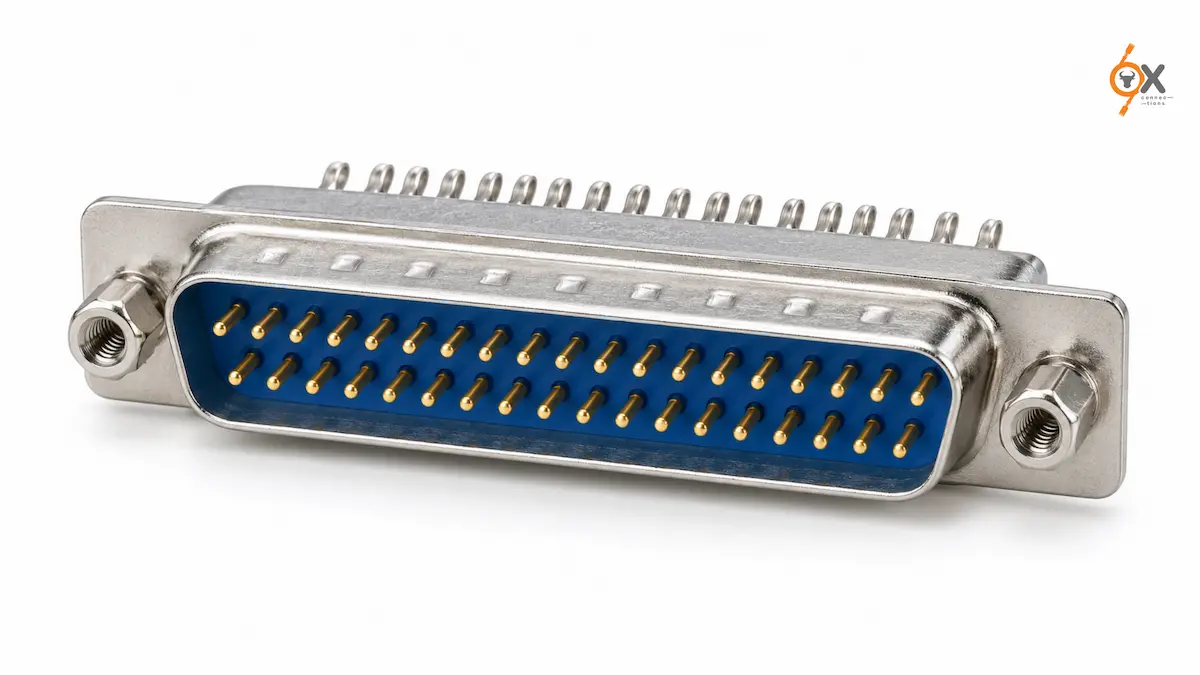
Some control panels carry too many signals for a 25-pin connector to handle cleanly. The 37-Pin D-Sub Connector picks up right where that smaller size runs out of room. It sits among the larger D-Sub sizes, built for equipment that genuinely needs this many contacts.
A Real Step Up in Capacity
The jump from 25 to 37 pins isn’t small. That’s 12 extra contacts packed into a wider shell. Engineers reach for this size when a design carries multiple independent circuits at once. Multi-axis motor controllers are a good example. Each axis often needs its own control and feedback lines. Thirty-seven pins can carry several of these axes through one connection point.
Where This Connector Actually Earns Its Keep
Industrial control systems managing several subsystems from one cabinet often standardise on this size. Test equipment wiring multiple channels into one interface relies on it too. Communication equipment with dense signal requirements uses the extra pin count to avoid running several smaller connectors side by side. Instrumentation racks reading many sensors at once also lean on this connector to keep the wiring manageable. Choosing this size for a simpler job usually means paying for capacity that never gets used.
D-Sub Connector Applications That Demand This Density
D-Sub Connector Applications built around 37 pins usually involve equipment with several independent signal groups. Automation panels use it to bring multiple actuator and sensor lines back to one controller. Legacy computing systems used this size for early parallel networking interfaces. Some of that hardware is still running today. Medical devices with multiple monitoring channels sometimes rely on this connector too. The reason is simple: it matches the actual signal count without adding unnecessary bulk.
Mounting Options for Every Assembly Line
Ox Connections offers the 37-pin D-Sub across solder-type, crimp, IDC, and PCB-mounting versions. A solder-type connector suits a technician building one cable at a time. A crimp version suits panel builders running larger batches, since it keeps every termination consistent. IDC versions save time on ribbon cable jobs. PCB-mount versions, in straight or right-angle orientation, solder directly onto a board for a clean internal layout. Matching the mounting type to the actual production volume avoids costly rework further down the line.
Why Locking Hardware Matters More at This Size
A wider connector carries more weight from its own cable bundle. That extra pull makes a secure locking mechanism even more important. Threaded jack screws keep the shell seated tightly against its mating half. They also resist the vibration common in industrial cabinets. A loose connection at this pin count can knock out several signals at once. That’s exactly why proper locking hardware is worth checking before installation.
Sourcing a D-Sub Connector India Complex Panels Need
D-Sub Connector India buyers building dense control panels need a supplier who treats this size as everyday stock. Ox Connections carries the 37-pin version alongside 9, 15, 25, 26, 44, 50, 62, 78, and 104 pin configurations. Over 5,000 products sit in stock. Quick dispatch across India keeps larger, more complex builds on schedule.
Cable Bulk Deserves Planning Too
Thirty-seven conductors terminating into one connector create a noticeably thick cable bundle. Panel layouts need enough clearance for the connector body and a proper bend radius. Skipping this step during design often means a cramped, awkward installation once the hardware arrives. Labelling each conductor at termination also saves considerable time if a fault ever needs tracing later. A wiring diagram kept with the equipment itself helps future technicians far more than one buried in a project folder somewhere.
A Note on Testing Before Commissioning
A connector carrying this many signals deserves a proper continuity check before a system goes live. Testing every pin individually catches a marginal contact long before it turns into an intermittent fault. Skipping this step to save time during installation often costs far more time later. A strange reading downstream can take hours to trace back through 37 possible contacts without a clear starting point.
Final Word
The 37-Pin D-Sub Connector suits panels that have genuinely outgrown a smaller interface. It’s not meant for every project with a few extra wires. Match mounting style and locking hardware to the actual application. Plan for cable bulk before the layout is finalised. Ox Connections offers D-Sub connectors across the full 9 to 104 pin range. Choices include solder, crimp, IDC, power, waterproof, and Centronics variants. Over 5,000 products stay in stock, with quick dispatch across India.
Quick Answers
What kind of equipment needs a 37-pin D-Sub connector?
Equipment with several independent signal groups, such as multi-axis motor controllers, dense test setups, or instrumentation racks with many channels.
Is this connector harder to install than smaller sizes?
It demands more care during mating. The wider shell and thicker cable bundle leave less room for a misaligned attempt.
Should I plan for extra panel space?
Yes. The cable bundle behind 37 conductors is noticeably thicker. Reserve clearance and a proper bend radius during the layout stage.
One Reply to “37-Pin D-Sub Connector: Built for Panels That Outgrew a Simple Interface”
44-Pin D-Sub Connector: A High-Density Fit for Compact Control PanelsSeptember 24, 2026
[…] panels need more signal density than a 37-pin connector offers. But that density shouldn’t come with unnecessary bulk. The 44-Pin D-Sub Connector […]