
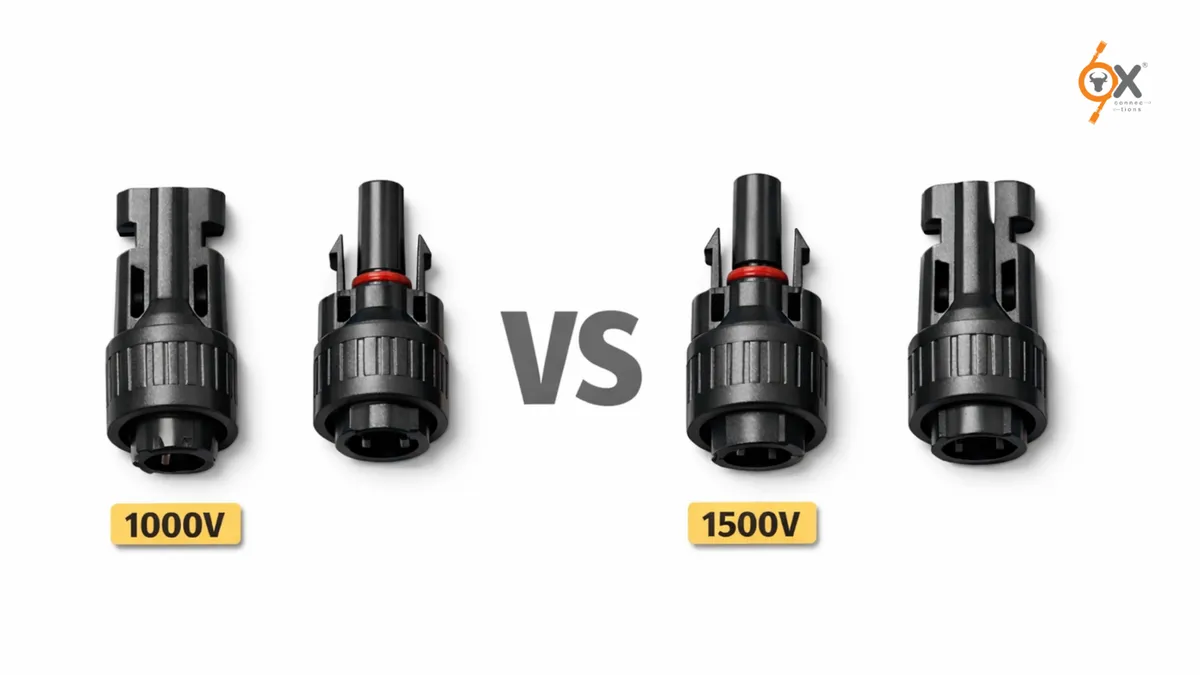
As solar installations scale up in size and complexity, choosing the correct connector voltage rating becomes increasingly important. This is where the comparison of 1000V vs 1500V MC4 connector options becomes relevant. Understanding the difference between these two voltage ratings helps installers, engineers, and project developers design safer and more efficient photovoltaic systems.
In modern photovoltaic installations, connectors play a critical role in ensuring the safe and efficient transfer of power between solar panels and other system components. Among the many connection technologies available, the MC4 connector has become the industry standard used in most solar power systems worldwide.
This guide explains the solar MC4 connector voltage rating, explores the differences between MC4 solar connector 1500V vs 1000V, and helps determine which option is best suited for different solar applications.
Understanding MC4 Connectors in Solar Systems
MC4 connectors are electrical connectors commonly used to connect solar panels in photovoltaic arrays. The name “MC4” originates from Multi-Contact (now Stäubli), the manufacturer that introduced the connector, while the “4” refers to the 4-mm diameter contact pin used inside the connector.
These connectors are designed to create a secure electrical connection between solar modules while maintaining resistance to environmental conditions such as moisture, UV radiation, and temperature variations.
Typical characteristics of MC4 connectors include:
- Snap-lock design for secure connections
- Touch-safe contacts to prevent accidental electric shock
- IP67 or higher waterproof protection
- Compatibility with standard solar DC cables
- Reliable performance in outdoor environments
Due to their reliability and simple installation method, MC4 connectors are used in more than 90% of new solar installations globally.
However, not all MC4 connectors are identical. One of the most important specifications installers must consider is the solar MC4 connector voltage rating.
What Does Solar MC4 Connector Voltage Rating Mean?
The solar MC4 connector voltage rating defines the maximum DC voltage that a connector can safely handle during operation. Voltage ratings are crucial because photovoltaic systems generate direct current (DC), which behaves differently from alternating current (AC) and can create stronger electrical arcs if connections fail.
Traditional MC4 connectors are commonly rated at 1000V or 1500V DC, depending on their insulation design and certification standards.
Using a connector with a lower voltage rating than the system voltage can result in:
- Overheating of connectors
- Electrical arcing
- System failure
- Safety hazards in solar installations
Therefore, selecting the correct voltage rating is essential when designing solar arrays, especially as modern solar farms continue to increase system voltage for improved efficiency.
1000V vs 1500V MC4 Connector: Key Differences
When comparing 1000V vs 1500V MC4 connector options, the primary difference lies in the maximum system voltage they can safely handle. However, the choice between these two options also affects system design, efficiency, and installation costs.
1. Voltage Capacity
A 1000V MC4 connector is designed for solar systems where the total string voltage does not exceed 1000 volts. These connectors are commonly used in residential and small commercial solar installations.
In contrast, a 1500V MC4 connector supports higher voltage levels, allowing longer strings of solar modules to be connected in series. This capability makes them suitable for large-scale commercial and utility solar plants.
Higher voltage capacity allows solar systems to transmit more power with fewer electrical losses.
2. System Efficiency
One of the major advantages of using 1500V solar systems is improved efficiency. By increasing system voltage, more solar panels can be connected in a single string, reducing the need for additional wiring and electrical components.
Higher voltage systems can reduce the number of strings required in a solar array, which ultimately lowers installation costs and simplifies system architecture.
For this reason, many large solar projects are transitioning toward 1500V designs.
3. Installation Scale
Another key factor in the MC4 solar connector 1500V vs 1000V comparison is the scale of the solar project.
1000V MC4 connectors are typically used in:
- Residential rooftop solar systems
- Small commercial installations
- Distributed solar projects
Meanwhile, 1500V MC4 connectors are preferred for:
- Utility-scale solar farms
- Large commercial solar plants
- High-capacity PV arrays
The choice depends largely on the total voltage of the photovoltaic string design.
4. Component Requirements
Higher voltage systems generally require components designed specifically for those voltage levels. This includes:
- Solar inverters
- Combiner boxes
- Cables and connectors
- Protection devices
In a 1500V system, all components must be rated for that voltage to ensure safety and compliance with solar design standards.
Technical Specifications of MC4 Connectors
Although voltage rating is the most obvious difference, MC4 connectors share several common technical characteristics regardless of whether they are rated for 1000V or 1500V.
Typical MC4 connector specifications include:
- Rated voltage: 1000V DC or 1500V DC
- Rated current: 30A–40A depending on cable size
- Contact resistance: less than 0.5 mΩ
- Operating temperature range: −40°C to +85°C or higher
- Protection rating: IP67 or IP68 waterproof design
- Cable compatibility: 2.5 mm² to 6 mm² solar cables
These specifications ensure reliable electrical performance even in harsh outdoor environments where solar panels operate continuously for decades.
Advantages of 1500V Solar Systems
The increasing adoption of 1500V MC4 connectors is largely driven by the advantages offered by higher-voltage solar installations.
Reduced System Costs
Higher voltage systems allow more panels per string, which reduces the number of combiner boxes, cables, and electrical components required.
Improved Energy Efficiency
Higher voltage reduces resistive power losses across long cable runs, improving overall system performance.
Simplified System Design
Fewer strings and cables simplify installation and maintenance for large photovoltaic projects.
These advantages are particularly important for utility-scale solar farms where even small efficiency improvements can translate into significant cost savings.
When to Choose a 1000V MC4 Connector
Despite the benefits of higher voltage systems, 1000V MC4 connectors remain widely used in many solar installations.
They are a suitable choice when:
- The system size is relatively small
- The inverter supports 1000V DC input
- Installation costs must remain low
- The project involves residential rooftops
Many residential and small commercial systems still operate efficiently with 1000V string designs.
When to Choose a 1500V MC4 Connector
A 1500V MC4 connector is typically recommended for larger solar projects where system voltage optimization is important.
It is the preferred choice when:
- Designing large commercial or industrial solar systems
- Building utility-scale solar farms
- Reducing wiring and balance-of-system costs
- Increasing overall PV array efficiency
As the solar industry continues to grow, 1500V systems are becoming increasingly common for high-capacity installations.
Choosing the Right MC4 Connector for Your Solar Project
Selecting the right connector depends on several technical and project-specific factors.
Installers and engineers should consider:
- Total system voltage
- Type of solar inverter used
- Size of the solar installation
- Local electrical regulations
- Cable compatibility and safety standards
Ensuring that the connector voltage rating matches the system design is essential for maintaining reliability and preventing electrical hazards.
Conclusion
Understanding the difference between 1000V vs 1500V MC4 connector options is crucial when designing modern photovoltaic systems. While both connectors provide reliable electrical connections, the correct choice depends on system voltage, project size, and efficiency requirements.
A 1000V MC4 connector is ideal for residential and small commercial solar installations, where system voltage levels remain relatively moderate. In contrast, a 1500V MC4 connector is designed for large-scale solar arrays that benefit from higher voltage efficiency and reduced system costs.
By carefully evaluating the solar MC4 connector voltage rating and understanding the technical differences in MC4 solar connector 1500V vs 1000V, solar professionals can ensure safer installations, optimized system performance, and long-term reliability for photovoltaic projects.