
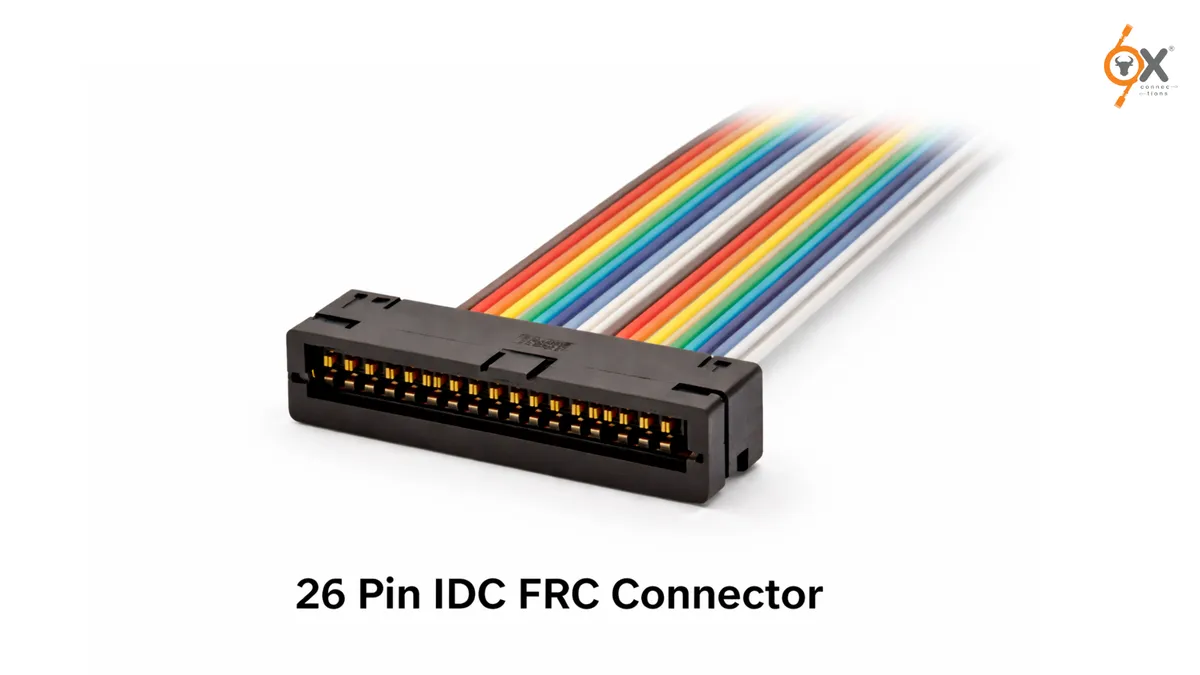
Modern electronic systems rely on fast, accurate, and dependable signal transmission between printed circuit boards (PCBs), control units, sensors, displays, and peripheral devices. Whether it is industrial automation equipment, medical electronics, telecommunications hardware, or consumer appliances, every electronic assembly depends on connectors that can maintain stable electrical performance over thousands of operating cycles. Among the most widely used interconnection solutions in electronic manufacturing is the 26 Pin IDC FRC Connector. Known for its compact design, easy assembly, and reliable performance, this connector has become a preferred choice for engineers and OEMs requiring efficient ribbon cable termination and PCB connectivity.
Its ability to create multiple electrical connections simultaneously while reducing assembly time makes it particularly valuable in high-volume manufacturing environments. Combined with the versatility of ribbon cables, the connector offers an economical and dependable solution for a wide range of applications.
In this guide, we will explore the construction, working principle, pin configuration, technical specifications, advantages, and industrial uses of the 26 Pin IDC FRC Connector, helping engineers and procurement teams understand why it remains an industry-standard interconnect solution.
Understanding the 26 Pin IDC FRC Connector
A 26 Pin IDC FRC Connector is a type of insulation displacement connector designed to terminate flat ribbon cables without requiring individual wire stripping or soldering.
The term IDC stands for Insulation Displacement Contact, while FRC refers to Flat Ribbon Cable.
Instead of removing insulation manually, specially designed metal contacts pierce the cable insulation and establish electrical contact directly with the conductor inside. This process significantly simplifies cable assembly while ensuring consistent connectivity.
The connector is commonly used for:
- PCB-to-PCB communication
- PCB-to-cable connections
- Internal electronic wiring
- Control systems
- Embedded electronics
- Industrial equipment interfaces
Because multiple conductors can be terminated simultaneously, the IDC Ribbon Cable Connector provides a highly efficient alternative to traditional wiring methods.
How an IDC Connector Works
The operating principle behind an IDC connector is surprisingly simple yet highly effective.
Each contact inside the connector features a precision-engineered slot slightly smaller than the conductor diameter.
When the ribbon cable is pressed into the connector:
- The conductor enters the slot.
- The metal contact cuts through the insulation.
- Direct electrical contact is established.
- Mechanical retention secures the conductor in place.
This eliminates several traditional assembly steps, including:
- Wire stripping
- Crimping individual conductors
- Soldering
- Manual termination
The result is faster manufacturing, reduced labour costs, and highly repeatable electrical performance.
Typical Pin Configuration of a 26 Pin IDC FRC Connector
As the name suggests, a 26 Pin Ribbon Cable Connector contains 26 electrical contacts arranged in two rows.
A common configuration includes:
| Parameter | Specification |
| Total Pins | 26 |
| Row Arrangement | 2 × 13 |
| Pitch | Typically 2.54 mm |
| Cable Type | Flat Ribbon Cable |
| Mounting Style | PCB Header Interface |
| Termination Method | IDC |
| Contact Material | Copper Alloy |
| Contact Plating | Tin or Gold Plating |
Pin numbering generally alternates between rows to maintain proper signal routing and cable identification.
Accurate pin orientation is critical during assembly to ensure correct signal transmission and prevent wiring errors.
Key Components of a 26 Pin IDC FRC Connector
Understanding the connector’s construction helps explain its reliability and widespread adoption.
Connector Housing
The housing is typically manufactured from durable engineering thermoplastics.
Its purpose is to:
- Protect contacts
- Maintain alignment
- Provide mechanical stability
- Resist environmental stress
IDC Contacts
These precision metal contacts perform the actual electrical connection.
Their design ensures:
- Consistent conductivity
- Strong retention force
- Low contact resistance
- Long-term reliability
Strain Relief Mechanism
Many connector designs include integrated strain relief components.
Benefits include:
- Reduced cable stress
- Improved durability
- Enhanced vibration resistance
- Better long-term performance
Polarization Features
Polarized housings prevent incorrect insertion and reduce assembly errors.
This is particularly important in industrial and high-volume manufacturing environments.
Technical Specifications to Consider
When selecting a FRC Connector, engineers evaluate several performance characteristics.
Contact Resistance
Low contact resistance ensures efficient electrical signal transfer with minimal energy loss.
Insulation Resistance
High insulation resistance prevents signal leakage and enhances circuit reliability.
Current Rating
The connector must support the required electrical load without overheating.
Operating Temperature Range
Industrial applications often demand reliable performance across varying temperatures.
Durability
Repeated insertion and removal cycles should not compromise electrical performance.
Mechanical Strength
A quality connector should withstand vibration, movement, and routine handling without connection failure.
These specifications play a vital role in ensuring dependable system performance.
Advantages of Using a 26 Pin IDC FRC Connector
Faster Assembly
One of the primary advantages of an IDC Ribbon Cable Connector is assembly efficiency.
Instead of terminating individual wires separately, all conductors can be connected simultaneously.
This significantly reduces:
- Production time
- Assembly complexity
- Labour requirements
Consistent Electrical Performance
The controlled termination process produces highly repeatable electrical connections.
This consistency improves:
- Signal integrity
- Manufacturing quality
- Product reliability
Reduced Wiring Errors
Ribbon cables maintain conductor order automatically.
As a result, assembly personnel face fewer wiring mistakes compared to discrete wire installations.
Cost-Effective Manufacturing
Lower assembly costs and reduced production time contribute to overall manufacturing efficiency.
This makes the connector particularly attractive for OEM production environments.
Compact Design
The connector occupies minimal space while supporting multiple signal paths.
Compact dimensions are especially valuable in modern electronics where space optimization is a critical design consideration.
Common Industrial Applications
The versatility of the 26 Pin IDC FRC Connector has made it a standard component across numerous industries.
Industrial Automation Systems
Automation equipment frequently relies on ribbon cable assemblies for internal communication.
Applications include:
- PLC systems
- Control panels
- HMI interfaces
- Sensor modules
- Industrial controllers
Consumer Electronics
Many electronic products utilize ribbon cable connections for compact internal wiring.
Examples include:
- Audio equipment
- Display modules
- Printers
- Home appliances
- Embedded control systems
Telecommunications Equipment
Telecommunication hardware often requires organized signal routing between boards and modules.
IDC connectors help simplify these interconnections while maintaining signal integrity.
Medical Devices
Medical electronics demand dependable electrical connectivity for accurate performance.
Common applications include:
- Monitoring systems
- Diagnostic equipment
- Laboratory instruments
- Imaging systems
Computing and Peripheral Devices
Ribbon cable assemblies continue to serve important functions in computing hardware and peripheral equipment where organized multi-conductor connections are required.
Selecting the Right FRC Connector for Your Application
Not all connectors are identical, and choosing the right one requires careful evaluation.
Important factors include:
Pin Count Requirements
Ensure the connector matches the required number of conductors.
Cable Compatibility
Verify compatibility with the intended ribbon cable dimensions and specifications.
Environmental Conditions
Consider:
- Temperature exposure
- Humidity
- Dust levels
- Mechanical vibration
Electrical Requirements
Review:
- Current rating
- Voltage rating
- Signal characteristics
- Contact plating requirements
Assembly Method
Choose a connector design that aligns with manufacturing capabilities and assembly processes.
Making the correct selection improves both system reliability and long-term performance.
Why Connector Quality Matters
Connectors may appear simple, but they often determine the reliability of an entire electronic system.
Poor-quality connectors can contribute to:
- Signal interruption
- Contact failure
- Increased maintenance
- Equipment downtime
- Reduced product lifespan
For OEMs and manufacturers, selecting high-quality interconnect solutions is essential for maintaining consistent product performance.
Companies seeking alternatives to expensive imported connector brands often prioritize suppliers that offer certified quality, dependable availability, and cost-effective solutions without compromising performance. This is one reason manufacturers across sectors continue to source connector solutions from providers such as OX Connections, where quality, certification compliance, and supply reliability remain key priorities.
Future Relevance of IDC Ribbon Cable Connectors
Despite advances in wireless communication and high-density interconnect technologies, ribbon cable connectors remain highly relevant.
Their advantages continue to support:
- Cost-sensitive applications
- Industrial equipment
- Embedded electronics
- Control systems
- Internal device wiring
As electronic products become increasingly compact and interconnected, the demand for reliable, efficient, and economical cable termination solutions is expected to remain strong.
The 26 Pin IDC FRC Connector continues to provide an excellent balance of performance, affordability, and manufacturing efficiency, making it a dependable choice for modern electronic designs.
Conclusion
The 26 Pin IDC FRC Connector remains one of the most practical and widely used solutions for ribbon cable termination and PCB interconnection. Its insulation displacement technology simplifies assembly, reduces production costs, and delivers consistent electrical performance across a broad range of applications.
From industrial automation and telecommunications equipment to medical devices and consumer electronics, these connectors play a critical role in ensuring reliable signal transmission and organized internal wiring. Their compact design, ease of installation, and proven durability make them a preferred choice for engineers and manufacturers worldwide.
For organizations seeking dependable FRC Connector solutions with strong quality standards, competitive pricing, and readily available inventory, trusted suppliers such as OXConnections offer practical alternatives to high-cost imported connector brands while supporting the evolving needs of modern electronic manufacturing.
Frequently Asked Questions
1. What is a 26 Pin IDC FRC Connector used for?
A 26 Pin IDC FRC Connector is primarily used for connecting flat ribbon cables to PCBs in industrial automation systems, consumer electronics, telecommunications equipment, medical devices, and embedded electronic applications.
2. What is the advantage of an IDC Ribbon Cable Connector?
An IDC Ribbon Cable Connector eliminates the need for wire stripping and soldering, enabling faster assembly, reduced labour costs, improved consistency, and reliable electrical connections.
3. Can a 26 Pin Ribbon Cable Connector be used in industrial environments?
Yes. When manufactured to appropriate quality standards, a 26 Pin Ribbon Cable Connector can provide dependable performance in industrial automation systems, control panels, instrumentation equipment, and other demanding applications.