
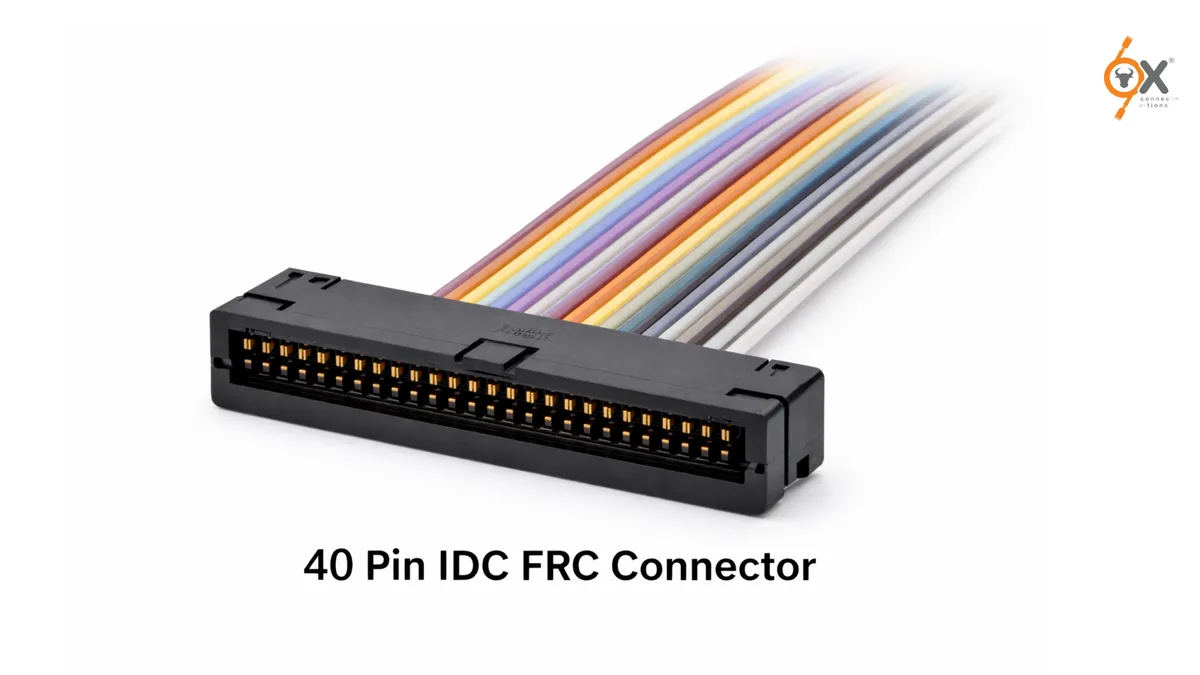
As electronic systems become more sophisticated, the number of internal connections continues to increase. Managing these connections efficiently is essential for reducing assembly time, improving maintenance, and maintaining signal integrity. This is where the 40 Pin IDC FRC Connector becomes a valuable solution.
Designed to terminate flat ribbon cables quickly and reliably, the 40 Pin IDC FRC Connector allows multiple signals to be routed through a single compact interface. Its combination of simplicity, durability, and cost-effectiveness has made it a preferred choice across industrial automation, telecommunications, instrumentation, embedded electronics, and numerous OEM applications.
Despite rapid advancements in connectivity technologies, IDC-based ribbon cable systems continue to be widely used because they offer practical advantages that modern manufacturers still rely on every day.
Understanding the 40 Pin IDC FRC Connector
A 40 Pin IDC FRC Connector is designed to connect a 40-conductor flat ribbon cable to a compatible PCB header or electronic interface. The connector uses IDC (Insulation Displacement Contact) technology, which enables electrical connections to be established without stripping wire insulation or soldering individual conductors.
Instead of preparing each wire separately, the connector’s contacts pierce through the insulation and make direct contact with the conductor. This significantly reduces assembly time while ensuring consistent electrical performance across all connections.
A typical connector assembly includes:
- Connector housing
- Precision IDC contacts
- Polarization key
- Strain relief mechanism
- Ribbon cable interface
Together, these components provide a secure and dependable connection suitable for demanding industrial and commercial environments.
Why IDC Technology Continues to Be Relevant
Many electronic systems require dozens of signals to travel between circuit boards, modules, sensors, displays, and controllers. Using individual wires for every connection can quickly create complexity during assembly and servicing.
The IDC Ribbon Cable Connector addresses this challenge by allowing all conductors to be organized within a flat cable assembly. This improves cable routing, simplifies installation, and reduces the likelihood of wiring mistakes.
Because IDC technology eliminates manual wire stripping and soldering, production teams can assemble cable harnesses faster and more consistently. For manufacturers producing equipment at scale, this translates directly into improved efficiency and reduced labor costs.
These practical benefits explain why IDC connectors remain a standard component in many industries today.
Key Features of a 40 Pin IDC FRC Connector
The popularity of the FRC Connector is largely due to its balance of performance, convenience, and reliability.
Supports Multiple Signal Connections
With forty available contact positions, the connector can accommodate numerous signal paths within a single compact assembly. This helps reduce wiring complexity and improve organization.
Faster Assembly Process
IDC termination technology enables simultaneous connection of all conductors, significantly reducing installation time compared to conventional wiring methods.
Reliable Electrical Contact
The precision-engineered contacts create stable conductor engagement, supporting dependable signal transmission over extended periods of operation.
Compact Design
The connector occupies minimal space while supporting high-density connectivity requirements, making it suitable for modern electronic systems.
Polarized Construction
Most 40 Pin IDC FRC Connectors incorporate keying features that help prevent incorrect installation and reduce assembly errors.
Improved Serviceability
Organized ribbon cable assemblies simplify maintenance, inspection, and troubleshooting activities throughout the equipment lifecycle.
Common Applications of 40 Pin IDC FRC Connectors
The versatility of the 40 Pin IDC FRC Connector makes it suitable for a broad range of industries and electronic systems.
Industrial Automation Equipment
Manufacturing facilities increasingly rely on automated systems that require multiple communication and control signals.
Common applications include:
- PLC systems
- Control cabinets
- Industrial machinery
- HMI interfaces
- I/O modules
- Monitoring systems
Ribbon cable connectivity helps maintain organized panel layouts while simplifying maintenance procedures.
Telecommunications and Networking Equipment
Reliable communication between internal modules is essential in networking and telecommunications hardware.
Applications include:
- Network switches
- Communication gateways
- Telecom interface boards
- Signal processing systems
- Data communication equipment
Embedded Electronics
Embedded systems frequently require compact internal wiring solutions. A Ribbon Cable Connector provides efficient signal routing between processors, displays, sensors, and peripheral devices.
Testing and Measurement Equipment
Laboratory instruments and industrial testing systems often contain multiple interconnected PCBs. IDC connectivity helps manufacturers maintain organized internal layouts while ensuring reliable performance.
Consumer and Commercial Electronics
Many electronic devices utilize ribbon cable assemblies to connect displays, control boards, interface modules, and other internal components.
Advantages for OEM Manufacturers
For OEMs, every component must contribute to both product reliability and manufacturing efficiency.
One major advantage of the IDC Ribbon Cable Connector is reduced assembly complexity. By terminating multiple conductors simultaneously, manufacturers can significantly improve production throughput while maintaining consistency.
Ribbon cable assemblies also improve internal cable management. Organized wiring not only enhances aesthetics but also simplifies future servicing and troubleshooting.
The compact nature of the connector allows engineers to optimize available space without sacrificing accessibility or performance.
Additionally, IDC technology provides repeatable termination quality, helping manufacturers achieve consistent results across large production volumes.
Choosing the Right 40 Pin IDC FRC Connector
Selecting the correct connector requires careful evaluation of system requirements.
Important factors include:
Connector Pitch
Common pitch options include:
- 54 mm
- 00 mm
- 27 mm
The chosen pitch must match the corresponding PCB header and cable assembly.
Electrical Requirements
Engineers should verify:
- Current rating
- Voltage rating
- Signal requirements
- Environmental specifications
Cable Compatibility
The connector must be compatible with the selected ribbon cable’s conductor count and wire gauge.
Installation Environment
Industrial applications may require additional durability to withstand vibration, temperature fluctuations, and continuous operation.
Choosing a high-quality connector can significantly improve long-term system reliability and reduce maintenance costs.
Installation Best Practices
Proper installation plays an important role in achieving reliable performance.
Before termination, installers should verify the orientation of Pin 1, typically identified by the red stripe on the ribbon cable.
Using appropriate IDC pressing tools helps ensure consistent conductor engagement and reliable electrical contact across all positions.
It is also important to avoid excessive cable bending or mechanical stress near the connector. Proper strain relief improves durability and minimizes the risk of intermittent connections during operation.
Routine visual inspection during assembly helps identify alignment issues before products move into production or field deployment.
A Smart Alternative for Cost-Conscious Manufacturers
Many manufacturers today face challenges such as rising procurement costs, long lead times, and large minimum order quantities from global connector brands.
For businesses seeking reliable alternatives, OXConnections supplies high-quality connector solutions designed to meet modern manufacturing requirements. With UL, RoHS, and CE certifications, OX supports industries including industrial automation, solar energy, renewable energy, EV manufacturing, medical devices, and home appliances.
By offering dependable performance, competitive pricing, and readily available inventory, OX helps manufacturers maintain production schedules while controlling costs.
Conclusion
The 40 Pin IDC FRC Connector continues to be one of the most practical solutions for organized multi-signal connectivity in modern electronic systems. Its ability to simplify assembly, improve cable management, and provide reliable electrical performance makes it a trusted choice across industrial automation, telecommunications, embedded electronics, instrumentation, and OEM manufacturing.
As manufacturers continue to prioritize efficiency, reliability, and scalability, the FRC Connector remains a proven technology capable of meeting the connectivity demands of today’s electronic designs. Whether used in an industrial control system, communication device, testing instrument, or embedded product, the IDC Ribbon Cable Connector delivers the dependable performance required for long-term success.