
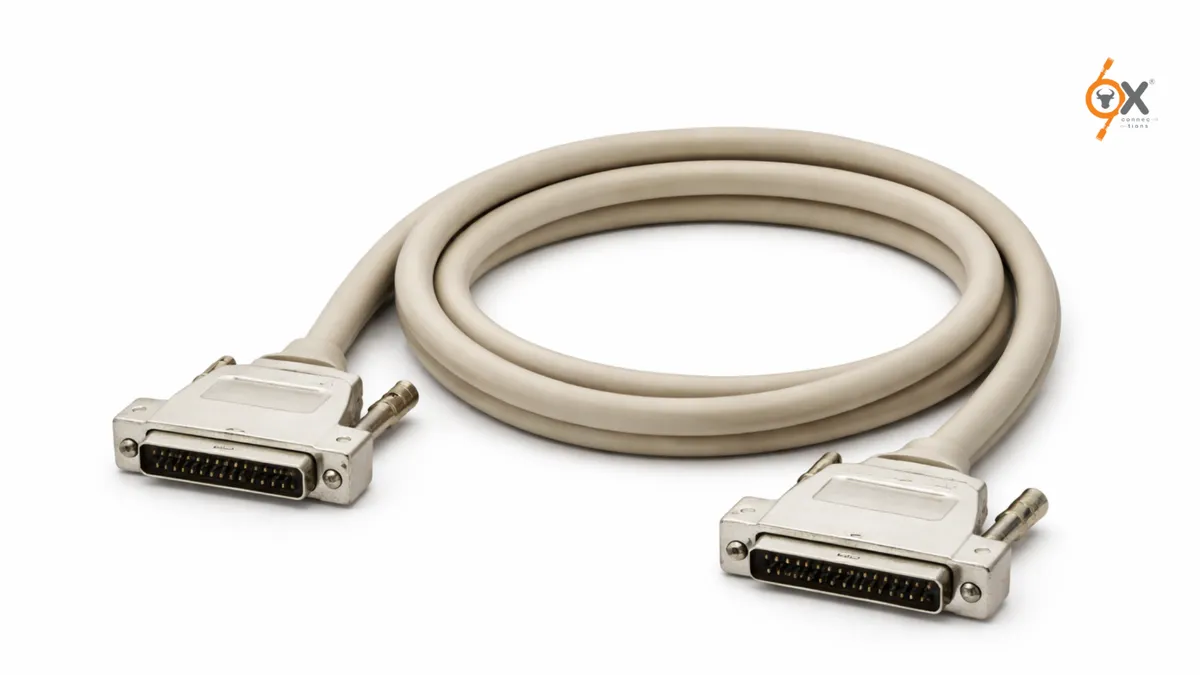
SCSI systems don’t leave room for approximation. While most modern interfaces are designed to be forgiving, a SCSI cable and connector setup expects accuracy at every step. One incorrect connection, one missing terminator, or one mismatched component can quietly disrupt the entire system.
In environments where SCSI is still actively used – industrial setups, legacy infrastructure, or specialized storage – reliability is everything. At Ox Connection, this is often where real challenges surface. Not because the technology is unclear, but because small oversights have disproportionate consequences.
Understanding SCSI Cable and Connector Fundamentals
SCSI operates on a shared bus architecture, meaning multiple devices communicate across the same pathway. This makes the system efficient, but also sensitive to how each component is configured.
A SCSI cable and connector setup is not just about connectivity – it’s about maintaining signal integrity across the chain. Every connector type, every cable length, and every termination point contributes to how well the system performs. When all elements are aligned, SCSI systems are remarkably stable. When they’re not, even basic operations can fail.
SCSI Connector Types and Their Practical Use
Understanding SCSI connector types is essential because compatibility is not always obvious. Older systems often rely on Centronics 50-pin connectors, which are still widely seen in legacy environments. DB25 connectors, although visually similar to parallel ports, are limited in performance and typically found in older compact systems.
As technology evolved, high-density 50-pin and 68-pin connectors became more common, offering better performance in a smaller form factor. In high-performance and server-grade environments, VHDCI connectors are preferred for their compact design and efficient data handling.
The challenge isn’t just identifying these connectors – it’s ensuring they are not mixed incorrectly. At Ox Connection, a significant part of solving SCSI issues comes down to helping users match the right connector types to their specific systems.
Choosing the Right SCSI Cable for Long-Term Stability
The cable in a SCSI setup is often underestimated, yet it plays a central role in overall performance. A well-matched SCSI cable and connector combination ensures stable communication, while a poor-quality cable introduces interference, signal loss, and inconsistent behavior.
Cable length is one of the most critical factors. As length increases, signal quality decreases, especially in environments with electrical noise. Shielding becomes equally important, particularly in industrial setups where interference is unavoidable.
At Ox Connection, the emphasis is not just on compatibility, but on providing cables that maintain performance under real-world conditions – where ideal setups rarely exist.
SCSI Cable Termination: Where Systems Either Work or Fail
Termination is the defining factor in any SCSI configuration. Without it, signals reflect back through the cable, causing interference that disrupts communication between devices.
Every SCSI chain must be terminated at both ends. This is a fundamental rule that cannot be ignored. Whether using passive, active, or advanced termination methods, the goal is to ensure that signals travel cleanly without reflection.
In many real-world scenarios handled by Ox Connection, issues that appear complex are often traced back to incorrect termination. Fixing this one aspect can restore an entire system.
SCSI Pinouts Explained Without the Complexity
Pinouts are often where users feel overwhelmed, but in practice, they are simply the mapping of signals across connector pins. In SCSI systems, pin configurations determine how data, control signals, and power are transmitted between devices.
The key is not to memorize every pin, but to ensure compatibility between connectors and cables. Mismatched pin configurations can lead to silent failures, where devices appear connected but fail to communicate.
For most users, the practical approach is to rely on standardized cables and verified components – something Ox Connection prioritizes to reduce the risk of configuration errors.
Installation That Works the First Time
A successful SCSI installation is built on structure rather than complexity. Devices should be connected in a clean sequence, forming a proper chain rather than scattered connections. Each device must have a unique SCSI ID, as duplication leads to conflicts that prevent proper operation.
Cable orientation must be checked carefully, since misaligned connections are more common than expected. Power sequencing also plays a role – external devices should be powered on before the host system to ensure they are detected correctly.
These steps may seem straightforward, but in SCSI environments, they are the difference between a system that works instantly and one that requires hours of troubleshooting.
Troubleshooting Without Trial and Error
SCSI issues rarely announce themselves clearly, but they do follow patterns. Devices not being detected are often linked to missing termination or incompatible cables. Data errors and slow performance usually point to cable quality or excessive length. System instability, including freezes or boot failures, is commonly caused by duplicate SCSI IDs or incorrect configuration.
What matters is a structured approach. At Ox Connection, troubleshooting begins with termination, followed by cable verification and connector compatibility. This method reduces guesswork and leads to faster, more reliable solutions.
SCSI vs Modern Interfaces: Why It Still Exists
Compared to modern interfaces like SATA or USB, SCSI may seem outdated. However, it continues to exist in environments where stability, multi-device communication, and legacy compatibility are critical.
SCSI systems are designed for consistency rather than convenience. While newer technologies prioritize ease of use, SCSI prioritizes control and reliability. This is why it remains relevant in specialized applications where performance must remain predictable over time.
Why the Right Components Matter
In SCSI systems, the quality of your SCSI cable and connector setup directly impacts performance. This isn’t an area where compromises work. Even a single low-quality component can affect the entire chain.
Ox Connection focuses on delivering components that meet real-world demands, ensuring that systems remain stable even in challenging environments. Because in SCSI, reliability is not achieved through upgrades – it’s achieved through precision.
FAQs: Quick Answers That Solve Real Problems
What happens if SCSI termination is missing?
Without termination, signal reflection occurs, leading to data errors, device failures, or complete communication breakdown.
Can different SCSI connector types be used together?
Yes, but only with the correct adapters and compatible configurations. Mismatches can prevent devices from functioning properly.
What is the ideal cable length for SCSI?
Shorter cables are always better. Longer cables increase the risk of signal degradation and interference.
Why is my SCSI device not detected?
The most common reasons are missing termination, incorrect cable type, or duplicate SCSI IDs.
Final Takeaway
A reliable SCSI setup is never accidental. It comes down to choosing the right connectors, using high-quality cables, and ensuring proper termination across the entire chain.
When these fundamentals are handled correctly, SCSI systems remain stable and efficient, even in demanding environments. When they’re not, even minor oversights can lead to persistent issues.
That’s why, at OxConnection, the focus remains on getting the basics right – because in SCSI systems, the basics are everything.