
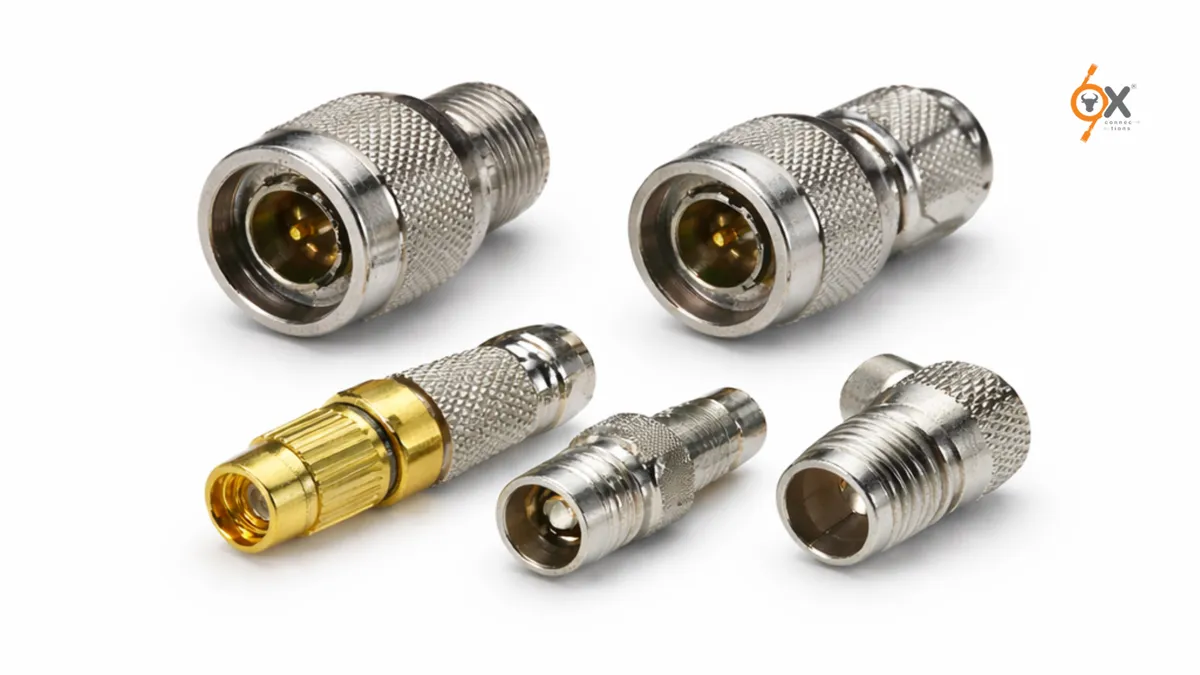
This guide explains the most common types of coaxial cable connector, their uses, and how to choose the right coaxial cable connectors for your specific application.
Coaxial cables are widely used in modern communication systems for transmitting radio frequency (RF), video, audio, and data signals. These cables play a critical role in telecommunications, broadcasting, networking, and industrial applications. At the heart of these systems are connectors that ensure secure connections, signal integrity, and reliable performance. Understanding different coaxial cable connector types, their applications, and selection criteria is essential for building efficient and long-lasting connectivity solutions.
What Are Coaxial Cable Connectors?
Coaxial cable connectors are mechanical components used to connect coaxial cables to devices such as antennas, televisions, routers, testing equipment, and communication systems. These connectors help maintain proper shielding, preventing signal loss and electromagnetic interference while ensuring consistent signal transmission.
Most coaxial cable connectors are designed with specific impedance levels, typically 50 ohms or 75 ohms, depending on the application. Proper impedance matching ensures minimal signal reflection and optimal signal clarity across long distances.
They also come in different fastening styles such as threaded, bayonet, and snap-on coupling, allowing compatibility with various devices and environments.
Why Are Coaxial Cable Connectors Important?
Reliable connectors are essential for maintaining signal strength and ensuring stable system performance. Poor connector selection or improper installation can result in signal loss, interference, and inconsistent performance.
Key benefits of high-quality coaxial cable connectors include:
- Stable and secure signal transmission
- Reduced signal interference
- Improved durability and reliability
- Easy installation and maintenance
- Compatibility with various RF and communication systems
These advantages make connectors critical components in telecom networks, broadcast systems, industrial automation, and data communication infrastructure.
Most Common types of coaxial cable connectors
There are several connector types designed for specific frequency ranges, environments, and applications.
1. BNC Connector (Bayonet Neil-Concelman)
BNC connectors are one of the most widely used coaxial cable connector types, originally designed for military and RF applications.
Key features:
- Bayonet twist-lock mechanism
- Quick connect and disconnect
- Reliable performance up to 4 GHz
Common applications:
- RF equipment
- Test instruments
- Television and video systems
- Radio communication
Their quick-lock design makes them ideal for systems requiring frequent connection and disconnection.
2. TNC Connector (Threaded Neil-Concelman)
TNC connectors are threaded versions of BNC connectors and provide improved performance at higher frequencies.
Key features:
- Threaded locking mechanism
- Weatherproof design
- Supports frequencies up to 12 GHz
Common applications:
- Cellular infrastructure
- RF antenna systems
- Wireless communication
TNC connectors offer better stability and reduced signal leakage compared to BNC connectors.
3. SMB Connector (Subminiature Version B)
SMB connectors are compact connectors commonly used in telecommunications and industrial applications.
Key features:
- Snap-on coupling mechanism
- Compact size
- Excellent electrical performance up to 4 GH
Common applications:
- Telecom equipment
- RF modules
- Industrial communication systems
These connectors provide reliable connections in compact and space-constrained systems.
4. MCX Connector (Micro Coaxial Connector)
MCX connectors are smaller versions of SMB connectors and are ideal for applications requiring compact solutions.
Key features:
- Small form factor
- Snap-on design
- Frequency range up to 6 GHz
Common applications:
- GPS systems
- Wireless devices
- Digital communication systems
Their compact design makes them suitable for portable and space-limited equipment.
5. F-Type Connector
F-type connectors are widely used in residential and commercial applications.
Key features:
- Threaded connection
- Strong and reliable signal transmission
- Easy installation
Common applications:
- Cable television
- Satellite receivers
- Broadband internet
These coaxial cable connectors are commonly found in home entertainment and internet systems.
6. N-Type Connector
N-type connectors are designed for high-frequency and high-power applications.
Key features:
- Threaded coupling
- Excellent performance in microwave frequencies
- Durable and reliable
Common applications:
- RF transmission systems
- Wireless communication
- Commercial communication infrastructure
N-type connectors are ideal for demanding industrial and telecom environments.
7. 7/16 DIN Connector
7/16 DIN connectors are designed for high-power and high-frequency applications.
Key features:
- Threaded locking mechanism
- High power handling capability
- Excellent durability
Common applications:
- Cellular base stations
- Antenna systems
- Industrial communication networks
These connectors are commonly used in critical communication infrastructure.
8. RCA Connector
RCA connectors are commonly used for audio and video signal transmission.
Key features:
- Simple plug-in design
- Reliable audio and video transmission
Common applications:
- Audio systems
- Video equipment
- Consumer electronics
They are easily recognizable by their red, white, and yellow connectors used in multimedia systems.
Key Factors to Consider When Choosing coaxial cable connector types
Selecting the right connector is essential for maintaining system efficiency and performance.
1. Frequency Range
Different connectors support different frequency ranges. High-frequency applications require connectors such as TNC or N-type connectors.
Choosing the right types of coaxial cable connectors ensures optimal signal performance.
2. Application Environment
Environmental conditions such as temperature, moisture, and vibration can affect connector performance. Some connectors are designed specifically for harsh environments.
Industrial applications often require more durable connectors with threaded locking mechanisms.
3. Impedance Matching
Matching connector impedance with the cable and equipment ensures minimal signal reflection and maximum performance.
Common impedance levels include:
- 50 ohm connectors – used in RF and communication systems
- 75 ohm connectors – used in video and television systems
4. Cable Compatibility
Connector selection must match the cable type and size to ensure secure installation and reliable signal transmission.
Improper connector selection can lead to signal degradation and poor system performance.
5. Installation and Maintenance Requirements
Some connectors are easier to install and maintain than others. Snap-on connectors offer quick installation, while threaded connectors provide stronger and more secure connections.
Choosing suitable coaxial cable connectors improves installation efficiency and long-term reliability.
Applications of Coaxial Cable Connectors
Coaxial connectors are used across various industries and applications, including:
- Telecommunications networks
- Broadcast and television systems
- RF and microwave communication
- Industrial automation
- Military and aerospace systems
- Internet and broadband infrastructure
Their versatility makes them essential components in modern communication systems.
Advantages of Modern coaxial cable connectors
Modern connectors provide several performance benefits:
Reliable Signal Transmission
Proper shielding ensures minimal signal loss and interference.
Durability
High-quality connectors offer long service life even in demanding environments.
Versatility
Different connectors support various cable types and communication systems.
Ease of Installation
Modern connectors simplify installation and maintenance processes.
These advantages make them essential components in communication infrastructure.
Conclusion
Understanding different coaxial cable connector types is essential for ensuring efficient signal transmission and reliable system performance. Each connector—such as BNC, TNC, SMB, MCX, F-type, N-type, and DIN—offers unique advantages depending on the application, frequency range, and environment.
Choosing the correct types of coaxial cable connectors ensures optimal performance, durability, and long-term reliability across telecom, industrial, and communication networks. Proper connector selection improves signal quality, reduces interference, and enhances overall system efficiency.
For reliable and high-performance connectivity solutions, Ox Connections provides precision-engineered coaxial cable connectors designed to meet modern industrial and telecom requirements. Their connectors are manufactured with high-quality materials, ensuring secure connections, minimal signal loss, and long-term durability. Whether used in industrial automation, RF communication systems, telecom infrastructure, or control panel applications, Ox Connections delivers dependable connectivity solutions built for performance and reliability.
By choosing high-quality connectors from trusted providers like Ox Connections, businesses can ensure stable communication, efficient performance, and future-ready infrastructure.