
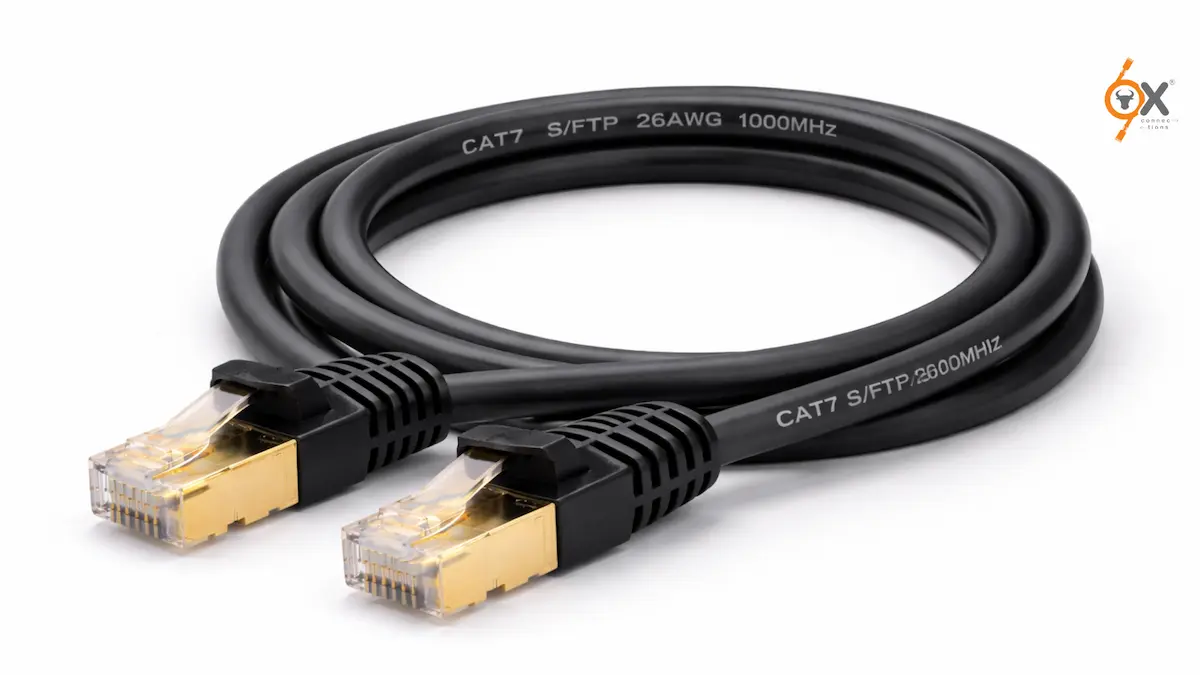
Still experiencing slow network speeds even after upgrading your internet plan?
The problem may not always be your router or internet provider – your Ethernet cable could also be limiting your network performance. As modern homes, offices, gaming setups, and industrial systems demand faster and more stable connectivity, networking technology has continued to evolve. One of the most advanced Ethernet cable categories available today is the Cat7 Cable.
Designed for ultra-fast data transmission, better shielding, and minimal signal interference, Cat7 is widely used in environments where high-speed and reliable communication is essential. But exactly what is Cat7, and how is it different from Cat6 or Cat6a?
In this guide, we’ll explain everything you need to know about Cat7 Cable, including its speed, features, applications, benefits, and why it is becoming a preferred High Speed Ethernet Cable for advanced networking systems.
Understanding Cat7 Cable
Cat7 Cable stands for Category 7 cable. It is a high-performance Ethernet cable designed to support extremely fast data transfer speeds while offering superior shielding and reduced interference.
Cat7 cables are commonly used for:
- High-speed office networking
- Data centers
- Gaming setups
- Smart homes
- Industrial automation
- CCTV systems
- Server communication
- Advanced networking infrastructure
Compared to earlier Ethernet cable categories, Cat7 is built to deliver better overall performance, especially in environments with heavy network traffic.
Cat7 Cable Speed & Performance
One of the biggest reasons behind the growing demand for Cat7 Cable is its exceptional speed capability.
Cat7 supports:
- Up to 10 Gigabit Ethernet
- Bandwidth of 600 MHz
- Faster data transfer
- Better signal stability
- Reduced crosstalk and interference
Because of its advanced shielding and improved internal structure, Cat7 offers more stable connectivity than Cat6 and Cat6a in high-performance networking environments.
This makes it ideal for:
- 4K & 8K streaming
- Online gaming
- Cloud computing
- Data centers
- Smart automation
- Enterprise networking
- Industrial communication systems
Cat7 vs Cat6 vs Cat6a
Many users are often confused about the differences between Cat6, Cat6a, and Cat7.
Here’s a simple comparison:
| Feature | Cat6 | Cat6a | Cat7 |
| Maximum Speed | 10 Gbps | 10 Gbps | 10 Gbps |
| Bandwidth | 250 MHz | 500 MHz | 600 MHz |
| Shielding | Moderate | Better | Advanced |
| Signal Interference | Low | Lower | Very Low |
| Best For | Homes | Offices & Enterprise | Advanced Networking |
The biggest advantage of Cat7 is its superior shielding and reduced interference, making it highly suitable for demanding networking environments.
How Does Cat7 Cable Work?
Cat7 cables use four individually shielded twisted pairs of copper wires along with additional overall cable shielding.
This design helps:
- Minimize electromagnetic interference
- Reduce signal loss
- Improve data transmission quality
- Maintain stable high-speed performance
Compared to older Ethernet cables, Cat7 offers cleaner and more reliable signal communication.
Types of Cat7 Cables
Depending on the networking requirement, Cat7 cables are available in different types.
1. Shielded Cat7 Cable
Most Cat7 cables are heavily shielded to reduce interference and improve signal quality.
Benefits:
- Better stability
- Reduced network disruptions
- Improved performance in industrial environments
2. Outdoor Cat7 Cable
Designed for external installations, outdoor Cat7 cables offer:
- Weather resistance
- Better durability
- Long-distance networking support
These are commonly used in:
- Outdoor CCTV systems
- Industrial installations
- Campus networking
Applications of Cat7 Cable
Because of its high-performance capability, Cat7 Cable is widely used in modern networking environments.
Data Centers
Cat7 is ideal for:
- High-speed servers
- Large data transfers
- Continuous network communication
Smart Homes
Modern smart homes use Cat7 for:
- Smart TVs
- Home automation
- High-speed Wi-Fi routers
- Streaming systems
Gaming Setups
Gamers prefer Cat7 because it supports:
- Low latency
- Stable connectivity
- Faster response time
CCTV & Surveillance
Cat7 cables help support:
- High-definition IP cameras
- Network video systems
- Long-distance signal transmission
Industrial Networking
Industrial automation systems require stable and interference-free communication. Cat7 is widely used in factories and advanced industrial networking environments.
Companies like OX Connections provide reliable networking and connectivity solutions for industrial and commercial applications across India.
Benefits of Using Cat7 Cable
Higher Bandwidth
Cat7 supports higher bandwidth for faster and smoother data transmission.
Better Shielding
Advanced shielding reduces interference from nearby electrical devices and cables.
Stable High-Speed Performance
Cat7 maintains consistent performance even in high-network-traffic environments.
Improved Reliability
Its strong build quality makes Cat7 suitable for long-term networking infrastructure.
Future-Ready Networking
As internet speeds and networking demands continue to increase, Cat7 helps future-proof your setup.
Is Cat7 Good for Gaming?
Yes, Cat7 is an excellent choice for gaming.
It helps reduce:
- Lag
- Packet loss
- Latency issues
For competitive gamers and advanced gaming setups, a wired Cat7 connection can offer a smoother and more stable experience compared to wireless networks.
Is Cat7 Worth It for Home Use?
For standard browsing and basic streaming, Cat6 may already be sufficient. However, Cat7 is worth considering if you:
- Have ultra-fast internet
- Use multiple smart devices
- Stream high-quality content
- Want future-proof networking
- Need maximum stability
It is especially useful for advanced smart homes and heavy internet users.
Cat7 Installation Considerations
Before installing Cat7 cables, keep these factors in mind:
- Cable thickness
- Shielding requirements
- Connector compatibility
- Installation space
- Budget
Since Cat7 cables are thicker and more heavily shielded, they may require slightly more careful installation compared to Cat6 cables.
Choosing the Right Cat7 Cable
When purchasing a High Speed Ethernet Cable, always check for:
- Pure copper conductors
- Strong shielding quality
- Certified cable standards
- Trusted manufacturers
Using low-quality cables can affect network performance and long-term reliability.
OXConnections offers dependable networking and connectivity solutions suitable for industrial, enterprise, and modern communication systems.
Final Thoughts
As digital infrastructure continues to evolve, choosing the right Ethernet cable becomes increasingly important. Understanding what is Cat7 helps businesses and homeowners build faster, more stable, and future-ready networking systems.
With advanced shielding, higher bandwidth, and reliable high-speed performance, Cat7 Cable has become an ideal choice for gaming, enterprise networking, smart homes, industrial communication, and data-heavy environments.
Whether you are upgrading your office network, setting up a gaming station, or building an advanced smart system, Cat7 provides the speed and stability needed for today’s connected world.