When you’re building reliable power connections – whether it’s for industrial equipment, consumer electronics, or renewable energy systems – connector choice isn’t just a technical detail, it’s a long-term decision. That’s where the Molex Mini-Fit 3.0 connector comes into the picture. Known for its compact design and dependable power delivery, it has become a go-to solution across industries.
But if you’ve ever searched for its exact pinout, dimensions, or specifications, you’ve probably noticed how fragmented or overly technical the information can be. This guide simplifies everything – without losing accuracy – so you can confidently understand, select, and use this connector.
What Is the Mini-Fit 3.0 Connector?
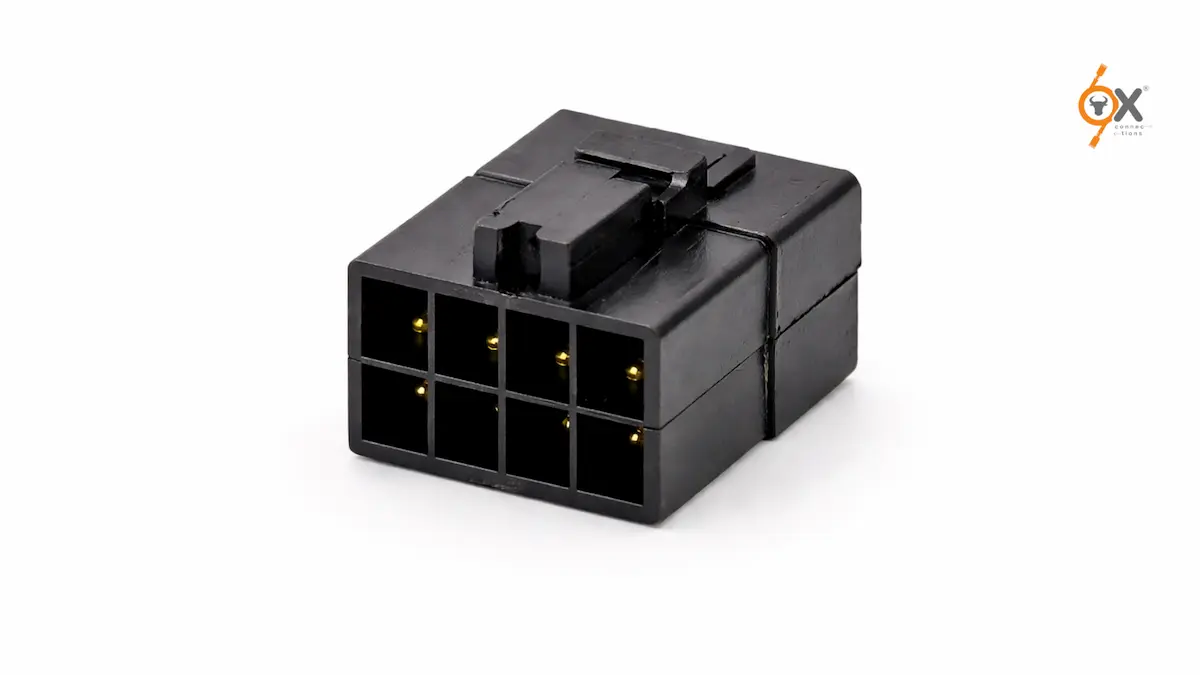
The Molex Mini-Fit 3.0 connector is a wire-to-wire and wire-to-board connector system with a 3.0 mm pitch, designed primarily for power applications. It’s widely used in industries where compact size meets moderate-to-high current requirements.
You’ll commonly find it in:
- Power supplies (including SMPS)
- Consumer electronics
- Automotive sub-systems
- Industrial automation
- Renewable energy setups
One reason it’s so popular is its balance between size and performance – smaller than many traditional power connectors, yet capable of handling significant current.
Understanding the Mini-Fit 3.0 Pinout
Let’s break down the Mini-Fit 3.0 pinout, because this is where correct installation and performance really begin.
Unlike signal connectors, Mini-Fit 3.0 is primarily used for power distribution, so the pin configuration typically depends on how power and ground are allocated across circuits.
Typical Pin Configurations
Mini-Fit 3.0 connectors are available in multiple circuit sizes, such as:
- 2-pin
- 4-pin
- 6-pin
- 8-pin
- 12-pin and more
Each pin corresponds to a dedicated electrical path, and the layout is usually arranged in dual-row configurations.
For example:
- In a 4-pin connector, you may have 2 pins for power and 2 for ground
- In higher pin counts, multiple pins may be used in parallel to increase current-carrying capacity
Important Pinout Considerations
When working with the Mini-Fit 3.0 pinout, keep these practical points in mind:
- Polarity matters: Always verify correct alignment before mating
- Parallel circuits: Used to distribute higher current safely
- Crimp quality: Poor crimping can lead to resistance, heating, and failure
- Keying features: Prevent incorrect mating but should still be double-checked
In real-world applications, incorrect pin mapping isn’t just a minor issue – it can damage entire systems. That’s why engineers often cross-check pinouts with datasheets before deployment.
Molex Mini-Fit 3.0 Dimensions Explained
Size plays a crucial role when designing compact systems. Understanding Molex Mini-Fit 3.0 dimensions helps ensure compatibility with your PCB layout or wiring harness.
Key Dimensional Features
- Pitch: 3.0 mm (distance between adjacent pins)
- Housing width: Depends on number of circuits
- Row spacing: Designed for dual-row compactness
- Mating height: Varies based on configuration and header type
The 3.0 mm pitch is what gives this connector its name – and its advantage. It allows for higher circuit density compared to larger pitch connectors while still maintaining solid power handling.
Why Dimensions Matter in Real Applications
Knowing Molex Mini-Fit 3.0 dimensions isn’t just about fitting components – it affects:
- Thermal performance (tight spaces = more heat concentration)
- Airflow and spacing in enclosures
- Ease of assembly and maintenance
- Compatibility with existing systems
For OEMs working on compact designs like EV modules or solar inverters, even a few millimeters can make a big difference.
Key Specifications You Should Know
Beyond pinout and dimensions, performance depends on the connector’s electrical and mechanical specifications.
Electrical Specifications
- Current rating: Up to ~9A per circuit (varies based on wire gauge and conditions)
- Voltage rating: Typically up to 600V
- Contact resistance: Low, ensuring efficient power transfer
Mechanical Features
- Positive locking system: Ensures secure mating
- Durable housing material: Typically high-temperature thermoplastics
- Crimp terminals: Designed for reliable wire termination
Environmental Performance
- Operates across a wide temperature range
- Resistant to vibration (important for automotive and industrial use)
- Designed for long mating cycles
These specifications make the Molex Mini-Fit 3.0 connector suitable for demanding environments where reliability is non-negotiable.
Common Applications Across Industries
The versatility of the Molex Mini-Fit 3.0 connector is one of its biggest strengths. Let’s look at where it’s commonly used:
1. Power Supply Units (PSUs)
Widely used in desktop power supplies and industrial SMPS systems for distributing power efficiently.
2. Automotive Systems
Used in non-critical automotive electronics where compact, reliable connections are needed.
3. Renewable Energy
Seen in solar inverters and battery management systems where stable power transfer is crucial.
4. Consumer Electronics
From gaming systems to appliances, wherever compact power connectors are required.
5. Industrial Equipment
Control panels, automation systems, and machinery often rely on Mini-Fit connectors for internal wiring.
Practical Installation Tips (That Actually Matter)
Instead of just theory, here are real-world tips that engineers and technicians follow:
- Use proper crimping tools: This is non-negotiable for performance
- Match wire gauge correctly: Avoid overheating and voltage drop
- Check mating cycles: Don’t reuse worn connectors in critical systems
- Label wiring during assembly: Prevents confusion in multi-pin setups
- Test continuity before powering up: A small step that avoids big failures
These practices ensure that your Mini-Fit 3.0 pinout works exactly as intended in real conditions.
The Cost & Supply Challenge (And a Smarter Alternative)
While the Molex Mini-Fit 3.0 connector is widely trusted, many OEMs and manufacturers face practical challenges:
- High cost per unit
- Long lead times
- High minimum order quantities (MOQs)
This is where OX Connections becomes a strong alternative.
Why Many OEMs Are Switching to OX
OX offers Mini-Fit 3.0 equivalent connectors that match performance expectations while solving supply chain issues:
- Up to 50% cost savings compared to traditional brands
- No long lead times – ready stock availability
- Low or flexible MOQs
- Certifications: UL, RoHS, CE compliant
- Designed for industries like:
- Solar
- EV
- Home appliances
- Medical equipment
- Industrial automation
For businesses scaling production, these factors aren’t just convenient – they directly impact profitability and timelines.
Final Thoughts
The Molex Mini-Fit 3.0 connector continues to be a reliable choice for compact power connections. With its well-designed Mini-Fit 3.0 pinout, efficient Molex Mini-Fit 3.0 dimensions, and strong performance specs, it’s easy to see why it’s so widely adopted.
But in today’s fast-moving manufacturing landscape, availability and cost matter just as much as performance. That’s why many engineers and procurement teams are exploring high-quality alternatives like OXconnection – without compromising on reliability.
If you’re designing your next system or optimizing an existing one, understanding these connectors in depth isn’t just helpful – it’s essential.