
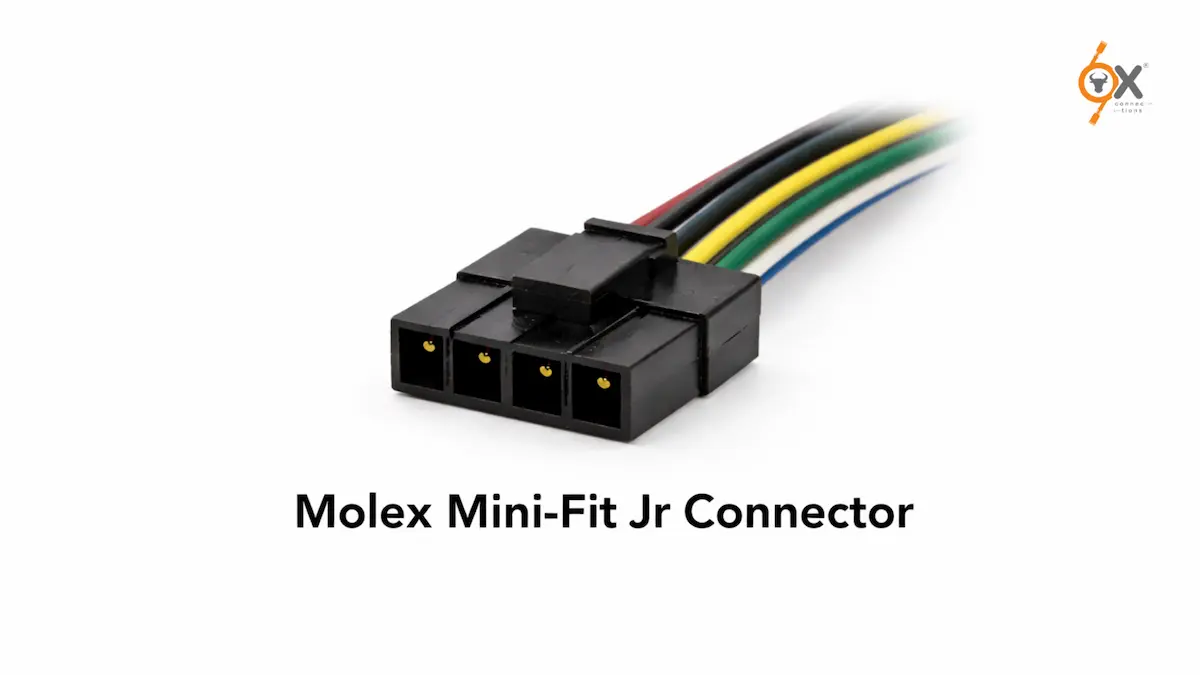
If you’ve ever opened up a power supply, worked on industrial equipment, or handled wiring inside appliances, chances are you’ve come across the Molex Mini-Fit Jr connector – even if you didn’t realise it at the time.
It’s one of those components that quietly powers everything from desktop PCs to industrial control systems, yet doesn’t always get the attention it deserves. In India, especially in manufacturing hubs like Mumbai, Pune, and Bengaluru, this connector has become a go-to choice for engineers and OEMs working with reliable power connections.
But what exactly makes it so popular? And more importantly – is it always the best choice today?
Let’s break it down in a way that actually makes sense.
What Is a Molex Mini-Fit Jr Connector?
At its core, the Molex Mini-Fit Jr connector is a wire-to-wire and wire-to-board power connector system designed for medium- to high-current applications.
What sets it apart is its:
- Compact size
- Reliable locking mechanism
- Ability to handle significant current
This is why you’ll find it in:
- Computer power supplies (ATX connectors)
- Industrial machinery
- Home appliances
- Automotive and EV subsystems
It strikes a balance between performance and size, which is exactly what modern electronics demand.
Understanding the Mini-Fit Jr Pinout
When engineers search for Mini-Fit Jr pinout, they’re usually trying to figure out one thing : “How do I wire this correctly without messing it up?”
Here’s a simplified breakdown.
Basic Pin Configuration
Mini-Fit Jr connectors typically come in:
- 2 circuits
- 4 circuits
- 6 circuits
- 8 circuits
- Up to 24 circuits
Each pin is designed to carry power or ground, depending on the application.
Example (Common 4-Pin Layout)
- Pin 1: Ground
- Pin 2: Ground
- Pin 3: +V (Power)
- Pin 4: +V (Power)
In PC applications, the pinout becomes more specific (like 12V rails), but in industrial use, it’s often customised.
Important: Always double-check the pin configuration before wiring. Unlike low-power connectors, mistakes here can lead to overheating or failure.
Molex Mini-Fit Jr Current Rating: What You Need to Know
One of the biggest reasons behind its popularity is the Molex Mini-Fit Jr current rating.
Typical Ratings
- Up to ~9A per circuit (depending on wire gauge and conditions)
- Voltage rating: Around 600V max (application dependent)
But here’s the part many blogs won’t tell you clearly:
These ratings are not fixed. They depend on:
- Wire size (AWG)
- Ambient temperature
- Number of circuits loaded simultaneously
- Housing material
In real-world Indian conditions – especially in high-temperature industrial environments like Mumbai factories – you should always consider derating.
Key Technical Specifications (Without the Boring Bits)
Let’s keep this practical instead of textbook-heavy.
- Pitch: 4.2 mm
- Contact Type: Crimp
- Mounting Options: Wire-to-wire / Wire-to-board
- Locking Mechanism: Positive latch (prevents accidental disconnection)
- Material: Nylon housing, tin-plated or gold-plated contacts
What this means in simple terms:
It’s compact, secure, and built for reliable power transfer.
Why Engineers Still Prefer It
Despite newer connectors entering the market, the Molex Mini-Fit Jr connector still holds strong because:
1. Proven Reliability
It’s been used for decades. Engineers trust what works.
2. Versatility
From consumer electronics to industrial setups – it fits almost everywhere.
3. Secure Locking
The latch system ensures the connector doesn’t come loose due to vibration – important for Indian industrial conditions.
But Here’s the Reality (Especially in India)
While the connector itself is excellent, sourcing it in India isn’t always smooth.
Many OEMs and procurement teams – especially in cities like Mumbai – face:
- High pricing
- Long lead times
- Large minimum order quantities (MOQs)
This becomes a real challenge for:
- Small to mid-sized manufacturers
- Startups in EV or renewable sectors
- Fast-moving production lines
And this is exactly where companies like OX Connections (Mumbai-based) are stepping in.
OX Connections: A Practical Alternative for Indian OEMs
Instead of waiting weeks (or months) for imports, many businesses are now exploring equivalent connector solutions locally.
OX Connections offers:
- Mini-Fit Jr compatible connectors
- ~50% lower cost compared to traditional imports
- No long lead times
- Certifications like UL, RoHS, and CE
- Immediate availability across India
For industries like:
- Solar
- EV manufacturing
- Home appliances
- Medical equipment
This shift isn’t just about saving cost – it’s about keeping production moving without delays.
Common Applications You’ll See in India
The Molex Mini-Fit Jr connector is everywhere once you start noticing it:
Consumer Electronics
- Desktop power supplies
- Gaming systems
Industrial Equipment
- Control panels
- Power distribution units
Automotive & EV
- Battery management systems
- Charging interfaces
Appliances
- Washing machines
- Refrigerators
In India’s rapidly growing manufacturing ecosystem, these connectors play a silent but critical role.
Things to Keep in Mind Before Using It
If you’re planning to use the Molex Mini-Fit Jr connector, here are a few practical tips:
- Always match the correct crimping tool
- Don’t push current limits in high-temperature environments
- Ensure proper housing compatibility
- Avoid mixing different quality grades of connectors
A small oversight here can lead to:
- Heat buildup
- Contact failure
- Reduced lifespan
Final Thoughts
The Molex Mini-Fit Jr connector has earned its place as a trusted standard in power connectivity – and for good reason. It’s reliable, versatile, and widely adopted across industries.
But in today’s fast-moving manufacturing environment – especially in India – availability and cost matter just as much as performance.
That’s why many OEMs are now rethinking their sourcing strategies and exploring high-quality, locally available alternatives like OXConnections.
Because at the end of the day, the best connector isn’t just the one that performs well – it’s the one that keeps your production running without delays.