
Have you ever searched for a network cable and found yourself confused between RJ45 and Cat6? Many buyers, technicians, and even first-time industrial purchasers often ask the same question: Is RJ45 the same as Cat6?
The short answer is – no, they are not the same.
But they do work together.
Understanding the difference between an RJ45 Connector and a Cat6 Cable is important when setting up office networks, factory automation systems, CCTV infrastructure, telecom projects, or industrial Ethernet systems.
In India, especially across manufacturing hubs like Mumbai, Pune, Ahmedabad, and Chennai, businesses are increasingly upgrading their networking systems. Choosing the right cable and connector helps improve performance, reduce downtime, and avoid expensive replacement costs.
In this guide, we’ll clearly explain RJ45 vs Cat6, where each is used, and how to choose the right solution for your application.
What is an RJ45 Connector?
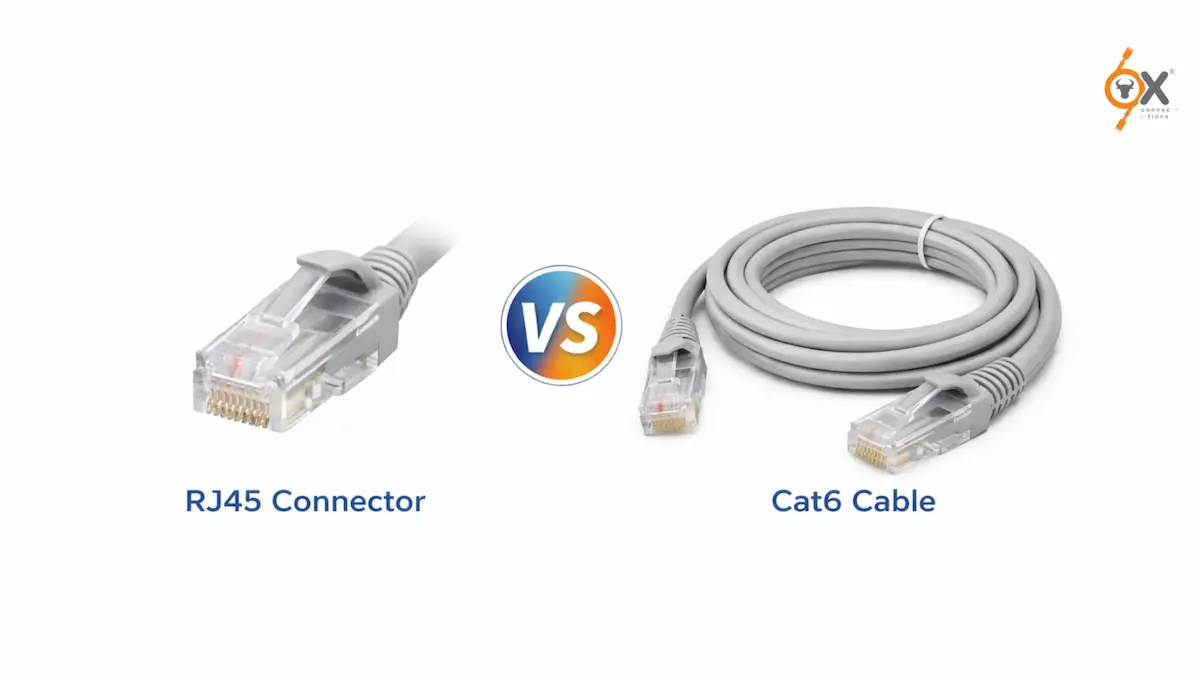
An RJ45 Connector is the plastic plug used at the end of an Ethernet cable.
It is the part that physically connects your cable to devices such as:
- Routers
- Switches
- Computers
- Servers
- CCTV systems
- PLC panels
- Industrial machines
The full form of RJ45 is Registered Jack 45.
A standard RJ45 Connector usually has 8 pins and 8 positions, commonly known as an 8P8C connector.
Its main purpose is to create a secure and stable connection for data transmission.
In simple words:
RJ45 is the connector.
What is a Cat6 Cable ?
A Cat6 Cable is a type of Ethernet cable used for high-speed network communication.
“Cat6” stands for Category 6, which refers to the cable performance standard.
It is designed to support:
- Faster data transfer
- Higher bandwidth
- Better signal quality
- Reduced interference
- Improved network reliability
Compared to older Cat5 or Cat5e cables, Cat6 Cable offers better performance, especially in industrial and enterprise environments.
In simple words: Cat6 is the cable.
So, Is RJ45 the Same as Cat6?
No , RJ45 vs Cat6 is not a comparison of the same thing.
They are two different parts of the same networking system.
The easiest way to understand it:
- Cat6 Cable = the road that carries the traffic
- RJ45 Connector = the gate that connects the road to the destination
A Cat6 Cable usually uses an RJ45 Connector at both ends.
That is why people often think they are the same.
But technically:
RJ45 = Connector and Cat6 = Cable Type
They work together, but they are not interchangeable.
Why Do People Confuse RJ45 vs Cat6?
Because when people buy Ethernet cables, they often see terms like:
- Cat6 RJ45 cable
- RJ45 Cat6 connector
- Ethernet cable RJ45
- Cat6 LAN cable
These terms are commonly used together in the market.
For example:
A supplier may say “Cat6 RJ45 cable,” which simply means:
A Cat6 Ethernet cable fitted with RJ45 connectors.
This creates confusion for many buyers, especially first-time purchasers.
Applications of RJ45 Connector and Cat6 Cable
Both are used together across multiple industries.
Let’s look at common applications.
1. Office Networking
Most office internet systems use Cat6 Cable with RJ45 Connectors for:
- Computers
- Printers
- IP phones
- Routers
- Wi-Fi access points
This ensures stable and high-speed internet performance.
2. CCTV and Security Systems
Modern IP cameras require reliable wired connections.
Using Cat6 Cable improves video transmission quality, while the RJ45 Connector ensures secure device connectivity.
This is widely used in:
- Warehouses
- Commercial buildings
- Residential projects
- Industrial plants
3. Industrial Automation
Factories rely heavily on industrial Ethernet systems.
Applications include:
- PLC communication
- SCADA systems
- Production line monitoring
- Control panels
- Machine-to-machine communication
In such environments, shielded RJ45 Connector solutions are often preferred for better durability.
4. Data Centers
High-speed structured cabling is critical in data centers.
Using quality Cat6 Cable reduces signal loss and improves long-term performance.
Poor connector quality can lead to serious downtime.
5. Telecom Infrastructure
Telecom networks require fast and stable transmission systems.
This makes both RJ45 Connector and Cat6 Cable essential components for network reliability.
Different Types of Cat6 Cable
Not all Cat6 cables are the same.
Unshielded Twisted Pair (UTP)
Best for:
- Offices
- Homes
- Standard LAN environments
It is cost-effective and easy to install.
Shielded Twisted Pair (STP)
Best for:
- Factories
- Industrial panels
- High EMI environments
It protects against electrical interference.
This is highly recommended for industrial networking.
Outdoor Cat6 Cable
Used for:
- CCTV outdoor installations
- Campus networking
- Industrial outdoor setups
These offer better weather resistance and durability.
Different Types of RJ45 Connector
Choosing the right connector matters just as much as choosing the cable.
Standard RJ45 Connector
Used for basic office and home networking.
Shielded RJ45 Connector
Used in environments with heavy electrical noise.
Ideal for:
- Manufacturing plants
- Industrial automation
- Heavy machinery zones
Tool-Free RJ45 Connector
Preferred for quick installations and maintenance work.
Common in service-heavy environments.
How to Choose the Right Solution
Before buying, ask these questions:
What Speed Do You Need?
If your system handles high-speed operations, choose Cat6 Cable or higher.
For industrial applications, speed and consistency matter more than initial savings.
Is the Environment Industrial?
Factories require stronger, more durable connectors.
Choose shielded RJ45 Connector solutions where EMI is high.
Do You Need Long-Term Reliability?
Low-cost connectors often create hidden costs later through:
- Downtime
- Replacement
- Maintenance
- Signal failures
Quality matters more than the cheapest option.
Are Certifications Available?
Look for:
- UL
- RoHS
- CE
Certified components improve safety and compliance, especially for OEM buyers and export-driven industries.
Why Buyers in India Look for Better Alternatives
Many businesses sourcing branded networking components often face:
- High pricing
- Long lead times
- Large minimum order quantities (MOQs)
This affects production schedules and increases procurement pressure.
That’s why many OEMs now prefer equivalent high-quality solutions that offer the same specifications at better value.
At OX Connections, businesses can source reliable industrial connector solutions for sectors like solar, medical, home appliances, renewable energy, and EV manufacturing – without the delays and excessive pricing often associated with premium global brands.
The focus is simple: quality, availability, and cost efficiency.
Final Thoughts
So, coming back to the original question:
Is RJ45 the same as Cat6?
No. RJ45 is the connector. Cat6 is the cable. They work together, but they are not the same.
Understanding the difference between RJ45 vs Cat6 helps buyers make smarter purchasing decisions, avoid installation mistakes, and improve long-term network performance.
Whether you’re setting up a factory floor network, upgrading office infrastructure, or sourcing components for industrial automation, choosing the right RJ45 Connector and Cat6 Cable can make a major difference.
Sometimes, the smallest components decide the biggest operational outcomes.
FAQs
1. Is RJ45 the same as Cat6 ?
No. RJ45 is the connector used at the end of the cable, while Cat6 is the Ethernet cable type used for high-speed data transmission.
2. Can a Cat6 Cable use an RJ45 Connector ?
Yes. Most Cat6 Cables use RJ45 Connectors on both ends for network connectivity.
3. Which is better: Cat5e or Cat6 Cable ?
Cat6 Cable is generally better because it offers higher speed, better bandwidth, and improved performance for industrial and enterprise networking systems.