
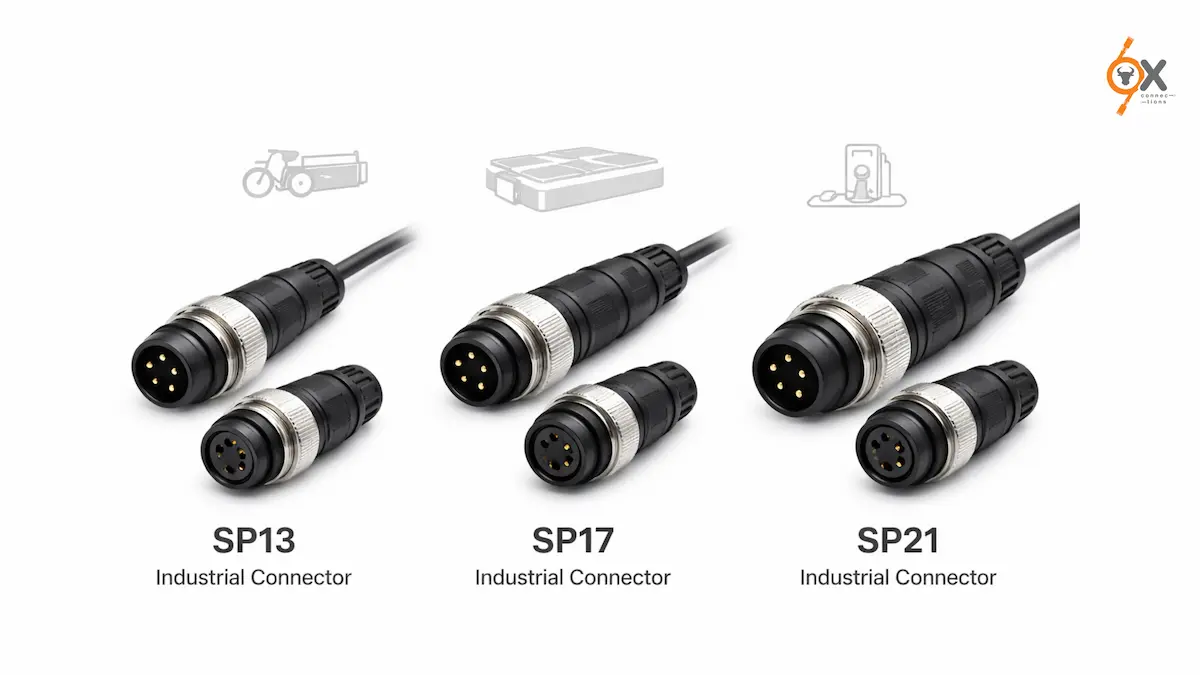
In this guide, we’ll explore what makes waterproof connectors important, the role of SP connectors in EV and battery applications, and the key factors to evaluate before making a selection.
The rapid growth of electric mobility is changing how manufacturers think about connectivity. Whether you’re building electric bicycles, battery energy storage systems, charging equipment, or electric vehicles, the reliability of every electrical connection matters.
A failed connector can lead to downtime, maintenance costs, performance issues, and in some cases, complete system failure. That’s why engineers and procurement teams are paying closer attention to connector selection during the design phase.
Among the many options available, SP Connectors have become a preferred choice for applications requiring secure, sealed, and durable connections. Their compact design, waterproof capabilities, and robust construction make them suitable for demanding outdoor and industrial environments.
Why Waterproof Connectors Matter in EV and Battery Applications
Electric mobility systems rarely operate in controlled environments.
E-bikes are exposed to rain, dust, mud, vibration, and temperature fluctuations. EV battery systems encounter moisture, road debris, washdowns, and varying weather conditions. Energy storage installations often remain outdoors for years.
In these environments, connector reliability becomes critical.
Poorly protected connections can result in:
- Corrosion
- Signal interruption
- Power loss
- Increased maintenance
- Reduced equipment lifespan
- Safety concerns
This is why waterproof connectors have become a standard requirement across many electric mobility and energy storage applications.
A properly specified connector helps maintain electrical integrity even when exposed to challenging environmental conditions.
Understanding SP Connectors
SP connectors are circular connectors designed for applications requiring reliable power or signal transmission in demanding environments.
Their popularity comes from a combination of advantages:
- Compact form factor
- Secure locking mechanisms
- Sealed construction
- Resistance to dust and moisture
- Mechanical durability
- Suitability for both indoor and outdoor use
Because of these characteristics, SP connectors are commonly found across:
- E-bikes
- Electric scooters
- EV subsystems
- Battery management systems
- Charging equipment
- Solar installations
- Industrial automation
- Portable energy storage systems
For manufacturers seeking dependable connectivity without excessive complexity, SP connectors often provide an effective solution.
Common Applications for SP Connectors in Electric Mobility
E-Bike Systems
Modern e-bikes contain multiple interconnected components:
- Battery packs
- Motor controllers
- Displays
- Sensors
- Lighting systems
- Charging ports
These systems experience constant vibration and outdoor exposure.
Waterproof connectors help ensure reliable performance while reducing maintenance requirements over the product’s lifespan.
EV Battery Packs
Battery systems represent one of the most critical assemblies within an electric vehicle.
Connectors used within battery-related subsystems must provide dependable electrical performance while withstanding environmental stresses.
Engineers often prioritize durability, sealing capability, and long-term reliability when selecting EV battery connectors.
Battery Management Systems (BMS)
A Battery Management System monitors and protects battery performance.
The integrity of communication and power connections within these systems directly impacts operational reliability.
SP connectors can be used where secure and protected connections are required.
Charging Infrastructure
Charging stations and charging equipment are frequently installed outdoors.
Exposure to weather makes waterproof connectivity essential.
Connectors must withstand repeated use while maintaining stable electrical performance.
Energy Storage Systems
Battery energy storage systems are increasingly deployed in:
- Commercial facilities
- Renewable energy projects
- Industrial sites
- Microgrids
Many of these installations require rugged connectivity capable of operating reliably for extended periods.
Key Factors to Consider When Selecting Waterproof Connectors
Choosing a connector based solely on size or price can create problems later in the product lifecycle.
A structured evaluation process helps ensure long-term reliability.
1. Environmental Protection Requirements
One of the first considerations is the operating environment.
Ask questions such as:
- Will the connector be exposed to rain?
- Is dust present?
- Will equipment be washed regularly?
- Is outdoor installation expected?
The answers will help determine the appropriate level of sealing and environmental protection required.
For EVs, e-bikes, and outdoor battery systems, waterproof protection is often considered a baseline requirement rather than an optional feature.
2. Power and Signal Requirements
Different applications have different electrical requirements.
Some connectors carry power.
Others carry signals.
Many systems require both.
Before selecting a connector, engineers should evaluate:
- Current requirements
- Voltage requirements
- Signal integrity needs
- System architecture
Matching the connector to the application’s electrical demands helps improve performance and reliability.
3. Mechanical Durability
Connectors in mobility applications experience continuous movement and vibration.
This is particularly true in:
- E-bikes
- Electric scooters
- Utility EVs
- Industrial vehicles
A connector should remain securely connected despite repeated vibration and handling.
Mechanical robustness becomes especially important for products intended for long service life.
4. Connector Size and Space Constraints
Product designers are constantly balancing performance with space limitations.
Compact battery systems and lightweight vehicle designs often leave little room for oversized components.
SP connectors are frequently chosen because they provide reliable connectivity while supporting compact equipment designs.
The right connector should fit the available space without compromising accessibility or performance.
5. Ease of Assembly
Connector selection also impacts manufacturing efficiency.
A connector that is difficult to install can increase assembly time and production costs.
When evaluating options, consider:
- Assembly requirements
- Installation process
- Maintenance accessibility
- Serviceability
Reducing assembly complexity can improve production efficiency while minimizing installation errors.
6. Long-Term Reliability
Procurement decisions should consider more than initial acquisition cost.
The true cost of a connector includes:
- Maintenance requirements
- Downtime risks
- Replacement frequency
- Product warranty implications
Selecting a connector with proven reliability can reduce total ownership costs throughout the product lifecycle.
Challenges Faced by EV and Battery Manufacturers
As electric mobility adoption continues to accelerate, manufacturers face several connectivity challenges.
Increasing Environmental Exposure
Products are expected to operate in increasingly diverse environments.
From urban commuting to industrial applications, connectors must withstand real-world conditions without compromising performance.
Higher Reliability Expectations
End users expect electric vehicles and battery-powered products to operate consistently.
Connector failures can negatively affect customer satisfaction and brand reputation.
Faster Product Development Cycles
Manufacturers are under pressure to launch products quickly.
Engineering teams need components that are readily available and supported by dependable supply chains.
Supply Chain Constraints
Long lead times and high minimum order quantities can create challenges for OEMs and contract manufacturers.
Reliable sourcing partners have become just as important as connector specifications themselves.
Why Procurement Teams Should Evaluate Supplier Capability
The connector itself is only part of the equation.
The supplier’s ability to provide consistent support is equally important.
Procurement teams should evaluate:
- Product availability
- Inventory support
- Technical assistance
- Quality processes
- Industry experience
- Supply continuity
Working with a dependable supplier helps reduce sourcing risks while improving production planning.
SP Connectors and the Future of Electric Mobility
The electric mobility market continues to expand across:
- Electric bicycles
- Electric scooters
- Passenger EVs
- Commercial EVs
- Energy storage systems
- Renewable energy infrastructure
As these industries evolve, the demand for durable and reliable waterproof connectivity solutions will continue to grow.
Connectors may seem like small components, but they play a significant role in overall system reliability.
Selecting the right waterproof connector today can help manufacturers avoid costly failures tomorrow.
For engineers, designers, and procurement professionals, connector selection should be viewed as a strategic decision rather than a routine purchasing task.
Conclusion
Choosing the right waterproof connectors for EV battery packs, e-bikes, and energy storage systems requires careful evaluation of environmental conditions, electrical requirements, mechanical durability, and long-term reliability.
Well-selected EV battery connectors help improve system performance, reduce maintenance needs, and support product longevity. Among the available options, SP connectors continue to be widely used because of their compact design, durability, and suitability for demanding operating environments.
For OEMs, product designers, and procurement teams, the goal should be finding not only the right connector specification but also the right supply partner capable of supporting ongoing production requirements.
To explore SP Series connector solutions, visit the OXConnections SP Connector product range and evaluate options that align with your application requirements.
Frequently Asked Questions
1. What are waterproof connectors used for in EV battery systems?
Waterproof connectors help protect electrical connections from moisture, dust, and environmental exposure. They are commonly used in EV battery packs, charging systems, and battery management systems.
2. Why are SP connectors popular in e-bike applications?
SP connectors offer compact design, secure connectivity, and environmental protection, making them suitable for outdoor applications such as e-bikes and electric scooters.
3. What factors should engineers consider when selecting EV battery connectors?
Key considerations include environmental protection, power requirements, signal needs, mechanical durability, installation requirements, and long-term reliability.
About OX Connections
OX Connections supplies a broad range of interconnect solutions for industrial, renewable energy, electronics, EV, and OEM applications. Product availability, specifications, and suitability may vary depending on the application. Engineering teams should evaluate connector requirements based on their specific design and operating conditions.
As a stocking distributor, OX Connections carries a comprehensive range of SP Series Connectors alongside its extensive SMA and RF connector portfolio. With competitive costs, consistent quality standards, dependable availability, and a proven track record supporting OEMs across multiple industries, OX helps procurement and engineering teams secure reliable connectivity solutions while reducing sourcing challenges. For ongoing production requirements and project enquiries, OX Connections serves as a long-term supply partner rather than simply a spot-purchase vendor.