
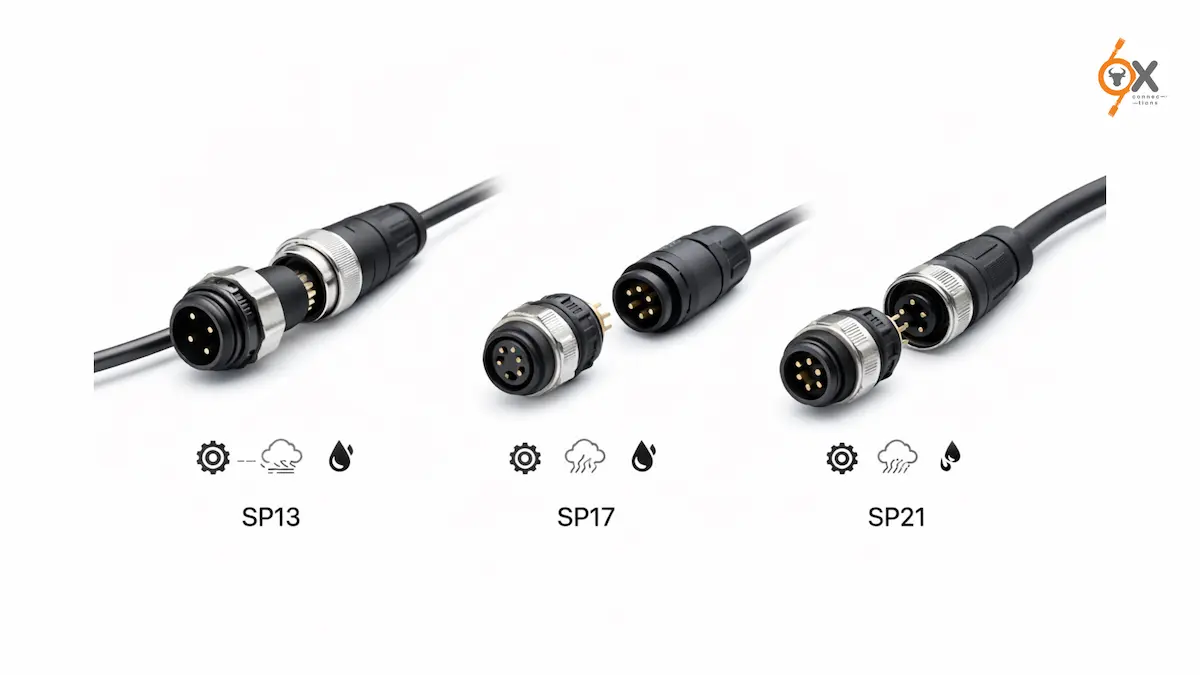
This guide explores how to select the right industrial connectors for automation systems and what factors matter most when specifying SP connectors for harsh industrial applications.
Modern factories are becoming smarter, faster, and more automated than ever before. From robotic assembly lines and CNC machines to packaging equipment and process control systems, today’s industrial environments depend on reliable electrical connectivity to keep operations running smoothly.
While motors, sensors, PLCs, and control systems often get the spotlight, the humble connector plays a critical role behind the scenes. A poorly selected connector can lead to signal interruptions, equipment downtime, maintenance headaches, and unexpected production losses.
That’s why engineers and procurement teams are increasingly focusing on connector reliability during the design and sourcing process.
Among the many options available, SP Connectors have emerged as a practical choice for industrial environments where vibration, dust, moisture, and continuous operation are everyday realities.
Why Connector Selection Matters in Industrial Automation
Industrial machinery operates under conditions that are significantly different from office electronics or consumer products.
Automation equipment often runs:
- 24/7 operations
- In dusty manufacturing environments
- Around moving machinery
- Near motors and vibration sources
- In areas exposed to moisture or washdowns
- Under changing temperatures
In such conditions, every connection point becomes a potential failure point.
A connector that performs perfectly in a laboratory environment may struggle on a production floor if it isn’t designed for industrial use.
For manufacturers, even a brief interruption can affect:
- Production schedules
- Product quality
- Maintenance costs
- Equipment availability
- Customer commitments
This makes reliable industrial automation connectors an important part of overall system design.
The Growing Demand for Rugged Industrial Connectors
As factories become more automated, the number of connected devices continues to increase.
Today’s machinery may include:
- Sensors
- Servo motors
- Human-machine interfaces (HMIs)
- Vision systems
- Controllers
- Communication modules
- Power distribution systems
Each component requires dependable connectivity.
At the same time, industrial environments continue to become more demanding.
Manufacturers want equipment that can operate reliably with minimal maintenance and maximum uptime.
As a result, connector selection is no longer simply an engineering decision it is a business decision that directly impacts operational efficiency.
Understanding SP Connectors
SP connectors are circular connectors commonly used in applications that require secure electrical connections and environmental protection.
Their design makes them suitable for both power and signal transmission across a variety of industrial applications.
Some of the reasons engineers choose SP connectors include:
- Compact construction
- Reliable locking mechanisms
- Mechanical durability
- Environmental protection
- Ease of installation
- Suitability for industrial environments
These characteristics make them useful across industries such as:
- Factory automation
- Industrial machinery
- Packaging equipment
- Robotics
- Process control
- Renewable energy systems
- Transportation equipment
The Three Biggest Challenges: Vibration, Dust & Moisture
When selecting industrial connectors, three environmental factors typically require special attention.
1. Vibration
Industrial machinery rarely stays still.
Motors, conveyors, compressors, pumps, and automated equipment create constant vibration.
Over time, vibration can affect electrical connections if the connector is not designed to remain securely mated.
Potential issues include:
- Loose connections
- Signal interruptions
- Increased wear
- Unexpected downtime
For applications involving continuous movement or vibration, connector retention and mechanical stability become critical considerations.
2. Dust
Dust is one of the most common challenges in manufacturing environments.
Industries such as:
- Metal fabrication
- Wood processing
- Cement production
- Food processing
- Packaging
- Textile manufacturing
often generate significant airborne particles.
Dust intrusion can affect electrical performance and shorten component life.
Connectors used in these environments should offer appropriate protection against contamination to help maintain reliable operation.
3. Moisture
Moisture exposure is not limited to outdoor applications.
Many industrial facilities encounter moisture through:
- Equipment washdowns
- Cooling systems
- Humid environments
- Chemical processing
- Water treatment operations
Moisture entering an electrical connection can lead to corrosion and performance issues over time.
This is why environmental sealing is often a key requirement when selecting industrial connectors.
Key Factors to Evaluate When Choosing SP Connectors
Selecting the right connector involves more than simply matching pin counts.
A comprehensive evaluation should consider the entire operating environment.
Environmental Protection
The first step is understanding where the equipment will operate.
Ask questions such as:
- Will the machine be exposed to dust?
- Is water exposure likely?
- Will regular washdowns occur?
- Is outdoor installation possible?
The answers help determine the level of environmental protection required.
Connectors that can withstand harsh conditions help improve equipment reliability and reduce maintenance interventions.
Electrical Requirements
Every automation application has unique electrical needs.
Engineers should evaluate:
- Voltage requirements
- Current requirements
- Signal transmission needs
- Communication protocols
A connector should support the system’s electrical demands without compromising performance.
Selecting an underspecified connector can create reliability issues later in the product lifecycle.
Mechanical Durability
Industrial equipment is often subjected to:
- Vibration
- Mechanical stress
- Frequent operation
- Repeated connection cycles
Connectors should be capable of handling these demands over extended periods.
Durability becomes especially important for machinery expected to remain operational for many years.
Space Constraints
Machine designers are continually working with limited installation space.
Control panels, junction boxes, and compact machine assemblies often leave little room for oversized components.
SP connectors are commonly selected because they offer a balance between performance and compact design.
The goal is achieving reliable connectivity without unnecessarily increasing equipment size.
Maintenance Accessibility
Maintenance teams appreciate equipment that is easy to service.
Connectors should allow efficient inspection, replacement, and troubleshooting when required.
Considering serviceability during the design phase can significantly reduce maintenance time later.
Applications Where SP Connectors Add Value
Robotics
Industrial robots perform repetitive movements continuously.
Reliable connectivity is essential for maintaining uninterrupted operation and accurate control.
SP connectors can be used in applications where durability and secure connections are required.
Packaging Machinery
Packaging lines often operate at high speeds and require dependable communication between multiple devices.
Connector reliability directly impacts production efficiency and line uptime.
CNC Machines
Precision manufacturing equipment depends on stable electrical connections for accurate operation.
Connectors used within CNC systems must withstand vibration while maintaining consistent performance.
Conveyor Systems
Conveyors represent one of the most common automation applications.
Sensors, motors, drives, and control systems all rely on dependable connectivity to ensure smooth operation.
Process Automation
Industries such as chemical processing, water treatment, and manufacturing depend heavily on automated monitoring and control systems.
Reliable connectors help support continuous operation in demanding environments.
Common Mistakes When Selecting Industrial Connectors
Even experienced teams occasionally overlook important connector considerations.
Some of the most common mistakes include:
Focusing Only on Initial Cost
A lower-cost connector may seem attractive initially but could lead to higher maintenance and replacement costs over time.
Total lifecycle value is often more important than upfront pricing.
Ignoring Environmental Conditions
A connector that works well in a clean environment may struggle in a dusty or wet industrial setting.
Environmental factors should always be evaluated during the selection process.
Overlooking Future Maintenance
Connectors that are difficult to access or replace can increase downtime during maintenance activities.
Serviceability should be part of the evaluation process.
Choosing Based Solely on Availability
Immediate availability is important, but long-term supply continuity matters just as much.
Manufacturers should consider supplier reliability alongside technical requirements.
Why Procurement Teams Should Evaluate Supplier Support
A connector specification is only one part of a successful sourcing strategy.
Procurement teams should also assess:
- Inventory availability
- Lead times
- Technical support
- Product consistency
- Supply reliability
- Industry experience
Strong supplier partnerships can help reduce sourcing risks while supporting long-term production requirements.
This becomes particularly important when managing ongoing manufacturing operations and scaling production volumes.
The Future of Industrial Automation Connectivity
Industrial automation continues to evolve through:
- Smart factories
- Industrial IoT
- Predictive maintenance
- Advanced robotics
- Digital manufacturing
As connectivity requirements increase, the importance of reliable connectors will only grow.
Machines are becoming smarter, but they still depend on robust physical connections to transfer power and data.
Choosing the right connector today can help manufacturers improve reliability, reduce maintenance costs, and support future growth.
Conclusion
Selecting the right industrial connectors is a critical step in building reliable automation systems. Factors such as vibration, dust exposure, moisture protection, electrical requirements, and mechanical durability should all be considered during the specification process.
For many industrial applications, SP connectors provide a practical solution thanks to their compact design, durability, and suitability for demanding environments. Whether used in robotics, packaging equipment, conveyor systems, or process automation, reliable industrial automation connectors help support uptime and long-term operational performance.
By taking a structured approach to connector selection and partnering with dependable suppliers, engineering and procurement teams can reduce risk while improving overall equipment reliability.
Frequently Asked Questions
1. What are industrial connectors used for?
Industrial connectors are used to transmit power, signals, or data between components in machinery, automation systems, robotics, and industrial equipment.
2. Why are SP connectors suitable for industrial automation?
SP connectors are commonly selected for their durable construction, secure connection mechanisms, compact design, and ability to operate in demanding industrial environments.
3. How do vibration and dust affect connector performance?
Vibration can loosen connections over time, while dust contamination may affect electrical performance and reliability. Choosing connectors designed for industrial environments helps reduce these risks.
About OX Connections
OX Connections supplies high-quality interconnect solutions for industrial automation, renewable energy, electronics manufacturing, EV systems, and OEM applications. Product suitability, specifications, and environmental requirements should always be evaluated based on the intended application and operating conditions.
As a stocking distributor, OX Connections offers a comprehensive range of SP Series Connectors alongside its extensive portfolio of SMA and RF connectors. With competitive costs, dependable availability, consistent quality standards, and a proven track record supplying OEMs across multiple industries, OX helps engineering and procurement teams secure reliable connectivity solutions for ongoing production requirements. Whether supporting new product development or large-scale manufacturing programs, OXConnections focuses on becoming a long-term supply partner rather than a one-time vendor.