
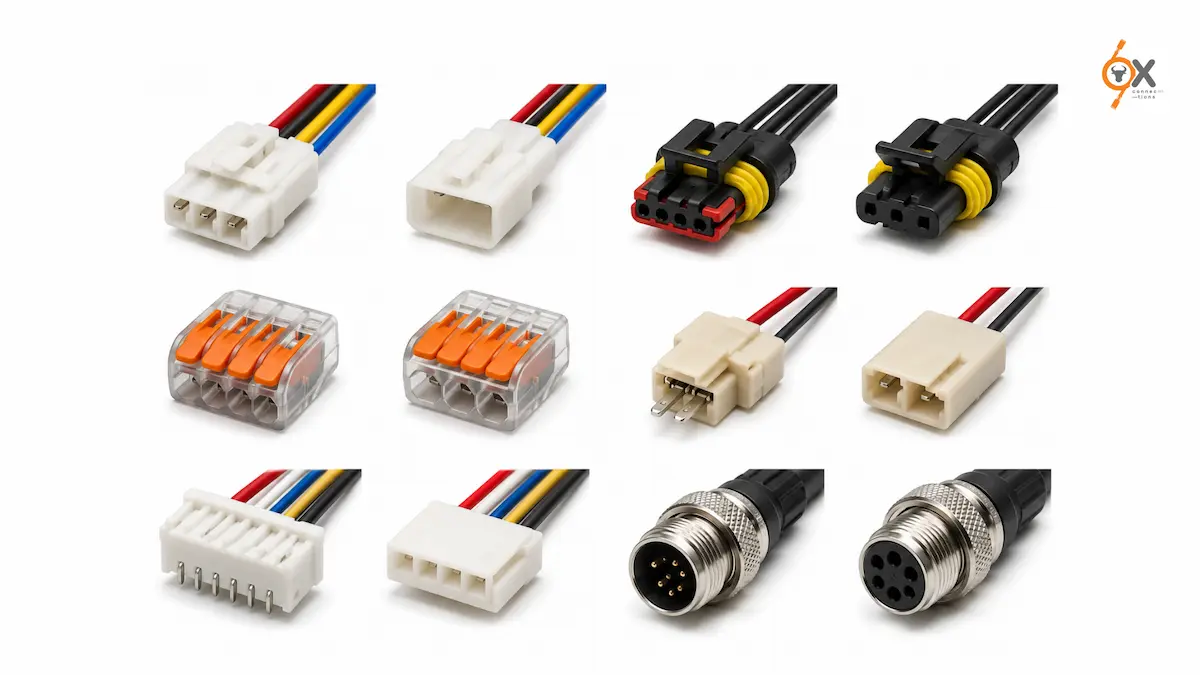
Ever traced a wiring fault for an entire afternoon, only to find the wire itself was perfectly fine? Anyone who has worked a factory floor in Bhiwandi, or a control panel job in Chennai, has been there at least once. The wire gets blamed first. Then the sensor. Sometimes even the supplier. And the actual problem sits quietly at the connection point, waiting to be found. At Ox Connections, we see this pattern often enough to know it isn’t bad luck. Most wiring failures trace back to a handful of avoidable habits around electrical wire connectors, not a defective batch or a design flaw. Once you know what to look for, spotting these habits gets easier. So does avoiding them the next time around.
The Real Causes of Wiring Failures on Site
Ask ten technicians why a circuit failed, and most will point at the wire first. But wire rarely fails on its own. The causes of wiring failures usually sit at the connector, not the cable. A loose contact heats up over time. A corroded pin slowly loses conductivity. A mismatched gender gets forced together under time pressure and never seats properly. None of this shows up on day one. It shows up months later, usually during a night shift when nobody has time to trace it properly.
This is exactly why electrical wire connectors deserve more attention at the specification stage than they usually get. Wire gauge gets checked twice, sometimes three times, before a job goes out. Connector quality gets assumed. That gap between “checked” and “assumed” is where most site failures actually start, and it rarely gets closed until something has already gone wrong.
Connector Installation Mistakes That Are Easy to Miss
Even a well-made connector fails early if someone installs it carelessly. Forcing a mismatched housing because “it fits with some pressure” is one of the fastest ways to crack a locking tab or bend a pin permanently. It looks like a small shortcut in the moment. It rarely stays small.
Skipping strain relief causes similar damage over a longer timeline. A connector doing double duty as a cable anchor pulls at its own pins every time someone moves the cable. That slow tug loosens the contact from the inside, long before anyone notices a problem on the surface.
Rushed panel wiring adds its own set of connector installation mistakes. Technicians under deadline pressure sometimes match connectors by size alone, without checking gender or pin configuration against the existing harness. A tight schedule on a production line in Pune or Taloja makes this mistake easy to justify in the moment. It gets expensive fast once the panel is already live and the fault needs tracing from scratch.
Reusing a connector with worn contacts causes trouble in a quieter way. Every mating cycle wears the plating down a little. Reusing a tired connector for “just one more quick fix” often introduces resistance that nobody notices for weeks, until the connection finally gives out at the worst possible time.
Ignoring the locking mechanism is another mistake that seems harmless until it isn’t. A connector with a functioning screw lock or latch resists vibration in a way friction alone never will. Leaving it finger-tight “for now” on a factory floor near heavy motors is one of the most common causes behind intermittent faults that take hours to trace.
What a Small Mistake Actually Costs
None of these mistakes look serious in the moment. A connector that’s slightly forced, a strain relief that’s skipped, a screw lock left loose – each one takes thirty seconds to fix and thirty seconds to ignore. The real cost shows up later: an afternoon lost tracing an intermittent fault, or a full production line paused because a connector gave out mid-shift.
That gap between a thirty-second fix and a full afternoon of downtime is really the whole story behind most wiring failures. The mistake itself is rarely expensive. The delay it causes almost always is.
Environment Quietly Decides How Long a Connector Lasts
Even a correctly specified connector fails early in the wrong environment. Indian factory floors and outdoor installations bring their own stress. Dust settles fast across Bhiwandi’s industrial belt. Humidity climbs through the monsoon in Mumbai. Vibration runs constant near heavy machinery in Chakan. A connector that works perfectly in a climate-controlled office panel can corrode or loosen within a year if it sits unsealed near a compressor or an outdoor junction box.
This is where IP rating stops being a technical footnote and starts mattering as much as current rating. Skipping it to save a little on unit cost almost always costs more later, once the callback, the downtime, and the second site visit get added up.
Why “Bad Wiring” Is Usually a Connector Problem in Disguise
Teams often blame “bad wiring” when a circuit misbehaves, but that phrase hides more than it explains. The wire itself rarely degrades on its own accord. What actually happens is a connector loosens, corrodes, or gets paired incorrectly, and the visible symptom looks exactly like a wiring fault from the outside. Chasing the wire first wastes hours that a five-minute check at the connection point would have saved.
This distinction matters even more at scale. One connector installed carelessly is a nuisance. A hundred installed the same way across a production run turns into a pattern of recurring faults across multiple sites. It usually shows up within the same few months, and it usually traces back to the same root cause every time.
A Quick Word on Sourcing Electrical Wire Connectors
Even good specification and careful installation cannot fix a batch that was never consistent to begin with. Contact plating, shell tolerances, and termination quality can drift just enough between production runs to cause a fitment issue nobody expected, whether the destination is a control panel in Mumbai or a production line in Vasai.
This is why consistency across an entire order matters as much as the datasheet of the one sample that got approved. Testing one connector and assuming the rest of the batch matches it is a common shortcut, and it’s exactly the shortcut that causes the most expensive surprises down the line.
Getting It Right Before the Fault Shows Up
None of this takes complicated engineering to fix. Confirm the actual load before ordering, rather than defaulting to whatever was used last time. Match gender to function instead of convenience. Check IP rating for anything exposed to dust, oil, or moisture. Confirm the housing and locking mechanism can survive real vibration instead of assuming it will hold. That covers most of it.
What takes real discipline is doing this before the crate opens on site, not after a fault forces the question. Electrical wire connectors sit low on most purchase orders and high on the list of things that decide whether a wiring job actually holds up for the long haul. At OxConnections, this is the standard every connector leaving our facility is built to meet, whether it’s a single sample for prototyping or a full production run headed to a site in Mumbai, Pune, Chennai, or anywhere else the wiring simply needs to keep working.
FAQs
What’s the most common cause of wiring failures on a factory floor?
More often than not, it’s the connector, not the wire. Loose contacts, mismatched gender, and skipped strain relief cause far more failures than a genuinely bad cable.
Can a good connector still fail if it’s installed carelessly?
Yes. Even a well-rated, correctly specified connector fails early if someone forces it into place, skips strain relief, or leaves the locking mechanism loose. Installation habits matter as much as the component itself.
How can procurement teams avoid connector installation mistakes at scale?
Build a quick check into the process: confirm the load, confirm gender against the existing harness, confirm IP rating for the environment, and test a sample batch before committing to a full order. It takes minutes and saves days.