
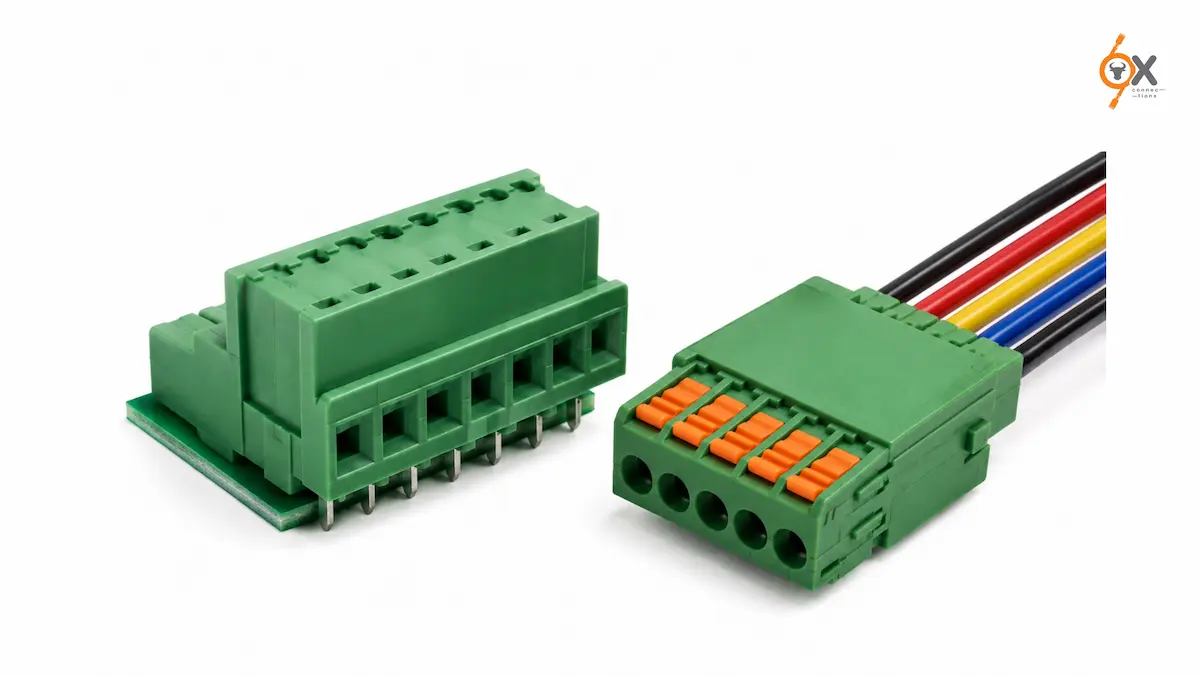
In this guide, we’ll explore what makes a reliable PCB Plug Connector, where it’s commonly used, and what procurement teams should consider when selecting an equivalent solution for industrial applications.
Could the Right PCB Plug Connector Improve Your Equipment’s Reliability?
As India’s manufacturing sector continues to expand across cities like Mumbai, Pune, Bengaluru, Chennai, and Ahmedabad, OEMs and panel builders are under increasing pressure to build equipment that is reliable, easy to maintain, and delivered on schedule. While much attention is given to PLCs, controllers, and automation systems, one component often determines how efficiently these systems perform over time – the PCB Plug Connector.
Whether it’s industrial automation, power distribution, HVAC, renewable energy, or process control, electrical connections need to remain secure throughout the equipment’s lifecycle. Downtime caused by loose or difficult-to-service connectors doesn’t just affect productivity; it can delay projects, increase maintenance costs, and impact customer satisfaction.
For years, global manufacturers like Degson have established themselves as trusted names in PCB connectivity. At the same time, many Indian manufacturers are now evaluating PCB Plug Equivalent solutions that offer the same application compatibility, dependable electrical performance, and mechanical reliability while providing better procurement flexibility, competitive pricing, and responsive local support.
Why PCB Plug Connectors Have Become Essential in Modern Equipment
Industrial electrical systems are becoming increasingly modular. Manufacturers no longer want electrical connections that require complete rewiring whenever maintenance is required.
That’s why PCB Plug Connectors have become a preferred choice across industries.
Instead of disconnecting multiple individual wires, technicians can remove the plug section while leaving the PCB-mounted header securely in place. This significantly reduces servicing time and minimises the chances of wiring mistakes during reinstallation.
For manufacturers, this translates into several operational advantages:
- Faster equipment assembly
- Reduced installation time
- Simplified field maintenance
- Lower servicing costs
- Improved equipment uptime
- Easier replacement of electronic modules
These practical benefits explain why pluggable connection systems continue to replace conventional fixed wiring in many industrial applications.
Why More Indian OEMs Are Looking for PCB Plug Equivalent Solutions
Procurement decisions today are driven by much more than technical specifications. Businesses also evaluate inventory availability, lead times, engineering support, pricing stability, and long-term supplier reliability.
While globally recognised brands such as Degson continue to be widely used, many OEMs, control panel builders, and equipment manufacturers are also sourcing PCB Plug Equivalent solutions that meet the same application requirements.
The focus is no longer simply on brand recognition – it is on selecting connectors that provide:
- Comparable electrical performance
- Mechanical compatibility
- Reliable contact quality
- Consistent manufacturing standards
- Easier procurement
- Stable inventory
- Responsive technical assistance
When these factors align, a technically equivalent connector can deliver the same operational reliability while improving procurement efficiency.
Where Are Pluggable PCB Connectors Commonly Used?
One of the biggest strengths of Pluggable PCB Connectors is their versatility. Their modular design makes them suitable for applications where secure electrical connections and quick servicing are equally important.
Some common applications include:
- Industrial automation systems
- PLC control panels
- Process automation equipment
- Building management systems
- HVAC controllers
- Power supply units
- Renewable energy systems
- Solar inverters
- EV charging equipment
- Railway signalling
- Industrial machinery
- Instrumentation and measurement equipment
As industrial automation continues to grow across India, modular PCB connectivity has become increasingly important for manufacturers seeking greater reliability and easier maintenance.
What Should Buyers Consider Before Selecting a PCB Plug Equivalent ?
Choosing a connector isn’t simply about matching the physical dimensions. Procurement teams and design engineers should evaluate the connector’s overall suitability for the intended application.
Electrical Performance
The first consideration should always be electrical compatibility.
Verify that the connector meets the required:
- Current rating
- Voltage rating
- Number of poles
- Wire size compatibility
Selecting an under-rated connector can lead to overheating, reduced reliability, and unnecessary maintenance over time.
PCB Compatibility
The PCB layout determines which connector can be used successfully.
Before sourcing a PCB Plug Equivalent, verify:
- PCB pitch
- Mounting orientation
- Number of positions
- Mechanical dimensions
- Mating compatibility
A technically equivalent connector should integrate into the existing design without requiring major PCB modifications.
Material Quality
Industrial environments place continuous stress on electrical connectors.
High-quality materials improve long-term performance by offering better resistance to:
- Heat
- Mechanical wear
- Vibration
- Corrosion
- Environmental exposure
Choosing connectors manufactured using durable engineering plastics and high-quality contact materials helps improve overall system reliability.
Environmental Conditions
Every industrial application presents different operating conditions.
Ask questions such as:
- Will the equipment operate continuously?
- Will it be exposed to vibration?
- Is there exposure to dust or humidity?
- Does the application involve elevated temperatures?
Selecting connectors designed for these conditions significantly improves equipment lifespan.
Ease of Maintenance
One of the primary reasons manufacturers prefer Pluggable PCB Connectors is simplified maintenance.
Instead of disconnecting multiple individual wires during servicing, technicians can quickly unplug and reconnect modules, reducing equipment downtime and improving maintenance efficiency.
Quick Procurement Checklist
Before selecting a PCB Plug Equivalent, confirm the following:
- Current and voltage ratings match the application
- PCB footprint is compatible
- Correct pitch and number of pole
- Wire gauge compatibility
- Suitable for the operating environment
- Easy to install and service
- Consistent product availability
- Technical documentation and support are available
Taking these factors into account helps reduce procurement risks while improving long-term equipment reliability.
How Modular PCB Connectivity Improves Manufacturing Efficiency
Modern manufacturing depends on speed, consistency, and serviceability.
Modular connector systems help manufacturers achieve all three.
They reduce assembly time, simplify servicing, improve production consistency, and minimise wiring errors during installation. For OEMs producing high volumes of equipment, even small improvements in assembly efficiency can result in significant productivity gains over time.
Perhaps more importantly, modular connections make future upgrades easier. As industrial systems evolve, replacing or servicing electronic modules becomes faster and less disruptive – helping businesses reduce maintenance costs and maximise equipment availability.
Common Mistakes Buyers Make When Selecting a PCB Plug Equivalent
Selecting the right connector is about much more than finding a product with the same dimensions or number of poles. Even experienced procurement teams can overlook factors that directly impact long-term equipment performance.
Here are some of the most common mistakes businesses should avoid.
Choosing Based Only on Price
Budget will always be an important consideration, but selecting the lowest-cost connector without evaluating its technical suitability can result in higher maintenance costs later.
A connector that requires frequent replacement or causes equipment downtime often proves more expensive over its lifecycle than one that offers dependable long-term performance.
Instead of comparing prices alone, consider:
- Product consistency
- Material quality
- Mechanical durability
- Supplier reliability
- Long-term availability
The overall cost of ownership is often a better indicator of value than the initial purchase price.
Ignoring PCB Compatibility
One of the most common procurement mistakes is assuming that connectors with a similar appearance will fit every PCB design.
Before selecting a PCB Plug Equivalent, always verify:
- PCB pitch
- Mounting orientation
- Pin configuration
- Mating dimensions
- Housing compatibility
Even minor dimensional differences can affect assembly efficiency and require unnecessary PCB modifications.
Overlooking Environmental Requirements
Industrial environments vary significantly.
A connector used inside a control cabinet may not perform reliably in equipment exposed to vibration, elevated temperatures, humidity, or dust.
Understanding the operating environment helps ensure the connector delivers reliable electrical performance throughout its service life.
Forgetting About Future Maintenance
Maintenance is often overlooked during the procurement stage.
One of the biggest advantages of a Pluggable PCB Connector is its ability to simplify servicing. Technicians can disconnect and reconnect modules without disturbing the surrounding wiring, reducing both maintenance time and the possibility of installation errors.
Considering maintenance requirements during connector selection can significantly improve long-term operational efficiency.
Not Evaluating Supplier Capabilities
The connector itself is only one part of a successful procurement strategy.
Businesses should also consider whether the supplier can provide:
- Stable inventory
- Technical documentation
- Responsive customer support
- Reliable lead times
- Consistent manufacturing quality
A dependable supplier helps reduce supply chain disruptions while supporting production schedules.
Equivalent Doesn’t Mean Compromising on Quality
Many procurement professionals assume that an “equivalent” connector is simply a lower-cost substitute. In reality, a PCB Plug Equivalent should match the original product’s critical electrical, mechanical, and application-specific requirements.
Globally recognised manufacturers such as Degson have built a strong reputation for industrial PCB connectivity. Alongside these established brands, many Indian OEMs and equipment manufacturers are now evaluating technically equivalent PCB Plug solutions that deliver comparable performance while improving sourcing flexibility and local support.
When assessing an equivalent connector, businesses should compare:
- Current and voltage ratings
- PCB pitch and footprint
- Housing material
- Contact quality
- Mechanical strength
- Operating temperature range
- Compliance with applicable standards
- Manufacturing consistency
A technically equivalent connector should integrate into the application without compromising safety, reliability, or maintenance efficiency.
Buying Checklist for Procurement Teams
Before placing your order, ask the following questions:
- Does the connector meet the required electrical specifications?
- Is the PCB footprint fully compatible?
- Does it support the required wire size?
- Is it suitable for the intended operating environment?
- Will it simplify future maintenance?
- Is inventory consistently available?
- Can the supplier provide technical assistance?
- Does the connector meet relevant industry standards?
A structured evaluation process helps minimise procurement risks while supporting long-term equipment reliability.
Why Supplier Reliability Matters
Selecting the right supplier is just as important as selecting the right connector.
Manufacturers today expect suppliers to provide more than products – they need partners who can support ongoing production through dependable inventory, technical expertise, and consistent quality.
Whether sourcing from globally recognised manufacturers such as Degson or evaluating technically equivalent solutions, businesses should look for suppliers that offer:
- Reliable product quality
- Consistent specifications
- Shorter lead times
- Technical guidance
- Responsive customer service
- Long-term supply continuity
For OEMs and panel builders managing multiple projects, these capabilities help reduce procurement delays and improve operational efficiency.
Why More Indian Manufacturers Are Choosing Equivalent PCB Plug Solutions
India’s manufacturing ecosystem is evolving rapidly, with growing demand across industrial automation, renewable energy, EV infrastructure, and smart manufacturing. As production scales, businesses are placing greater emphasis on procurement flexibility and supply chain resilience.
Rather than relying on a single global brand, many OEMs are now incorporating PCB Plug Equivalent solutions into their sourcing strategies – provided they meet the required technical and quality standards.
This approach offers several practical benefits:
- Greater procurement flexibility
- Improved inventory availability
- Competitive pricing
- Faster delivery timelines
- Local technical support
- Reduced supply chain risks
For manufacturers operating in fast-moving industries, these advantages contribute to smoother production planning and improved project delivery.
Conclusion
As industrial equipment becomes increasingly modular, the importance of dependable PCB connectivity continues to grow. A well-designed PCB Plug Connector not only ensures secure electrical connections but also simplifies installation, reduces maintenance time, and supports long-term equipment reliability.
When selecting a PCB Plug Equivalent, procurement teams should look beyond basic compatibility and evaluate factors such as electrical performance, PCB integration, environmental suitability, supplier reliability, and long-term availability. Taking a strategic approach to connector selection helps minimise downtime, improve maintenance efficiency, and reduce the overall cost of ownership.
While global manufacturers such as Degson continue to be recognised for their industrial connectivity solutions, many businesses are also choosing technically equivalent PCB Plug solutions that deliver comparable application performance while offering greater sourcing flexibility and dependable local support.
At OXConnections, we support OEMs, panel builders, automation companies, and equipment manufacturers with a comprehensive range of industrial connectivity solutions, including PCB Plug Connectors designed for demanding applications. Our portfolio includes technically equivalent PCB Plug solutions for globally recognised brands such as Degson, helping businesses source reliable products backed by consistent inventory, responsive technical assistance, and competitive lead times. Whether you’re developing a new system or identifying a compatible replacement, OX Connections provides dependable connectivity solutions that keep your operations moving with confidence.