
Industrial networks rely on more than switches and cabling. Each connector must handle vibration, dust, and constant plugging and unplugging. It must also maintain a reliable connection without becoming the weak link in the plant’s data backbone. This is where the M12 connectors earns its place as the most specified size in the M-Series range. Teams sourcing an M12 connector India wide for a new automation network or a field-bus retrofit will often consider this size. This blog explains why.
Coding Types and What They Mean
M12 connectors come in several coding types. The most common options include A, B, and D coding.
Each coding type serves a specific purpose. A-coding typically handles general sensor and low-voltage power connections. B-coding commonly supports field-bus networks such as Profibus. D-coding supports industrial Ethernet protocols such as Profinet and EtherCAT.
Choosing the correct coding type is essential. Each coding system uses physical keying to prevent incorrect connections.
For plants that run mixed protocols on the same floor, coding should be one of the first specifications to confirm. This matters when ordering an M12 connector for industrial ethernet applications. A D-coded connector cannot replace a B-coded field-bus connector.
Why M12 Suits Industrial Ethernet Deployments
Industrial Ethernet networks push higher data rates through demanding plant environments. These environments expose cabling to vibration, temperature changes, and frequent connector cycling during maintenance.
The M12 locking mechanism keeps the connection secure under mechanical stress. Its circular and sealed design also limits dust and moisture from reaching the contact area.
This reliability has helped make M12 a standard choice for switches, drives, and controllers on modern industrial Ethernet networks. Many exposed plant environments now use M12 connections instead of less rugged RJ45-style connections.
Role in Field-Bus Networks
Before industrial Ethernet became widespread, field-bus protocols such as Profibus and DeviceNet already used M12 connectors extensively.
These connectors link sensors, actuators, and controllers along a shared communication line. Many facilities still operate established field-bus infrastructure today. M12 therefore remains a popular choice for network extensions and repairs.
As an M12 field-bus connector, its main role involves maintaining a stable and low-noise signal path across distributed devices. It does not focus only on raw data speed.
Cabling and Data Rate Considerations
Network speeds have increased over time. M12 connector designs have evolved to support these higher requirements.
X-coded variants support higher-bandwidth industrial Ethernet applications beyond the original capabilities of standard D-coding. Engineers should confirm the coding type against the required data rate early in the design process.
Retrofitting a network to another coding standard can create significant disruption after installation. Specifying the correct coding from the start can help avoid this problem.
Cable shielding also affects signal integrity. This becomes especially important near variable-frequency drives and heavy motor loads. Electrical noise can otherwise interfere with data transmission across longer cable runs.
Panel Mount, Field-Attachable, and Cable Assembly Options
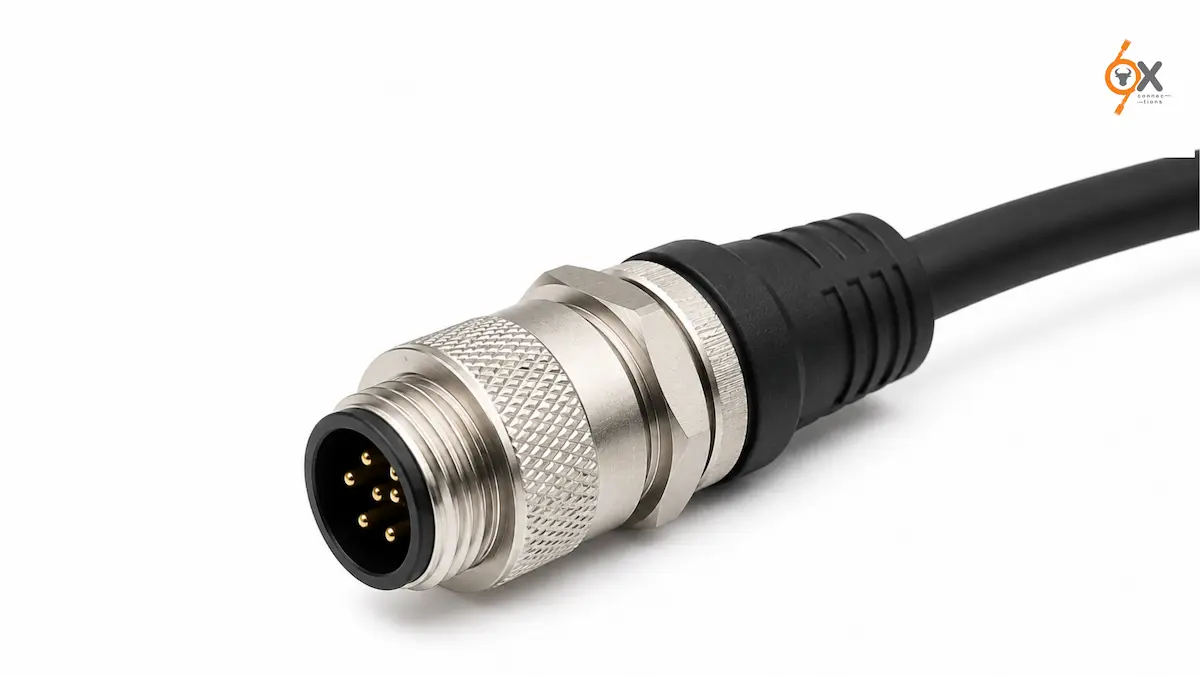
M12 connectors come in panel mount, field-attachable, and pre-terminated cable assembly formats.
Each format suits a different installation requirement. Panel mount versions provide a permanent termination point on an enclosure or switch. Field-attachable versions allow installers to set the exact cable length during installation.
This flexibility helps when installers route cables through trays or conduit on the plant floor.
Straight and angled body styles are also common. The choice usually depends on the available clearance around the mounting point. Both styles provide the same basic electrical function.
Common Installation Mistakes to Avoid
New installations can face problems when teams mix coding types without a clear labelling system. A technician may try to force an incompatible connector during a rushed repair.
Clear coding information on panel drawings and cable labels helps prevent this mistake. It also saves troubleshooting time later.
Under-tightening the locking nut can create another problem. A connector may appear fully seated but still loosen under vibration if the installer does not apply the correct torque.
Follow the manufacturer’s torque guidance during installation instead of tightening the connector by feel. This approach helps prevent intermittent network faults that can prove difficult to diagnose.
M12 Compared to Adjacent Sizes in the Range
M12 sits above M8 in the M-Series family. The difference in typical applications is fairly clear.
M8 generally handles compact sensor and actuator wiring with lower pin counts. M12 supports higher pin counts and commonly handles networking and communication protocols.
Sizes such as M16 and M20 sit above M12. These larger sizes focus more on combined power and signal or higher-current applications. That role differs from the network connectivity focus of M12.
Sourcing M12 Connectors from Ox Connections
OxConnections stocks over 5,000 products with dispatch within 48 hours. This can help network infrastructure projects where a missing connector could delay an entire line commissioning.
The M12 range includes A, B, and D coding options. It also covers panel mount, field-attachable, and cable assembly formats.
This range supports many industrial Ethernet and field-bus requirements without the need to switch suppliers.
Panel builders and system integrators can also source M12 connectors alongside the rest of the M-Series range from one supplier. This approach simplifies documentation and spare-parts planning.
It also keeps coding types and connector formats consistent across projects instead of varying them between vendors.
If you are planning a new network rollout, our team can help confirm the right coding and format. We can also help if you need to standardise connector types across an existing field-bus installation.