
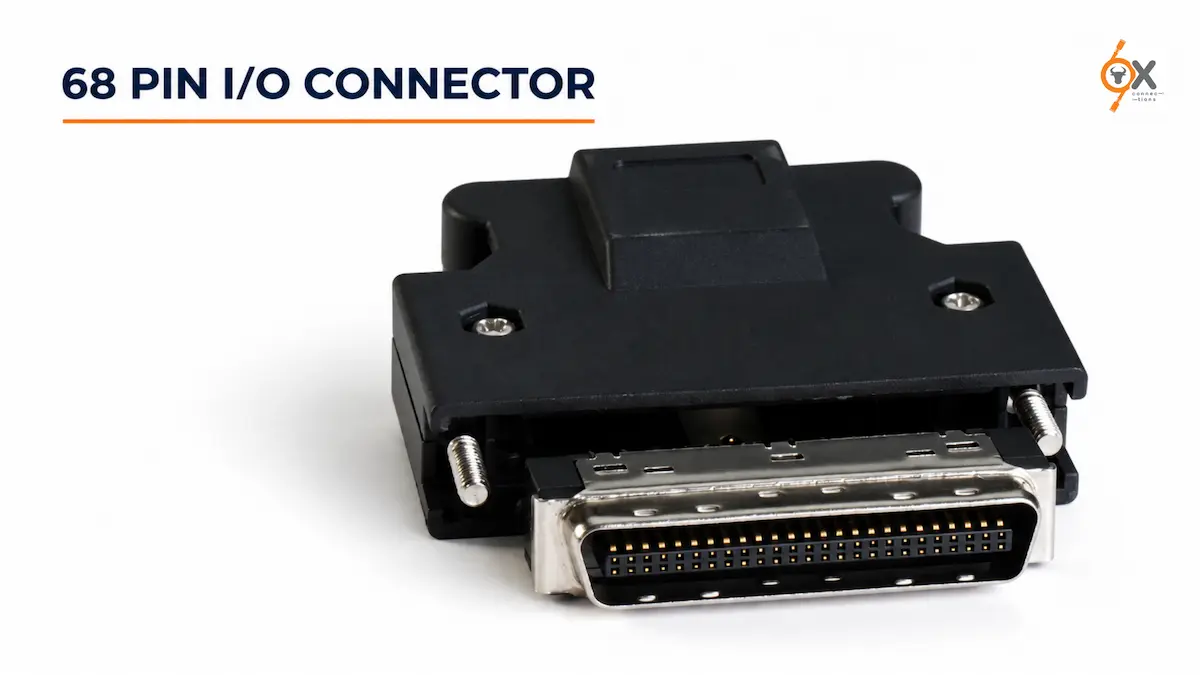
At some point, a design simply runs out of smaller options. The 68 Pin IO Connector sits at the top of the range for exactly that reason. It exists for systems where the signal count has grown beyond anything a mid-size connector could carry cleanly, without forcing an engineer to split one device’s wiring across several separate interfaces.
The Ceiling of the Range, Not the Starting Point
Sixty-eight pins mark the top of Ox Connections’ I/O connector range, sitting above the 6, 14, 26, 36, and 50 pin versions. Few projects start here. Most arrive at this pin count after a design grows through several revisions, adding channels until a smaller connector genuinely can’t hold them all. Specifying this size from day one, before the actual channel count justifies it, usually means carrying unused capacity and unnecessary bulk through the product’s entire life. A useful discipline is mapping the real channel count against each size in the range before committing, rather than jumping straight to the top simply because a project feels complex.
The Same Trusted IO Connector Types, at Maximum Density
Even at the top of the range, the mounting options stay familiar. Buyers get the same IO Connector Types available across every smaller size: a male wire solder version for field-terminated cable assemblies, and a PCB-mounted female version in straight or right-angle orientation for board-level designs. That continuity means a team that has specified the smaller sizes already knows exactly what to expect from the sixty-eight pin version.
What It Takes to Build a Connector This Dense Correctly
Sixty-eight contacts in one housing leave essentially zero room for manufacturing inconsistency. Pin alignment, plating quality, and contact retention all need to hold to a tight tolerance across every single position, since a fault at this density can be genuinely hard to trace back to its source. A compact, rugged build rated for frequent mating cycles keeps that quality intact well beyond the first few connections, which matters most on equipment expected to run for years without a connector failure.
Commissioning a High Pin-Count System the Right Way
A connector this large deserves a proper commissioning check rather than a visual glance. Testing continuity across all sixty-eight pins before a system goes live catches a marginal contact long before it turns into an intermittent fault on the production floor. Skipping this step to save time during installation often costs far more time later, once a strange reading somewhere downstream needs tracing back through dozens of possible contacts.
The Systems That Actually Need This Much Capacity
Large data acquisition systems pulling in readings from dozens of sensors at once reach for this pin count as standard practice. Industrial control systems coordinating an entire production cell, rather than a single subsystem, consolidate their wiring here. Test equipment built to interface with complex devices under evaluation, ones exposing a large number of measurement or control points, also depend on this density to keep the connection manageable rather than sprawling across multiple smaller interfaces. Research and instrumentation setups running many parallel experiments through one data logger round out the list, since consolidating that many channels into anything smaller would defeat the purpose of a unified logging system.
Documentation Matters More at the Top of the Range
A wiring error is forgivable on a six-pin connector and expensive on a sixty-eight pin one. Clear pin-out documentation, labelled at both ends of every cable, turns a routine service call into a quick job instead of a lengthy investigation. Teams managing systems at this density benefit from keeping that documentation with the equipment itself, not buried in a project folder that’s hard to find once the original designer has moved on to another project.
Space, Weight, and Cable Bulk at Maximum Pin Count
A sixty-eight conductor cable bundle carries real physical weight and stiffness, which changes how it behaves during installation compared to a lighter, smaller harness. Panel builders should plan generous strain relief, a wide enough bend radius, and secure cable clamping to prevent the bundle’s own weight from stressing the termination point over time. Reserving this space during the initial layout avoids a difficult retrofit once the harness physically arrives on site.
Sourcing an IO Connector India Projects Won’t Outgrow
IO Connector India buyers working at this scale need a supplier who stocks the full range, not just the common mid-size parts. Ox Connections carries the sixty-eight pin version alongside every smaller configuration in the family, with over 5,000 products in stock and quick dispatch across the country. That range means a growing project can move from a modest six-pin start to a full sixty-eight pin system without ever switching suppliers.
Final Word
A 68 Pin IO Connector earns its place only once a system’s real wiring demands justify the largest interface in the range. Getting there deliberately, through a design that has genuinely outgrown smaller connectors rather than defaulting to the biggest part available, keeps a system both reliable and cost-effective. Ox Connections offers I/O connectors across 6, 14, 26, 36, 50, and 68 pin configurations, in male wire solder and PCB female straight or right-angle types, backed by deep stock and quick dispatch across India.
Quick Answers
When does a design actually need a 68 pin IO connector?
Once a system’s real channel count, after accounting for realistic future revisions, genuinely exceeds what a 50 pin connector can carry cleanly.
How should I test a connector this dense before going live?
Check continuity across all sixty-eight pins during commissioning rather than relying on a visual inspection alone.
Does the cable bundle need special handling at this size?
Yes. Plan generous strain relief, bend radius, and clamping, since a bundle this large carries real weight that can stress the termination point over time.
Leave A Comment