
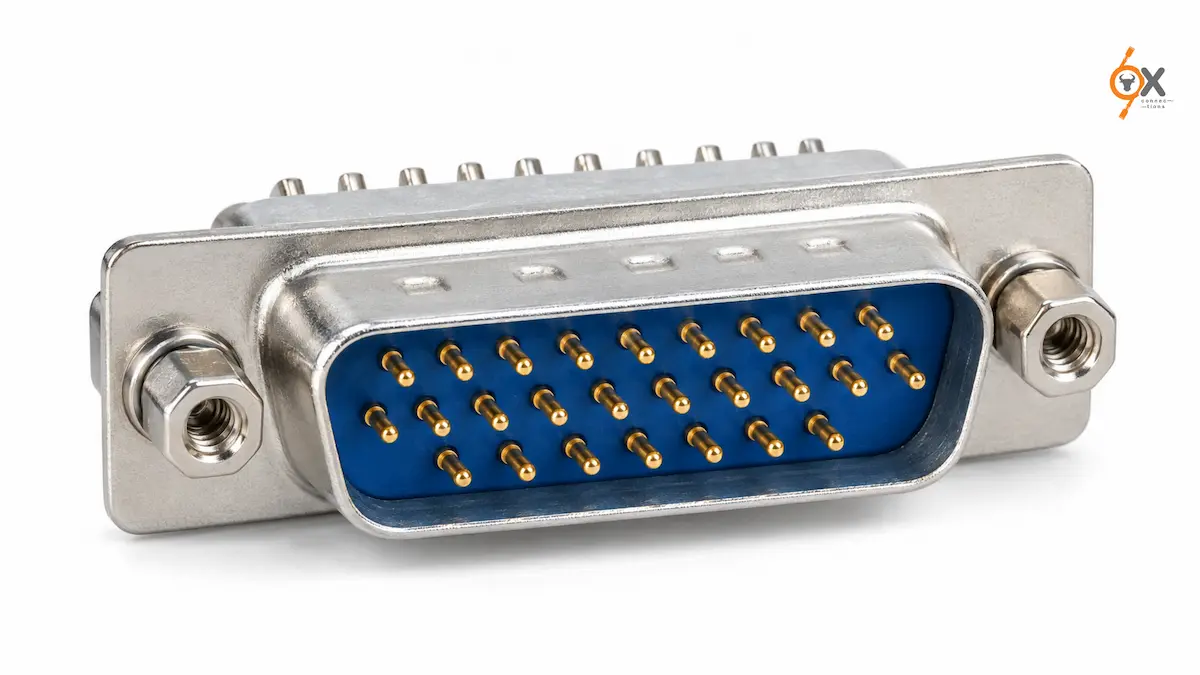
Some panels need more than 25 signal lines but not quite enough to justify a much bigger connector. That’s exactly where the 26-Pin D-Sub Connector fits. It sits just past the common 25-pin size. Designers get one extra channel without a major jump in bulk.
A Slightly Unusual Size With a Clear Purpose
Most people know D-Sub connectors by their common sizes: 9, 15, 25, and 37 pins. The 26-pin version fills a specific gap. It packs one more contact than the standard 25-pin layout. The pitch is often tighter too, which keeps the shell close to the same size. Engineers reach for it when a design needs just one more signal or ground line than 25 pins can offer. This size rarely appears in general catalogues. Buyers sometimes overlook it entirely until a wiring problem forces the question.
Where Panel Builders Actually Use This Size
Multi-signal industrial interfaces often need that extra channel for a dedicated ground or shield line. High-density wiring layouts benefit from the added contact too, especially where several sensors or actuators share one connector. Custom instrumentation panels sometimes standardise on this size for exactly that reason. It rarely shows up in consumer electronics. It earns its place in tightly engineered industrial systems instead. Panel builders already using 25 pins often find that one spare line justifies the switch.
D-Sub Connector Applications That Call for This Pin Count
D-Sub Connector Applications built around 26 pins usually involve dense signal groups needing one extra line. Industrial automation panels use it where a spare ground pin improves signal stability. Communication equipment sometimes specifies this size to separate a control line from the main data bus. Instrumentation setups pick it when a design outgrows 25 signals but doesn’t need a full jump to 37. Test and measurement racks with a tightly defined signal count often standardise on it for the same reason.
Mounting Choices That Keep Assembly Simple
Ox Connections offers the 26-pin D-Sub across solder-type, crimp, IDC, and PCB-mounting versions. A solder-type connector suits low-volume, hand-built cable assemblies. A crimp version works better for larger batches, since it keeps termination quality consistent. IDC versions save time on ribbon cable jobs. PCB-mount versions come in straight or right-angle orientation and solder directly onto a board for a tidy layout.
Why the Tighter Pitch Deserves Extra Care
Squeezing one more pin into a familiar shell size usually means a slightly tighter pitch between contacts. That tighter spacing leaves less room for error during mating. A secure locking mechanism, typically a pair of jack screws, keeps the connector seated correctly. It also helps prevent pins from bending under vibration. Technicians should always check alignment before applying force. This size punishes a careless connection more than a standard 25-pin part would. A magnifying tool helps during quality checks too, since bent pins are harder to spot at this pitch.
Sourcing a D-Sub Connector India Custom Builds Depend On
D-Sub Connector India buyers working on tightly engineered panels need a supplier who stocks less common sizes too. Ox Connections carries the 26-pin version alongside 9, 15, 25, 37, 44, 50, 62, 78, and 104 pin configurations. Over 5,000 products sit in stock. Quick dispatch across India keeps custom builds moving without long waits on a less common part.
Handling Notes for a Denser Contact Layout
Technicians should mate this connector slowly and check alignment twice before applying pressure. A rushed attempt on a tighter pitch risks bending more than one pin at once. Hand-tightening the jack screws evenly on both sides keeps the shell seated flat. Routine visual inspection catches early wear before it becomes a hard-to-trace fault. Keeping a labelled spare cable on hand also shortens repair time when a connection eventually needs replacing.
What a Buyer Should Check Before Ordering
A datasheet mismatch causes more headaches than any other issue with this pin count. Two connectors can share the same 26-pin label yet use different pitches from different manufacturers. Always verify pitch, shell size, and pin layout against the exact part number before placing an order. A quick physical comparison against an existing sample also helps when documentation is unclear. This small step avoids a mismatched batch arriving after a long shipping wait.
Final Word
The 26-Pin D-Sub Connector solves a narrow but real problem: needing one more signal line than 25 pins can offer. Match mounting style and locking hardware to the actual application. Confirm pitch compatibility with any existing cable assembly before ordering in bulk. Ox Connections offers D-Sub connectors across the full 9 to 104 pin range. Choices include solder, crimp, IDC, power, waterproof, and Centronics variants, backed by 5,000-plus products in stock and quick dispatch across India.
Quick Answers
Why does a 26-pin D-Sub connector exist alongside the 25-pin version?
It offers one extra contact, often for a ground or shield line, without a major jump in connector size.
Is the 26-pin connector interchangeable with a 25-pin part?
No. The pitch and pin count differ, so always confirm compatibility against the exact datasheet first.
What mounting style should I pick?
Choose based on assembly method: solder for hand-built cables, crimp for volume production, IDC for ribbon cable, and PCB mount for board-level builds.
Leave A Comment