
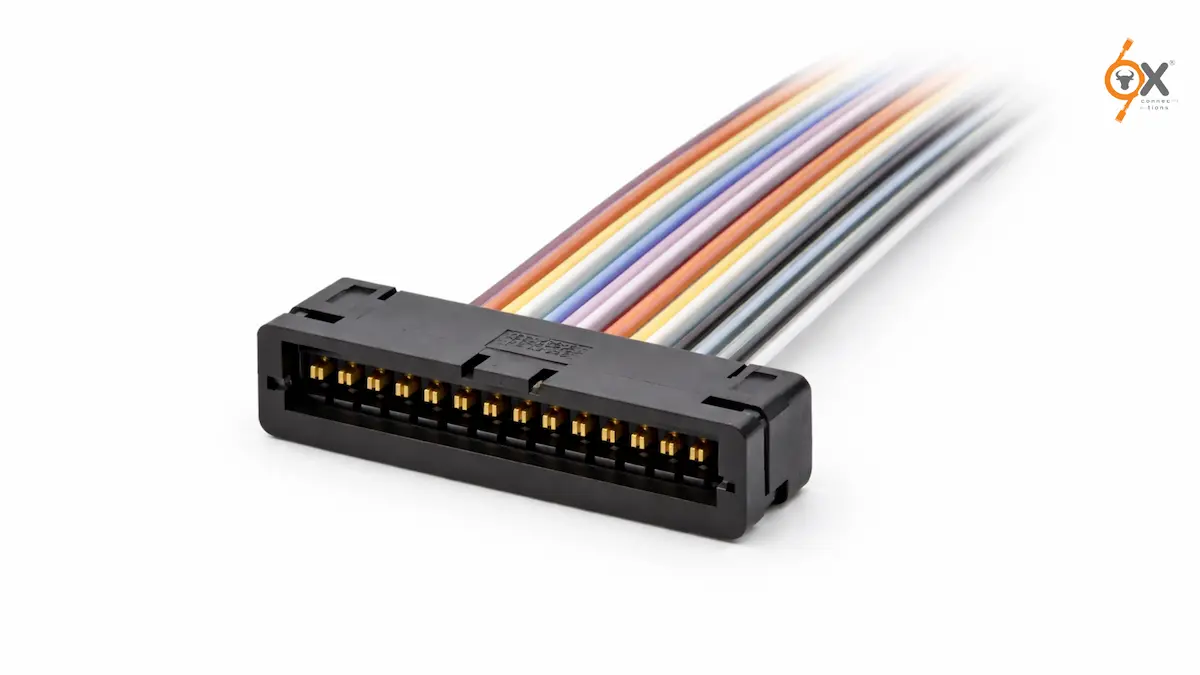
Whether it’s an industrial control panel, communication equipment, consumer electronics device, or embedded system, efficient signal transmission is critical for reliable performance. One of the most widely used solutions for connecting multiple signal lines in a compact space is the 20 Pin FRC Connector.
Designed to work with flat ribbon cables, these connectors provide a neat, organized, and cost-effective way to connect printed circuit boards (PCBs), displays, controllers, sensors, and other electronic modules. Their simple installation process, dependable electrical contact, and compatibility with insulation displacement technology have made them a preferred choice across industries.
In this guide, we’ll explore everything you need to know about the 20 Pin FRC Connector, including its construction, pin configuration, benefits, applications, selection criteria, and installation best practices.
What Is a 20 Pin FRC Connector?
A 20 Pin FRC Connector is a type of FRC Connector specifically designed to terminate a 20-conductor flat ribbon cable. FRC stands for Flat Ribbon Cable, a cable consisting of multiple insulated conductors arranged side by side in a flat configuration.
These connectors are commonly used to establish secure electrical connections between:
- Printed circuit boards
- Embedded systems
- Industrial controllers
- Displays and interface modules
- Communication equipment
- Consumer electronic devices
The connector is typically attached to the ribbon cable using Insulation Displacement Contact (IDC) technology, eliminating the need for wire stripping or soldering.
Because of their compact structure and ease of assembly, Ribbon Cable Connectors have become standard components in electronic system design.
Understanding the Pin Configuration
As the name suggests, a 20 Pin FRC Connector contains twenty individual electrical contacts arranged in two rows.
Typical Configuration
| Feature | Specification |
| Total Pins | 20 |
| Pin Arrangement | 2 × 10 |
| Pitch | Usually 2.54 mm |
| Connection Method | IDC Termination |
| Cable Type | Flat Ribbon Cable |
| Contact Material | Copper Alloy |
| Housing Material | Engineering Thermoplastic |
The connector follows a standardized numbering sequence, making it easy for engineers and technicians to identify signal paths during installation and maintenance.
Pin 1 identification is usually marked by:
- A triangle symbol
- A notch
- A colored stripe on the ribbon cable
Proper pin orientation is essential to prevent reversed connections and signal errors.
How Does a 20 Pin FRC Connector Work?
The operation of a 20 Pin FRC Connector is straightforward.
When the connector is pressed onto the flat ribbon cable, sharp IDC contacts penetrate the cable insulation and establish direct electrical contact with the conductor underneath.
This process offers several advantages:
- Fast assembly
- Consistent electrical connections
- Reduced wiring errors
- No soldering required
- Improved manufacturing efficiency
Once terminated, the connector can be plugged into a matching PCB header, creating a reliable pathway for signal transmission.
Key Features of a 20 Pin FRC Connector
Several characteristics make the 20 Pin FRC Connector suitable for modern electronic systems.
Compact Design
The flat structure of the connector minimizes cable bulk and helps optimize space utilization inside equipment enclosures.
Multiple Signal Transmission
Twenty conductors can carry multiple data, control, and power signals simultaneously through a single cable assembly.
Easy Installation
IDC termination technology significantly reduces assembly time compared to conventional crimping or soldering methods.
Reliable Electrical Contact
Precision-engineered contacts maintain stable conductivity and reduce signal interruptions.
Organized Cable Routing
Flat ribbon cables provide clean cable management, making systems easier to assemble and maintain.
Cost-Effective Solution
The combination of low manufacturing costs and simple installation contributes to overall system cost savings.
Advantages of Using a 20 Pin FRC Connector
The popularity of FRC Connectors stems from the practical advantages they offer across different applications.
Faster Production
Manufacturers can terminate ribbon cables quickly without specialized tools or soldering equipment.
Reduced Assembly Errors
Clearly defined conductor positions help ensure accurate wiring.
Improved Serviceability
Ribbon cable assemblies are easy to disconnect, inspect, and replace during maintenance.
Consistent Signal Integrity
Short, organized conductor paths help reduce wiring confusion and maintain signal quality.
Scalable Design
Multiple connector sizes are available, allowing designers to expand systems as required.
Space Optimization
Compact dimensions make these connectors ideal for equipment with limited internal space.
Common Applications of 20 Pin FRC Connectors
The versatility of the 20 Pin FRC Connector enables its use in numerous industries and electronic systems.
Industrial Automation Equipment
Industrial control systems rely heavily on ribbon cable assemblies for connecting:
- PLC modules
- I/O boards
- Control panels
- Sensor interfaces
- Relay boards
The connector’s reliability helps maintain uninterrupted operation in demanding environments.
Consumer Electronics
Many consumer devices use Ribbon Cable Connectors to link internal components efficiently.
Examples include:
- Printers
- Scanners
- Audio equipment
- Home appliances
- Gaming systems
Their compact design allows manufacturers to maximize available internal space.
Computer Hardware
Ribbon cable technology has long been used in computing applications.
Common examples include:
- Internal peripheral connections
- Expansion modules
- Interface boards
- Legacy storage devices
- Diagnostic systems
The organized structure simplifies cable management within equipment.
Medical Electronics
Medical devices often require dependable low-current signal connections between electronic modules.
Applications include:
- Diagnostic instruments
- Monitoring equipment
- Laboratory analyzers
- Imaging systems
Reliable connector performance supports consistent device operation.
Telecommunications Equipment
Communication systems frequently utilize FRC Connectors for signal routing between circuit boards and interface modules.
Examples include:
- Network switches
- Communication controllers
- Signal processing units
- Testing equipment
Embedded Systems and Development Boards
Engineers and developers commonly use 20 Pin FRC Connectors during prototyping and product development.
Applications include:
- Microcontroller boards
- Embedded control systems
- Robotics projects
- Educational electronics kits
Their plug-and-play capability speeds up development and testing.
Factors to Consider When Choosing a 20 Pin FRC Connector
Selecting the right connector ensures reliable system performance and long service life.
Pitch Compatibility
Verify that the connector pitch matches the ribbon cable and PCB header.
The most common pitch is:
2.54 mm
However, other pitch options may be available depending on the application.
Cable Compatibility
Confirm compatibility with:
- Cable width
- Number of conductors
- Insulation thickness
Improper matching can affect termination quality.
Contact Material
High-quality copper alloy contacts provide:
- Better conductivity
- Lower contact resistance
- Improved durability
Current and Voltage Requirements
Although primarily intended for signal transmission, some applications may require higher current capacities.
Always review connector ratings before selection.
Environmental Conditions
Consider operating conditions such as:
- Temperature
- Humidity
- Dust exposure
- Vibration
Applications in industrial environments may require more robust connector options.
Mating Cycle Requirements
Frequent connection and disconnection may demand connectors with higher durability ratings.
Installation Best Practices
Proper installation plays a major role in achieving reliable performance.
Verify Cable Orientation
Always align Pin 1 correctly before termination.
Use Proper IDC Pressing Tools
Uniform pressure ensures consistent contact penetration.
Inspect Connections
Check for:
- Misalignment
- Incomplete termination
- Damaged conductors
Avoid Excessive Cable Bending
Sharp bends can damage conductors and reduce cable lifespan.
Test Before Deployment
Electrical continuity testing helps identify assembly issues before installation.
Common Mistakes to Avoid
Even though installation is relatively simple, several mistakes can impact performance.
Incorrect Pin Alignment
Misaligned connections can cause communication failures or circuit damage.
Excessive Force During Assembly
Over-compression may damage contacts or cable conductors.
Using Incompatible Ribbon Cables
Different cable dimensions can lead to poor contact reliability.
Ignoring Environmental Factors
Exposure to moisture, heat, or vibration beyond specifications can shorten connector life.
Skipping Inspection Procedures
Visual and electrical inspections help detect issues early.
Why Quality Matters in FRC Connector Selection
A connector may appear to be a small component, but it directly impacts overall system reliability.
High-quality FRC Connectors offer:
- Better contact stability
- Consistent signal transmission
- Longer service life
- Improved mechanical durability
- Reduced maintenance requirements
For OEMs and manufacturers, choosing reliable connector solutions can significantly reduce downtime and field failures.
Companies like OXConnections , provide a broad range of connector solutions designed for industrial and electronic applications, helping manufacturers achieve dependable performance while maintaining cost efficiency.
The Future of Ribbon Cable Connectivity
As electronic devices continue becoming more compact and sophisticated, efficient internal connectivity remains essential.
Modern Ribbon Cable Connectors are evolving with improvements in:
- Contact reliability
- Miniaturization
- Material durability
- High-density interconnections
- Automated assembly compatibility
Despite advances in wireless technologies, wired interconnect solutions such as the 20 Pin FRC Connector continue to play a crucial role in ensuring secure, reliable, and interference-free communication between electronic components.
Conclusion
The 20 Pin FRC Connector remains one of the most practical and widely used connectivity solutions in modern electronics. Its ability to connect multiple signal lines through a compact, organized cable assembly makes it valuable across industrial automation, consumer electronics, telecommunications, medical devices, and embedded systems.
By understanding its pin configuration, operating principles, advantages, and selection criteria, engineers and buyers can make informed decisions that improve system reliability and simplify installation.
Whether you’re designing a new electronic product, upgrading industrial equipment, or sourcing components for large-scale manufacturing, choosing the right FRC Connector can significantly enhance performance, maintainability, and long-term operational efficiency.
FAQs
1. What is the purpose of a 20 Pin FRC Connector?
A 20 Pin FRC Connector is used to connect a 20-conductor flat ribbon cable to electronic circuits, enabling organized and reliable transmission of multiple signals between devices and PCBs.
2. What type of cable is used with a 20 Pin FRC Connector?
It is typically used with a flat ribbon cable containing 20 parallel conductors and is terminated using IDC (Insulation Displacement Contact) technology.
3. Where are 20 Pin FRC Connectors commonly used?
These connectors are widely used in industrial automation systems, consumer electronics, medical devices, communication equipment, embedded systems, and computer hardware.