
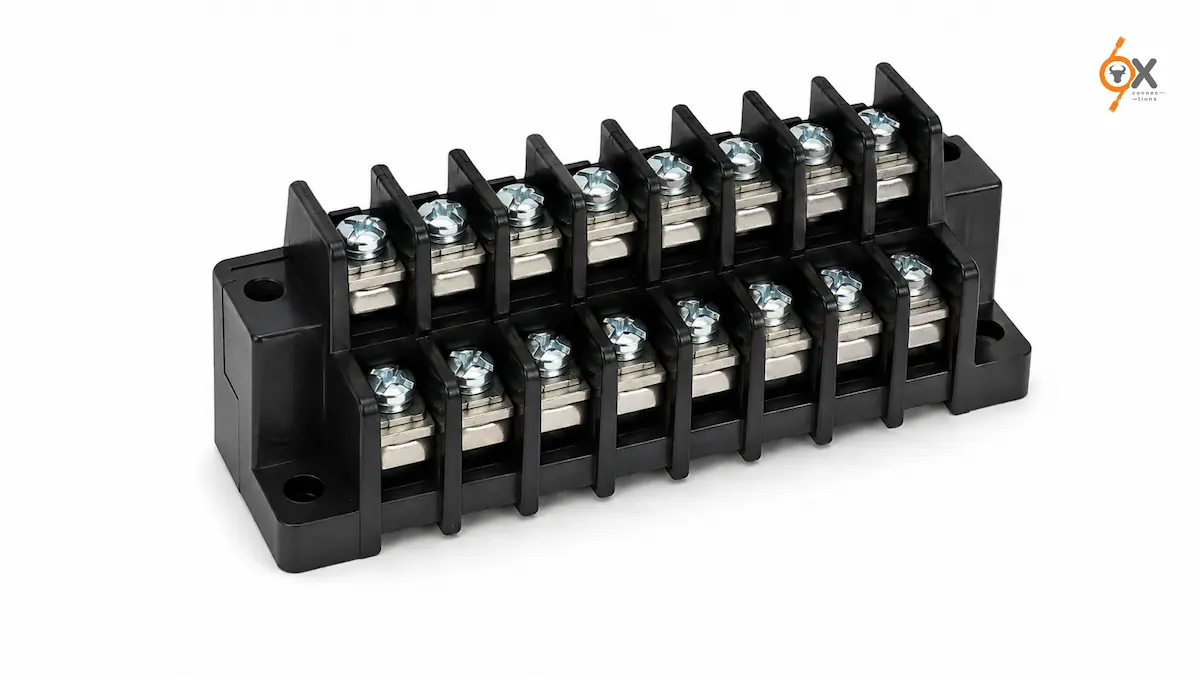
This guide explains what double level type barrier terminal blocks are, where they’re commonly used, and the key factors to consider before selecting an equivalent.
What do you do when your preferred double level barrier terminal block isn’t readily available, but production deadlines can’t wait?
It’s a situation many procurement teams and design engineers encounter. A delayed shipment, a discontinued product line, or the need to diversify suppliers can quickly disrupt manufacturing schedules. In these moments, the natural question is: Can we use an equivalent instead?
The answer is yes – but only if the replacement is evaluated carefully.
Choosing a Double Level Type Barrier Terminal Blocks Equivalent isn’t simply about finding a connector that looks similar. The replacement must fit the existing design, support the required electrical load, and perform reliably throughout the equipment’s lifecycle.
Across manufacturing hubs such as Mumbai, Pune, Bengaluru, Chennai, and Hyderabad, OEMs and panel builders are increasingly adopting multi-supplier sourcing strategies to improve supply chain resilience. Selecting technically compatible equivalents has become an important part of that approach.
What Are Double Level Type Barrier Terminal Blocks?
As industrial control panels become more compact, engineers are expected to fit more wiring into increasingly limited space. Double level barrier terminal blocks are designed to address exactly this challenge.
Unlike conventional single-level terminal blocks, these connectors provide two levels of terminal connections within a single housing, allowing more circuits to be accommodated without significantly increasing the installation footprint.
Like other barrier terminal blocks, they use screw-clamp technology to secure conductors while insulating barriers between adjacent terminals help minimise the possibility of accidental contact between connections.
Their compact design makes them particularly useful in applications where panel space is at a premium but reliable electrical connections remain essential.
Why Are Manufacturers Looking for Equivalent Double Level Barrier Terminal Blocks?
The need for an equivalent isn’t necessarily driven by product quality. More often, it’s about keeping projects on schedule.
Some of the most common reasons include:
Improving Supply Chain Flexibility
Depending entirely on one supplier can create unnecessary procurement risks. Approving technically compatible alternatives gives purchasing teams greater flexibility when sourcing components.
Reducing Lead Times
A single unavailable connector can delay the assembly of an entire control panel. Choosing an equivalent with better availability helps maintain production schedules.
Managing Procurement Costs
When connectors are used across multiple products, evaluating equivalent solutions may help improve procurement efficiency while maintaining the required technical performance.
Supporting Existing Equipment
Many manufacturers continue to service equipment that has been in operation for years. Equivalent terminal blocks help maintain legacy systems when original components become difficult to source.
What Should You Compare Before Choosing an Equivalent?
Not every connector with a similar appearance will perform the same way. Before approving an equivalent, engineers typically compare several important specifications.
Terminal Pitch
The pitch, or spacing between adjacent terminals, is usually one of the first dimensions to verify.
Even a small variation can prevent the replacement from fitting the existing PCB or mounting arrangement. Matching the original pitch helps avoid unnecessary redesign or installation issues.
Number of Poles
The equivalent should provide the same number of electrical connection points as the original component.
Changing the pole configuration may affect wiring layouts and increase installation complexity.
Current and Voltage Ratings
These specifications determine whether the terminal block can safely handle the electrical requirements of the application.
Rather than selecting a connector based solely on its appearance, it’s important to ensure its electrical ratings are appropriate for the intended operating conditions.
Different terminal blocks accommodate different conductor sizes.
Selecting a connector that supports the wire gauge used in the equipment helps maintain secure connections and simplifies installation.
Mounting Configuration
Double level barrier terminal blocks are available in various mounting configurations depending on the application.
Verifying the mounting style ensures the replacement integrates seamlessly into the existing equipment without mechanical modifications.
Housing Material
Although often overlooked, the housing material contributes significantly to long-term durability.
Quality engineering thermoplastics offer reliable electrical insulation while maintaining mechanical stability in demanding industrial environments.
Screw Clamp Mechanism
A well-designed screw terminal provides consistent clamping force, helping maintain reliable electrical contact throughout the product’s service life.
This becomes particularly important in applications where equipment may experience vibration during normal operation.
Where Are Double Level Barrier Terminal Blocks Used?
Because they combine compact design with dependable performance, double level barrier terminal blocks are widely used across many industries.
Some common applications include:
- Industrial automation and PLC systems
- Factory control panels
- Power distribution equipment
- Renewable energy systems
- HVAC control equipment
- Process automation
- Machine building
- Instrumentation and monitoring systems
Wherever space efficiency and organised wiring are important, double level barrier terminal blocks provide a practical solution.
Why Are Double Level Terminal Blocks Becoming More Popular?
Modern electrical systems are becoming smaller, smarter, and more complex.
Rather than expanding the size of a control panel every time additional connections are required, engineers increasingly look for components that make better use of available space.
Double level barrier terminal blocks help achieve this by offering:
- Higher connection density
- Better panel organisation
- Efficient use of installation space
- Secure screw-clamp wire termination
- Easier maintenance and troubleshooting
For panel builders working within strict space constraints, these advantages can simplify both installation and future servicing.
Common Mistakes to Avoid When Choosing an Equivalent
Even experienced buyers can overlook important details when selecting replacement components.
Some common mistakes include:
Assuming Similar Appearance Means Compatibility
Connectors may appear identical while differing in terminal spacing, electrical ratings, or mounting dimensions.
Always compare the technical specifications rather than relying on visual similarity.
Ignoring the Installation Environment
Dust, vibration, humidity, and elevated operating temperatures can all influence connector performance.
Choosing products suitable for the intended environment contributes to long-term reliability.
Focusing Only on Purchase Price
The lowest-cost connector isn’t always the most economical over the product’s lifetime.
Reliability, availability, and consistent quality often have a much greater impact on overall operating costs.
Why Choosing the Right Distributor Matters
Finding the right equivalent isn’t only about selecting the correct connector – it’s also about working with a supplier that understands industrial connectivity.
A knowledgeable distributor can help manufacturers:
- Identify technically compatible alternatives
- Reduce sourcing delays
- Maintain consistent component availability
- Simplify procurement across multiple connector families
- Access technical guidance when required
For OEMs, panel builders, and manufacturers across Mumbai and the rest of India, dependable distribution support can play an important role in keeping projects on schedule.
Conclusion
Choosing the right Double Level Type Barrier Terminal Blocks Equivalent involves much more than matching dimensions. A suitable replacement should offer compatible electrical performance, mechanical fit, and long-term reliability while supporting the overall requirements of the application.
As manufacturers continue to optimise supply chains and reduce procurement risks, technically compatible equivalents have become an important part of modern sourcing strategies. Taking the time to evaluate key specifications before making a substitution helps avoid unnecessary redesign, minimise downtime, and maintain dependable equipment performance.
OXConnections is a trusted distributor of electronic connectors, offering a comprehensive portfolio of connectivity solutions for industrial automation, automotive, renewable energy, medical equipment, consumer electronics, and other industrial applications. With ready inventory, products that meet applicable industry standards, and dedicated technical support, OX Connections helps OEMs and manufacturers across India source reliable connector solutions with reduced lead times and consistent availability.
Frequently Asked Questions
1. Can a Double Level Type Barrier Terminal Block be replaced with an equivalent?
Yes. An equivalent can be used provided it matches the original connector’s terminal pitch, number of poles, electrical ratings, mounting configuration, and wire compatibility. Reviewing the product datasheet before replacement is always recommended.
2. Why are double level barrier terminal blocks preferred in compact control panels?
Because they provide two levels of electrical connections within a single housing, they help increase wiring density and make more efficient use of available panel space without compromising accessibility.
3. Where can manufacturers in India source Double Level Type Barrier Terminal Block equivalents?
Manufacturers and OEMs across India, including Mumbai, commonly source compatible barrier terminal block solutions through specialised electronic connector distributors that offer ready inventory, technical guidance, and dependable product availability.