
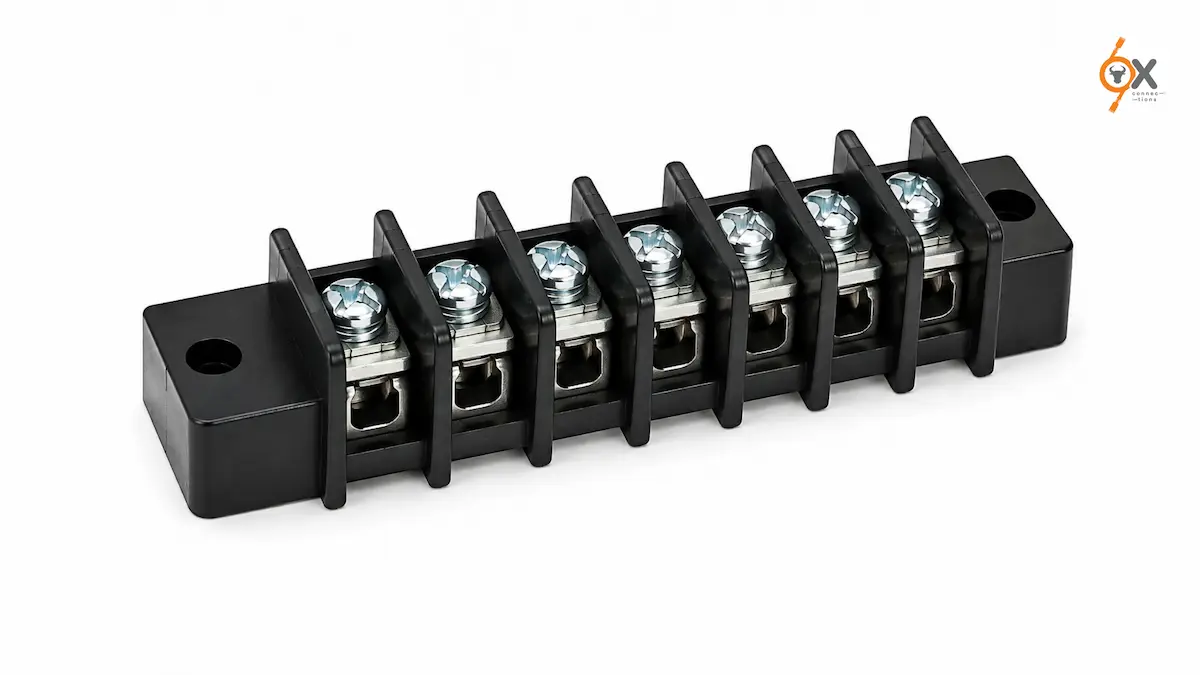
Looking for a reliable Single Level Type Barrier Terminal Blocks Equivalent that offers dependable performance without requiring design changes or compromising electrical safety?
As industries continue to embrace automation and smarter electrical systems, selecting the right connectivity components has become more important than ever. Barrier terminal blocks have long been trusted for creating secure wire-to-wire and wire-to-board connections in industrial control panels, machinery, power supplies, and electrical equipment.
However, engineers and procurement professionals often face challenges such as extended lead times, changing supplier availability, or the need to optimise sourcing costs. In such situations, identifying a technically compatible Single Level Type Barrier Terminal Blocks Equivalent can help maintain production schedules while ensuring reliable electrical performance.
Across industrial centres such as Mumbai, Pune, Chennai, Bengaluru, Hyderabad, and Ahmedabad, manufacturers are increasingly adopting multi-supplier procurement strategies to reduce supply chain risks. Choosing the right equivalent is therefore not just about availability – it’s about maintaining compatibility, safety, and long-term reliability.
This guide explains everything you should consider before selecting a compatible barrier terminal block.
What Are Single Level Type Barrier Terminal Blocks?
Single Level Type Barrier Terminal Blocks are electrical connectors designed to terminate and distribute electrical wiring safely and efficiently.
They feature a single row of terminals separated by insulating barriers, helping prevent accidental short circuits between adjacent connections. Conductors are secured using screw-clamp terminals, creating reliable electrical contact for both low and high-power applications.
Because of their robust construction and ease of maintenance, barrier terminal blocks remain one of the most widely used connection solutions across industrial electrical systems.
They are commonly found in:
- Industrial control panels
- Power distribution equipment
- Factory automation systems
- Motor control centres
- HVAC systems
- Renewable energy equipment
- Test and measurement instruments
- Machine building applications
Why Are Engineers Looking for Barrier Terminal Block Equivalents?
Choosing an equivalent connector is often driven by procurement strategy rather than product performance alone.
Some of the most common reasons include:
Improved Component Availability
Production schedules depend on consistent component supply. Equivalent barrier terminal blocks help manufacturers reduce delays caused by procurement challenges.
Reduced Lead Times
Waiting several weeks for a single connector can delay an entire production batch. Selecting compatible alternatives helps keep projects moving.
Multi-Supplier Procurement
Many OEMs approve equivalent components from multiple suppliers to minimise dependency on a single source and improve supply chain resilience.
Cost Optimisation
Where technically appropriate, equivalent components can support cost-effective procurement while maintaining product quality and performance.
What Should You Compare Before Choosing an Equivalent?
Although many barrier terminal blocks appear similar, several important technical specifications must be evaluated before making a replacement.
Terminal Pitch
Pitch refers to the centre-to-centre spacing between adjacent terminals.
Common pitches include:
- 25 mm
- 50 mm
- 00 mm
- 00 mm
- 00 mm
The replacement should match the PCB or mounting layout precisely to avoid installation issues.
Number of Poles
Single level barrier terminal blocks are available with different pole configurations.
The selected equivalent should match the required number of electrical connections without requiring modifications to the assembly.
Current Rating
Every terminal block has a specified current-carrying capacity.
Selecting an equivalent with insufficient current capability may lead to excessive heat generation, reduced efficiency, or premature component failure.
The replacement should always satisfy the electrical requirements of the application.
Voltage Rating
Industrial equipment often operates under varying voltage conditions.
Choosing a connector with an appropriate voltage rating helps maintain insulation performance and operational safety.
Wire Size Compatibility
Barrier terminal blocks support different conductor sizes depending on their design.
Always verify compatibility with the wire gauge used in the equipment to ensure secure termination.
Mounting Configuration
Single level barrier terminal blocks may be designed for:
- PCB mounting
- Chassis mounting
- Panel mounting
Selecting the correct mounting style ensures seamless integration into the existing system.
Insulating Material
The housing material contributes significantly to connector durability.
High-quality engineering thermoplastics offer:
- Excellent insulation
- Mechanical strength
- Heat resistance
- Long-term dimensional stability
Screw Terminal Quality
Reliable screw terminals provide consistent clamping force, ensuring secure electrical contact even after repeated maintenance cycles.
High-quality screw mechanisms also reduce the possibility of loose connections caused by vibration during normal operation.
Advantages of Single Level Barrier Terminal Blocks
Barrier terminal blocks continue to be widely used because they combine simplicity with dependable performance.
Reliable Electrical Connections
Screw-clamp terminals provide secure conductor retention suitable for a wide range of industrial applications.
Easy Installation and Maintenance
Individual wires can be connected or disconnected without affecting neighbouring circuits, simplifying servicing and troubleshooting.
Improved Electrical Safety
Insulating barriers between adjacent terminals help reduce the possibility of accidental contact and short circuits.
Flexible Wiring
Barrier terminal blocks accommodate multiple conductor sizes, making them suitable for diverse electrical installations.
Long Service Life
Properly selected terminal blocks deliver dependable performance even in demanding industrial environments.
Common Industrial Applications
Single level barrier terminal blocks are used across numerous industries where secure electrical connections are essential.
Industrial Automation
Control panels, PLC systems, sensors, and industrial machinery rely on barrier terminal blocks for dependable field wiring.
Power Distribution Equipment
Power supplies, switchgear, and electrical distribution systems commonly use barrier terminal blocks to organise electrical circuits.
Renewable Energy
Solar power systems, battery storage equipment, and power conversion systems require reliable terminal connections for efficient operation.
HVAC Equipment
Heating, ventilation, and air-conditioning systems use barrier terminal blocks to connect control boards and electrical components.
Process Industries
Manufacturing plants, instrumentation systems, and process automation equipment frequently incorporate barrier terminal blocks for safe electrical interconnections.
Common Mistakes to Avoid
Selecting a compatible barrier terminal block involves more than matching physical dimensions.
Avoid these common mistakes:
Choosing Only by Appearance
Two connectors may appear identical while differing in current capacity, terminal spacing, or mounting dimensions.
Always compare the technical specifications carefully.
Ignoring Environmental Conditions
Applications exposed to vibration, dust, humidity, or elevated temperatures require connectors suitable for those operating conditions.
Overlooking Mounting Compatibility
Even minor dimensional differences can affect installation and may require costly modifications to the equipment.
Prioritising Initial Cost
Lower-cost connectors may increase maintenance requirements or reduce service life if they do not meet the application’s technical requirements.
Evaluating overall reliability often provides better long-term value.
Why Work with a Reliable Connector Distributor?
Choosing the right distributor can simplify both procurement and technical selection.
An experienced distributor can provide:
- Ready inventory
- Technical assistance
- Multiple connector options
- Faster procurement
- Consistent product availability
- Support for OEMs and panel builders
For businesses across Mumbai and other industrial regions of India, partnering with a reliable distributor helps reduce sourcing complexity while maintaining uninterrupted production.
Conclusion
Selecting the right Single Level Type Barrier Terminal Blocks Equivalent requires careful consideration of electrical ratings, terminal pitch, mounting configuration, wire compatibility, and overall mechanical design. A properly matched equivalent can help manufacturers improve sourcing flexibility, reduce lead times, and maintain reliable electrical performance without unnecessary redesign.
Whether you’re building new equipment or maintaining existing industrial systems, choosing technically compatible barrier terminal blocks contributes to safer installations, simplified maintenance, and dependable long-term operation.
OXConnections is a trusted distributor of electronic connectors, offering a comprehensive portfolio of connectivity solutions for industrial automation, renewable energy, automotive, medical equipment, consumer electronics, and other industrial applications. With ready inventory, products that meet applicable industry standards, and dedicated technical support, OX Connections helps OEMs and manufacturers across India source reliable connector solutions with reduced lead times and consistent availability.
Frequently Asked Questions
1. What is a Single Level Type Barrier Terminal Block?
A Single Level Type Barrier Terminal Block is an electrical connector that provides secure wire termination using screw-clamp technology. The insulating barriers between terminals help improve safety by reducing the risk of accidental short circuits.
2. Can I replace a barrier terminal block with an equivalent?
Yes. An equivalent can be used provided it matches the original connector’s terminal pitch, current rating, voltage rating, mounting configuration, wire compatibility, and overall dimensions.
3. Where can manufacturers in India source Single Level Type Barrier Terminal Block equivalents?
Many OEMs, panel builders, and industrial manufacturers across India – including Mumbai – source compatible barrier terminal block solutions through specialised electronic connector distributors that provide ready inventory, technical support, and dependable product availability.