
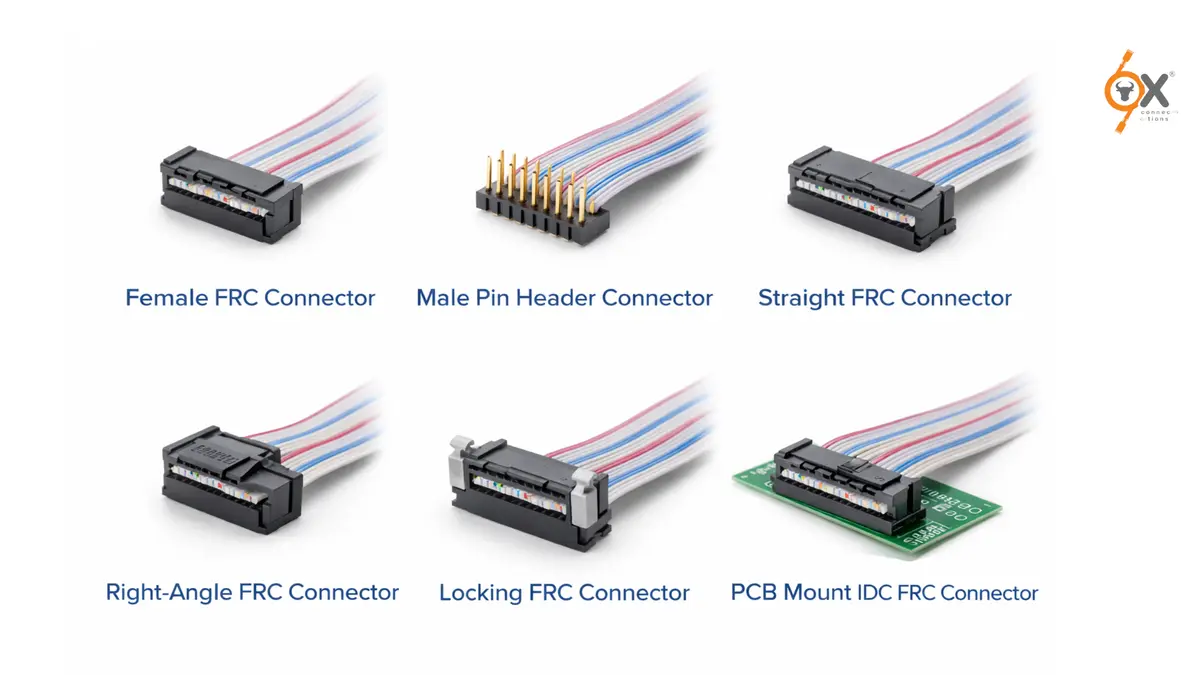
This guide explains the different FRC Connector Types, their uses, benefits, and industrial applications.
In modern electronics and industrial systems, compact and reliable connectivity plays a crucial role in ensuring smooth signal transmission and efficient device performance. From consumer electronics and computer hardware to industrial automation and medical equipment, connectors are the backbone of internal communication systems.
One such widely used connector solution is the FRC connector.
Known for its compact structure and compatibility with flat ribbon cables, the Ribbon cable connector has become an essential component in PCB-to-PCB and wire-to-board connections. Whether in embedded systems, telecom equipment, control panels, or industrial automation devices, FRC cable connectors are valued for their organized cable management, easy installation, and dependable performance.
What Is an FRC Connector?
An FRC connector (Flat Ribbon Cable Connector) is an electrical connector designed specifically for use with flat ribbon cables. These connectors help connect multiple wires simultaneously in a compact and organized format.
A ribbon cable consists of multiple insulated wires placed parallel to each other, creating a flat and flexible cable structure. The Ribbon cable connector allows these wires to terminate efficiently into PCBs and electronic assemblies.
FRC connectors are commonly used in:
- Computers and laptops
- Industrial automation systems
- Consumer electronics
- Telecom equipment
- Medical devices
- Automotive electronics
- Embedded systems
Because ribbon cables save space and simplify wiring layouts, IDC FRC connectors have become a preferred solution in modern electronic manufacturing.
What Is an IDC FRC Connector?
An IDC FRC connector refers to an Insulation Displacement Contact connector used with ribbon cables.
Unlike traditional crimping or soldering methods, IDC technology allows the connector contacts to pierce the cable insulation and establish electrical contact directly with the conductor.
This offers several advantages:
- Faster assembly
- Reduced wiring errors
- Reliable electrical connections
- Lower installation time
- Cost-effective manufacturing
IDC technology is one of the main reasons why FRC cable connectors are widely used in mass-production environments.
Different FRC Connector Types
There are several FRC connector types, each designed for specific applications and PCB configurations.
1. Female FRC Connector
Female FRC connectors are among the most commonly used types.
These connectors are designed to mate with male pin headers mounted on PCBs. They are widely used in:
- Computer motherboards
- Internal electronic wiring
- Automation systems
- Industrial control units
Features
- Compact design
- Easy PCB connectivity
- Secure cable retention
- Multiple pin configurations available
Because of their versatility, female Ribbon cable connectors are extensively used in both consumer and industrial electronics.
2. Male Pin Header Connector
Male pin headers are commonly paired with female FRC connectors.
These connectors are mounted directly onto PCBs and act as the mating interface for ribbon cable assemblies.
Applications
- PCB interconnections
- Embedded systems
- Microcontroller boards
- Industrial automation devices
Male headers are available in:
- Straight type
- Right-angle type
- SMT versions
- Through-hole versions
Their flexibility makes them suitable for a wide range of PCB designs.
3. Straight FRC Connectors
Straight FRC connectors allow ribbon cables to connect in a linear direction.
These are commonly used where there is sufficient vertical space inside the device or enclosure.
Common Uses
- Desktop computers
- Industrial machines
- Telecom systems
- Medical devices
Straight connectors simplify cable routing and improve accessibility during maintenance.
4. Right-Angle FRC Connectors
Right-angle connectors are designed for compact systems where space optimization is important.
These connectors allow the ribbon cable to bend at a 90-degree angle, reducing vertical clearance requirements.
Benefits
- Better space management
- Compact assembly design
- Improved airflow inside enclosures
Right-angle Ribbon cable connectors are commonly used in:
- Compact electronic devices
- Networking equipment
- Embedded systems
- Control panels
5. Locking FRC Connectors
Locking connectors include latching mechanisms that secure the cable connection.
These connectors are ideal for environments where vibration or movement may loosen standard connectors.
Applications
- Industrial automation
- Automotive systems
- Railway electronics
- Heavy machinery
Locking systems improve connection reliability and reduce accidental disconnections.
6. PCB Mount IDC FRC Connectors
PCB mount IDC connectors are directly mounted onto printed circuit boards and used for organized multi-wire connections.
These are highly preferred in mass-production electronics because they support:
- Fast assembly
- Reliable signal transmission
- Easy cable management
Industries Using PCB Mount IDC FRC Connectors
- Consumer electronics
- Telecom infrastructure
- Medical electronics
- Industrial equipment manufacturing
Advantages of FRC Connectors
The popularity of FRC cable connectors comes from the many benefits they offer.
Compact Cable Management
Ribbon cables keep multiple wires neatly arranged, reducing clutter and simplifying internal layouts.
Faster Assembly
IDC termination technology significantly reduces assembly time compared to soldering individual wires.
Cost-Effective Manufacturing
Mass production becomes easier and more economical with IDC FRC connectors.
Easy Maintenance
Organized wiring layouts make troubleshooting and maintenance faster.
Flexible Configurations
FRC connectors are available in multiple:
- Pin counts
- Pitch sizes
- Mounting styles
- Orientation options
This flexibility makes them suitable for diverse applications.
Applications of FRC Connectors
Because of their versatility, Ribbon cable connectors are widely used across industries.
Consumer Electronics
Devices such as:
- TVs
- Printers
- Audio systems
- Gaming consoles
often use FRC connectors for internal PCB communication.
Computers and IT Hardware
Ribbon cable assemblies are commonly used in:
- Hard drives
- Motherboards
- Disk drives
- Peripheral devices
Industrial Automation
Factories and automation systems rely on IDC FRC connectors for connecting:
- PLCs
- Control panels
- Sensors
- Automation boards
Reliable signal transmission is essential in industrial operations.
Medical Equipment
Medical electronics require compact and dependable connector systems for precise operation.
FRC connectors are commonly used in:
- Diagnostic equipment
- Monitoring systems
- Imaging devices
Telecom Infrastructure
Networking and telecom systems use FRC cable connectors for internal signal routing and organized cable management.
Choosing the Right FRC Connector
Selecting the right FRC connector depends on several factors.
1. Pin Count
Choose the appropriate number of pins based on your circuit requirements.
2. Pitch Size
Common pitch sizes include:
- 27 mm
- 0 mm
- 54 mm
Smaller pitch connectors help save PCB space.
3. Mounting Style
Options include:
- Through-hole
- Surface mount
- Right-angle
- Straight mount
4. Environmental Conditions
Industrial environments may require locking connectors for vibration resistance.
5. Cable Compatibility
Always ensure the connector matches the ribbon cable specifications.
Growing Demand for FRC Connectors in India
As India’s electronics manufacturing and automation sectors continue expanding, demand for reliable connector systems is increasing rapidly.
Industries such as:
- Renewable energy
- Consumer electronics
- Medical equipment
- EV manufacturing
- Industrial automation
require dependable and cost-effective interconnect solutions.
Manufacturers today are also looking for alternatives to expensive imported connector systems with long lead times.
Companies like OX Connections provide connector solutions for OEMs and industrial manufacturers across India. Their product offerings support sectors such as solar, home appliances, EVs, renewable energy, and medical equipment while meeting standards like UL, RoHS, and CE certifications.
Common Mistakes to Avoid While Using FRC Connectors
Incorrect Cable Orientation
Improper alignment may damage connector pins or affect signal transmission.
Using the Wrong Pitch Size
Mismatch between cable and connector pitch can result in connection failure.
Poor Cable Handling
Excessive bending or pulling can damage ribbon cables.
Low-Quality Connectors
Inferior connectors may lead to unreliable performance and increased maintenance costs.
Future of FRC Connectors
As electronics become smaller and more advanced, the demand for compact and efficient connectivity solutions will continue growing.
Technologies such as:
- Industrial IoT
- Smart manufacturing
- Robotics
- EV systems
- AI-enabled devices
will further increase the use of Ribbon cable connectors and IDC FRC connectors in modern electronic systems.
Compact, organized, and reliable cable management solutions will remain critical for next-generation devices and industrial automation.
Conclusion
The FRC connector has become an essential component in modern electronics and industrial systems. From consumer electronics and computer hardware to automation and telecom infrastructure, these connectors provide reliable and space-efficient connectivity solutions.
Understanding the different types of Ribbon cable connectors helps manufacturers, engineers, and OEMs select the right solution for their applications. Whether using straight connectors, right-angle connectors, locking systems, or IDC FRC connectors, choosing the correct connector improves performance, reliability, and ease of assembly.
As industries continue moving toward smarter and more compact systems, the demand for dependable FRC cable connectors will only continue to rise.
FAQs
1. What is an FRC connector used for?
An FRC connector is used to connect flat ribbon cables in electronic and industrial systems for organized and reliable signal transmission.
2. What does IDC mean in IDC FRC connector?
IDC stands for Insulation Displacement Contact, a technology that connects wires without stripping insulation.
3. Where are ribbon cable connectors commonly used?
Ribbon cable connectors are widely used in computers, telecom systems, industrial automation, medical equipment, and consumer electronics.