
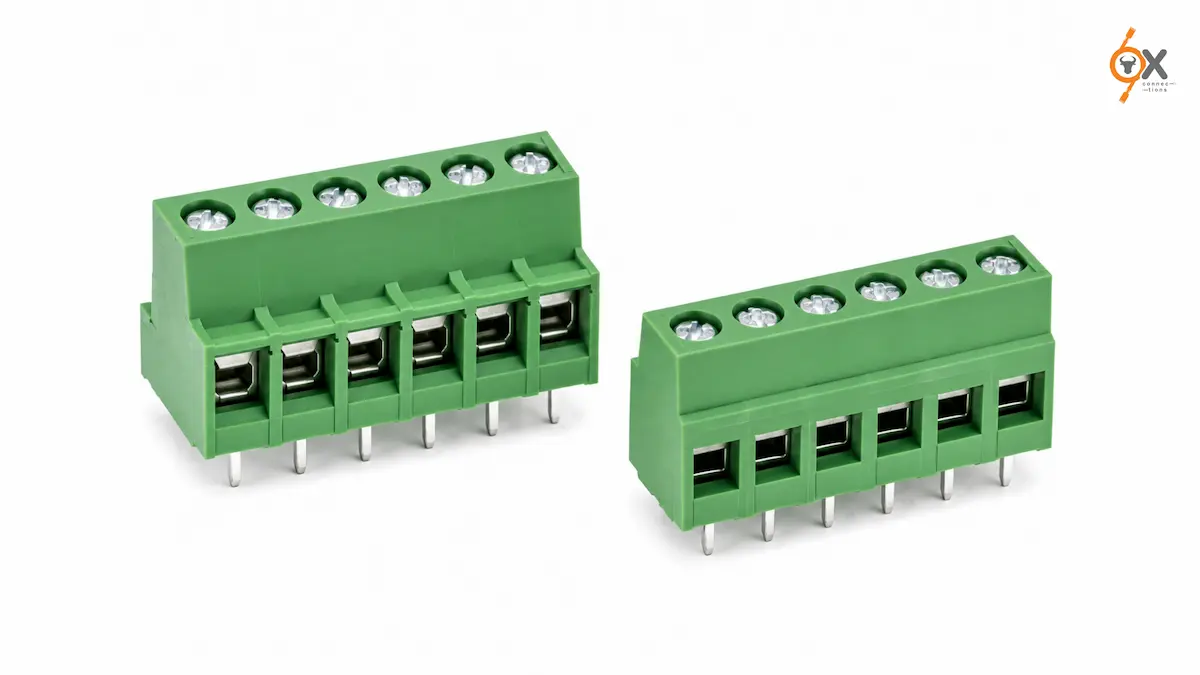
This guide explains what to look for when selecting a screw type PCB terminal blocks equivalent and the key factors that should never be overlooked.
What happens when the PCB terminal block you’ve always used suddenly becomes difficult to source, has extended lead times, or no longer fits your project’s budget?
For design engineers, procurement professionals, and panel builders, this is a familiar challenge. Selecting a Screw Type PCB Terminal Blocks Equivalent isn’t simply about finding a connector with a similar appearance – it requires careful evaluation of electrical, mechanical, and environmental specifications to ensure long-term reliability.
Across India’s manufacturing hubs, including Mumbai, Pune, Bengaluru, Chennai, Hyderabad, and Ahmedabad, OEMs are increasingly looking for dependable alternatives to globally recognised brands like Degson. Whether the goal is reducing procurement delays, maintaining production schedules, or implementing a multi-supplier sourcing strategy, choosing the right equivalent can deliver both operational and commercial advantages.
What Are Screw Type PCB Terminal Blocks?
Screw type PCB terminal blocks are connectors that provide a secure electrical interface between a printed circuit board (PCB) and external wires using screw-clamp technology.
Unlike soldered wire connections, they allow conductors to be connected, removed, or replaced with ease, making maintenance and servicing significantly more convenient.
These terminal blocks are widely used across industries because they offer:
- Secure wire retention
- Reliable electrical continuity
- Easy field wiring
- Simple maintenance
- Long service life
They are commonly found in industrial control panels, power supplies, HVAC equipment, automation systems, renewable energy applications, security systems, instrumentation, and consumer electronics.
Why Are Engineers Looking for Degson Terminal Block Equivalents?
Degson is a recognised name in industrial connectivity, but many manufacturers evaluate equivalent solutions for practical business reasons rather than product performance alone.
Some of the most common reasons include:
Supply Chain Flexibility
Relying on a single supplier can create procurement challenges during periods of high demand or extended lead times. Using compatible equivalents provides sourcing flexibility and reduces production risks.
Inventory Availability
For manufacturers operating on tight production schedules, readily available components are essential. Choosing an equivalent with consistent stock availability helps minimise delays.
Cost Optimisation
Electronic products often contain multiple terminal blocks across a single assembly. Selecting technically compatible alternatives can contribute to better cost management without compromising functionality.
Product Lifecycle Management
As products evolve over time, engineers often reassess component selection to improve sourcing efficiency or standardise connector families across multiple designs.
What Should You Compare Before Selecting a Screw Type PCB Terminal Blocks Equivalent?
Choosing an equivalent requires more than comparing dimensions. Several technical parameters must match the original design.
Pitch
The terminal block pitch refers to the centre-to-centre spacing between adjacent terminals.
Common pitches include:
- 54 mm
- 5 mm
- 81 mm
- 0 mm
- 08 mm
- 5 mm
- 62 mm
Even a minor variation in pitch can prevent proper installation on the PCB.
Number of Positions
The replacement should provide the same number of poles or positions as the original component.
Using a different configuration may require PCB redesign or affect cable routing.
Current Rating
Every terminal block is designed to safely carry a specified amount of current.
Selecting an equivalent with insufficient current capacity can result in excessive heating, reduced performance, or premature failure.
The replacement should always meet or exceed the electrical requirements of the application.
Voltage Rating
Voltage capability is another important consideration, particularly in industrial control systems and power distribution equipment.
Ensure the equivalent matches the original operating voltage and insulation requirements.
Wire Size Compatibility
Different terminal blocks support different conductor sizes.
Before selecting an equivalent, verify compatibility with the wire gauge used in the existing application to ensure secure clamping and reliable electrical contact.
Mounting Orientation
Screw type PCB terminal blocks are available in multiple configurations, including:
- Vertical
- Horizontal
- 45-degree entry
The mounting orientation must match the PCB layout and enclosure design.
Housing Material
High-quality engineering thermoplastics provide excellent dimensional stability and resistance to heat during operation.
A robust housing also improves mechanical durability in demanding industrial environments.
Screw Clamp Quality
The screw-clamp mechanism plays a vital role in maintaining a reliable electrical connection over time.
Well-designed screw terminals provide consistent clamping force while reducing the likelihood of loose connections caused by vibration or repeated maintenance.
Applications of Screw Type PCB Terminal Blocks
Because of their versatility and dependable performance, screw type PCB terminal blocks are widely used across numerous industries.
Industrial Automation
PLCs, control panels, sensors, motor drives, and industrial controllers frequently use screw terminal blocks for field wiring.
Renewable Energy
Solar inverters, battery management systems, and energy storage equipment rely on dependable PCB terminal blocks for power and signal connections.
HVAC Systems
Heating, ventilation, and air-conditioning equipment uses PCB terminal blocks to connect control boards with field wiring.
Power Supplies
Power conversion equipment requires secure electrical connections capable of handling continuous operating loads.
Building Automation
Lighting controls, access control systems, and smart building infrastructure commonly incorporate PCB terminal blocks.
Common Mistakes to Avoid
When selecting a Degson terminal block equivalent, avoid these common errors:
Choosing Only by Appearance
Two terminal blocks may look identical but differ in pitch, current rating, housing dimensions, or mounting configuration.
Always compare the technical specifications.
Ignoring PCB Footprint
Even slight dimensional differences may prevent proper installation or create mechanical stress during assembly.
Overlooking Environmental Conditions
Applications exposed to vibration, temperature fluctuations, dust, or humidity require connectors designed to operate reliably under those conditions.
Prioritising Price Alone
The lowest-cost connector is not always the most economical choice over the product’s lifecycle.
Consistent quality and dependable performance help reduce maintenance costs and improve system reliability.
Why Work with a Reliable Connector Distributor?
Selecting the right equivalent is only part of the procurement process.
Working with an experienced distributor offers several advantages:
- Ready inventory for faster procurement
- Access to multiple connector series
- Technical guidance during product selection
- Consistent product availability
- Reduced sourcing complexity
- Reliable support for OEMs and panel builders
For manufacturers across Mumbai and other industrial regions of India, partnering with a trusted distributor can simplify sourcing while helping maintain uninterrupted production schedules.
Conclusion
Choosing the right Screw Type PCB Terminal Blocks Equivalent involves far more than finding a connector with similar dimensions. Engineers must carefully evaluate pitch, current rating, voltage capacity, mounting orientation, wire compatibility, and mechanical design to ensure the replacement performs reliably throughout the product’s lifecycle.
For businesses seeking a Degson terminal block equivalent, a well-matched alternative can improve sourcing flexibility, reduce procurement delays, and support efficient production without requiring unnecessary design changes.
OXConnections is a trusted distributor of electronic connectors, offering a comprehensive portfolio of connectivity solutions for industrial automation, renewable energy, automotive, consumer electronics, and other industrial applications. With ready inventory, products that meet applicable industry standards, and dedicated technical support, OX Connections helps OEMs and manufacturers across India source reliable connector solutions with reduced lead times and consistent availability.
Frequently Asked Questions
1. Can I replace a Degson screw type PCB terminal block with an equivalent?
Yes, provided the replacement matches the original connector’s pitch, current rating, voltage rating, mounting orientation, number of positions, and PCB footprint. Always verify the technical specifications before substitution.
2. What is the most important factor when choosing a PCB terminal block equivalent?
The PCB footprint and pitch should be verified first, followed by electrical ratings, wire compatibility, mounting orientation, and the application’s operating environment.
3. Where can businesses in India source screw type PCB terminal block equivalents?
Many OEMs, panel builders, and manufacturers source compatible PCB terminal block solutions through specialised electronic connector distributors that maintain ready inventory and provide technical support for industrial applications.