
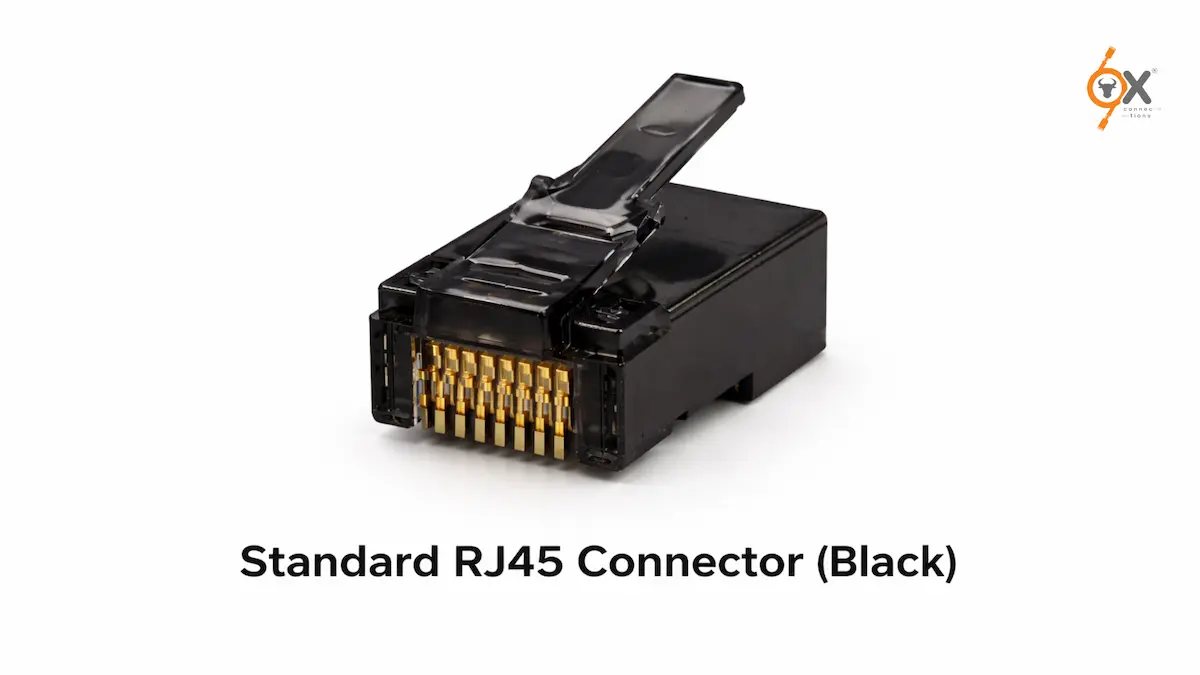
When we think about network connectivity, most of the attention goes to routers, switches, servers, and cables. However, one small component plays a critical role in ensuring reliable communication between these devices – the Standard RJ45 Connector.
From office networks and data communication systems to industrial automation equipment and smart infrastructure, the RJ45 Connector has become the universal interface for Ethernet connectivity. Despite advancements in wireless technology, wired Ethernet networks continue to be preferred where stability, speed, and reliability are essential.
If you’re an engineer, OEM, procurement professional, system integrator, or simply someone looking to understand networking hardware better, knowing how a Standard RJ45 Connector works can help you make more informed decisions for your projects.
What Is a Standard RJ45 Connector?
A Standard RJ45 Connector is an 8-position, 8-contact (8P8C) modular connector used primarily for Ethernet networking. It terminates twisted-pair cables and establishes a physical connection between networking devices, allowing data signals to travel efficiently from one point to another.
The connector is designed to support Ethernet communication standards and is widely used across commercial, industrial, telecommunications, and residential networking environments.
Today, almost every wired internet connection relies on an Ethernet Connector based on the RJ45 format.
Why Is It Called a Standard RJ45 Connector?
The term “RJ45” originally referred to a registered jack specification used in telecommunications. Over time, the industry adopted the familiar 8P8C modular design for Ethernet communication, and it eventually became the standard connector format for networking applications worldwide.
What makes it “standard” is its universal acceptance across Ethernet-enabled devices. Whether you’re connecting a desktop computer, network switch, IP camera, industrial controller, or communication gateway, the same connector design is used across applications.
This standardization offers several advantages:
- Universal compatibility
- Simplified installation
- Easy replacement and maintenance
- Consistent performance across devices
- Global adoption across industries
Components of a Standard RJ45 Connector
Although compact in size, a Standard RJ45 Connector consists of several important elements that contribute to reliable connectivity.
Connector Housing
The plastic housing protects the internal contacts and guides proper insertion into the Ethernet port.
Metal Contacts
Eight conductive contacts establish electrical connections between the cable conductors and the connected device.
Locking Tab
The locking clip secures the connector inside the port and prevents accidental disconnection during operation.
Cable Entry Section
The rear section allows the Ethernet cable to enter and align correctly with the connector contacts.
Strain Relief Support
Proper strain relief helps protect cable termination points from mechanical stress, increasing durability and reliability.
Understanding the RJ45 Pinout
One of the most important aspects of Ethernet installation is understanding the RJ45 Pinout.
The connector contains eight conductors arranged according to standardized wiring schemes. The two commonly used standards are T568A and T568B.
T568A Wiring Sequence
- White/Green
- Green
- White/Orange
- Blue
- White/Blue
- Orange
- White/Brown
- Brown
T568B Wiring Sequence
- White/Orange
- Orange
- White/Green
- Blue
- White/Blue
- Green
- White/Brown
- Brown
In most commercial Ethernet installations, T568B is more commonly used. However, both standards deliver the same network performance when implemented correctly.
Accurate wiring is essential because even minor errors can lead to connectivity issues, slower network speeds, or complete communication failures.
How Does a Standard RJ45 Connector Work?
The operation of a RJ45 Connector is straightforward yet highly effective.
When the connector is inserted into an Ethernet port, the metal contacts inside the connector align with corresponding contacts inside the device. This creates a secure electrical pathway that allows data signals to travel through the Ethernet cable.
Because Ethernet communication depends on precise signal transmission, the quality of contact between the connector and device plays a major role in maintaining network stability and performance.
This simple connection mechanism is one reason why RJ45 technology has remained the preferred networking interface for decades.
Applications of Standard RJ45 Connectors
The versatility of the Standard RJ45 Connector makes it suitable for a wide range of industries and applications.
Computer Networks
The most common application is connecting devices within Local Area Networks (LANs).
Examples include:
- Desktop computers
- Network switches
- Routers
- Printers
- Servers
- Storage devices
Industrial Automation
Modern factories increasingly rely on Ethernet-based communication systems.
RJ45 connectors are frequently used in:
- PLC systems
- HMI interfaces
- Industrial controllers
- Machine communication networks
- Automation equipment
Telecommunications Infrastructure
Network communication equipment often depends on reliable Ethernet connectivity for transmitting and managing data traffic.
Surveillance and Security Systems
Many IP-based security systems use Ethernet connections for communication and power delivery.
Applications include:
- CCTV cameras
- Network video recorders
- Access control systems
- Monitoring stations
Smart Buildings and Renewable Energy Systems
RJ45 connectivity is commonly found in:
- Building management systems
- Smart monitoring solutions
- Energy management equipment
- Solar monitoring systems
- IoT gateways
Benefits of Using a Standard RJ45 Connector
Universal Compatibility
One of the biggest advantages is compatibility across virtually all Ethernet-enabled equipment.
Reliable Connectivity
Unlike wireless communication, Ethernet connections provide stable and predictable performance with minimal signal interruptions.
High-Speed Data Transmission
Modern Ethernet networks can support extremely fast communication speeds while maintaining signal integrity.
Easy Installation
RJ45 connectors are straightforward to terminate, install, inspect, and replace when necessary.
Cost-Effective Networking
The widespread adoption of the Ethernet Connector has made it one of the most affordable and efficient connectivity solutions available.
Long Service Life
When properly installed and maintained, RJ45 connectors can deliver reliable performance for many years.
Factors to Consider When Selecting a Standard RJ45 Connector
Choosing the right connector involves more than simply matching the cable.
Consider the following factors:
Contact Material Quality
High-quality contact materials improve conductivity and reduce long-term wear.
Durability Requirements
Industrial applications may require connectors capable of withstanding vibration, temperature fluctuations, and continuous operation.
Cable Compatibility
The connector should match the cable specifications used within the network.
Environmental Conditions
Dust, humidity, and industrial contaminants can influence connector performance and lifespan.
Compliance and Certifications
For OEMs and manufacturers, selecting connectors that comply with RoHS, CE, and UL requirements is often essential for product reliability and regulatory compliance.
Common Installation Mistakes to Avoid
Even a premium-quality connector can underperform if installed incorrectly.
Some common mistakes include:
Incorrect Wiring Sequence
Always verify conductor placement before termination.
Excessive Untwisting of Cable Pairs
Maintaining cable twists helps preserve signal quality and reduce interference.
Poor Crimping
Improper termination can create unstable connections and intermittent communication failures.
Mechanical Stress on the Cable
Excessive pulling or bending can damage the connector assembly and reduce service life.
Why Connector Quality Matters
In many networking systems, failures are often traced back to small components rather than expensive equipment. A poorly manufactured connector can introduce signal loss, unreliable communication, increased maintenance requirements, and unexpected downtime.
For OEMs working in industrial automation, renewable energy, home appliances, EV systems, and medical equipment, selecting dependable connectivity solutions is essential for long-term product performance.
At OXConnections, we support manufacturers and OEMs with reliable connector solutions that combine quality, certification compliance, competitive pricing, and readily available inventory – helping businesses avoid long lead times and excessive procurement costs often associated with imported connector brands.
Conclusion
The Standard RJ45 Connector remains one of the most widely used and trusted components in modern networking infrastructure. Its universal compatibility, dependable performance, simple installation, and cost-effectiveness make it the preferred choice for Ethernet connectivity across industries.
Whether used in office networks, industrial automation systems, telecommunications infrastructure, security applications, or smart energy solutions, a high-quality RJ45 Connector plays a vital role in ensuring stable and efficient communication.
Understanding the connector’s structure, RJ45 Pinout, applications, and selection criteria can help businesses and engineers build networks that deliver long-term reliability and performance.