
When it comes to Ethernet networking, not every environment requires heavy-duty shielding or complex connectivity solutions. In fact, many office networks, residential setups, commercial systems, and everyday networking applications rely on a simpler and more cost-effective option – the Unshielded RJ45 Connector.
Known for its practicality, ease of installation, and reliable performance, the RJ45 Connector remains one of the most commonly used components in Ethernet communication. For standard networking environments where electromagnetic interference is minimal, an unshielded connector is often the preferred choice.
Whether you’re setting up a LAN network, assembling networking hardware, building communication systems, or sourcing components for OEM applications, understanding the role of an Unshielded RJ45 Connector can help you choose the right solution for efficient and stable connectivity.
What Is an Unshielded RJ45 Connector?
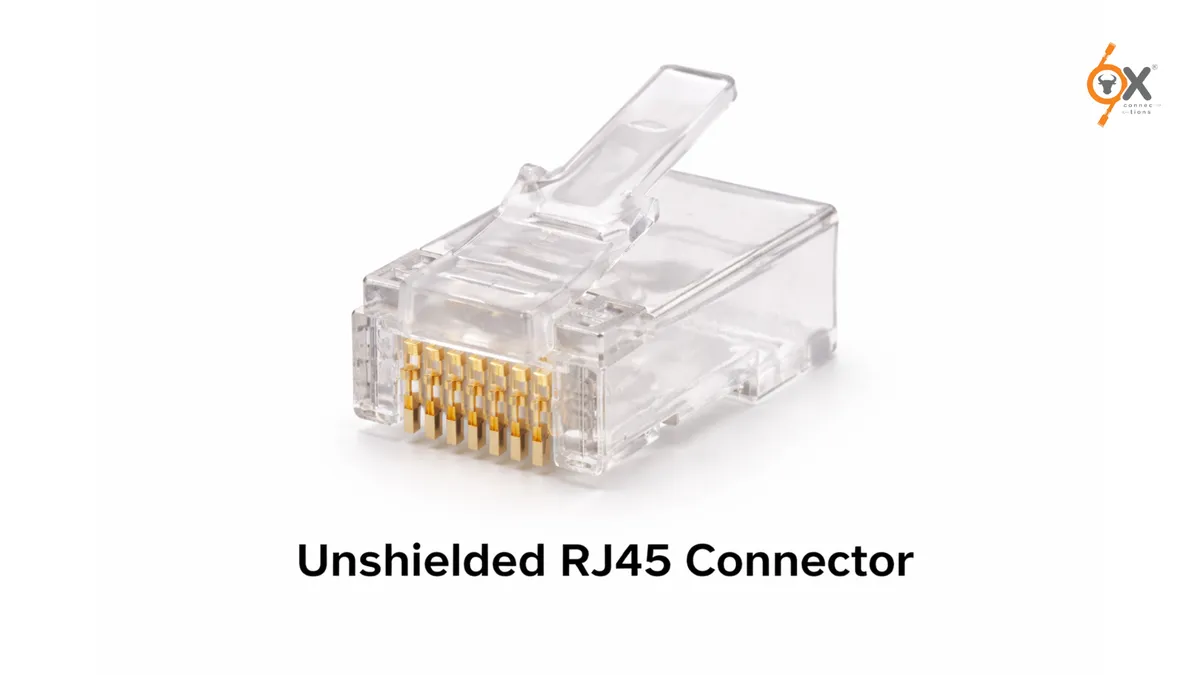
An Unshielded RJ45 Connector is a standard Ethernet connector designed without an external metallic shielding layer. It follows the familiar 8P8C (8-position, 8-contact) configuration used in Ethernet networking and is commonly paired with unshielded twisted pair (UTP) cables.
The connector allows devices to communicate through Ethernet networks while maintaining reliable signal transmission for day-to-day networking applications.
Unlike shielded connectors that are designed for electrically noisy industrial environments, unshielded connectors are ideal for clean networking setups where interference levels are low.
Why Are Unshielded RJ45 Connectors So Widely Used?
One of the biggest reasons for the popularity of the Unshielded RJ45 Connector is its simplicity.
Most commercial and residential networking environments do not experience significant electromagnetic interference. As a result, businesses and installers often prefer unshielded connectors because they are:
- Easy to install
- Cost-effective
- Lightweight
- Widely compatible
- Suitable for standard Ethernet applications
From office LAN systems and internet routers to educational institutions and retail setups, unshielded connectors continue to support millions of Ethernet connections every day.
Understanding the Structure of an Unshielded RJ45 Connector
Even though it has a simple design, every component within the connector plays an important role in maintaining reliable connectivity.
Connector Housing
The plastic housing protects the internal contact structure and ensures proper alignment during insertion.
Metal Contacts
The connector contains eight conductive contacts that establish communication between the Ethernet cable and networking device.
Locking Tab
The locking clip secures the connector firmly into the Ethernet port and prevents accidental disconnection.
Cable Entry Point
This section helps guide the Ethernet cable into the connector for proper termination.
Because the connector lacks metallic shielding, it offers a more lightweight and compact design compared to shielded alternatives.
How Does an Unshielded RJ45 Connector Work?
The working principle is straightforward.
When inserted into a compatible Ethernet port, the metal contacts inside the connector align with the contacts inside the networking device. This creates a direct electrical connection that allows data signals to travel through the Ethernet cable.
The connector is typically used with UTP cables, where twisted cable pairs help reduce minor interference naturally without requiring additional shielding.
This combination delivers stable communication for most standard networking environments.
Applications of Unshielded RJ45 Connectors
The Unshielded RJ45 Connector is commonly used across industries where networking conditions are relatively stable and free from excessive electrical noise.
Office Networks
Corporate LAN systems frequently use unshielded Ethernet connectivity for:
- Desktop computers
- Printers
- Routers
- Network switches
- Internet access points
Residential Networking
Home internet systems rely heavily on unshielded connectors because they are easy to install and sufficient for daily internet usage.
Retail and Commercial Spaces
Retail stores, commercial offices, and educational institutions often use unshielded Ethernet networks for communication and internet connectivity
CCTV and Surveillance Systems
Many surveillance systems use Ethernet communication for IP cameras and network video recorders in standard indoor environments.
OEM Networking Applications
OEMs developing communication devices, smart appliances, and networking equipment frequently integrate Ethernet Connectors into their systems for stable wired connectivity.
Benefits of Using an Unshielded RJ45 Connector
Cost-Effective Solution
One of the biggest advantages is affordability. Unshielded connectors are generally more economical than shielded alternatives.
Easy Installation
The connector design simplifies cable termination and installation, making it suitable for high-volume deployment.
Lightweight Design
Without metallic shielding, the connector remains compact and lightweight.
Universal Compatibility
An RJ45 Connector is compatible with a wide range of Ethernet-enabled devices and networking equipment.
Reliable Everyday Performance
For environments with low electromagnetic interference, unshielded connectors provide dependable and stable connectivity.
Key Considerations Before Choosing an Unshielded RJ45 Connector
Before selecting a connector, it is important to evaluate the application environment.
Interference Levels
Unshielded connectors are best suited for environments with minimal electrical noise.
Cable Compatibility
Ensure the connector matches the Ethernet cable specifications used in the network.
Durability Requirements
Applications involving repeated insertion and removal may require connectors with higher mechanical durability.
Network Speed Requirements
The connector should support the network performance requirements of the application.
Compliance Standards
For OEMs and industrial applications, using connectors compliant with RoHS, CE, and other standards helps ensure quality and regulatory compatibility.
Common Installation Mistakes to Avoid
Even simple connectors require proper installation techniques.
Some common mistakes include:
- Incorrect conductor arrangement
- Poor crimping
- Excessive cable bending
- Damaging cable conductors during termination
- Using incompatible cable and connector combinations
Careful installation improves long-term network performance and reduces maintenance issues.
Why Connector Quality Still Matters
Even in standard networking environments, low-quality connectors can lead to unreliable communication, signal instability, and premature failure.
For OEMs and manufacturers, connector quality directly affects product reliability and customer experience.
At OXConnections, we support businesses with dependable connector solutions designed for consistent performance, certification compliance, competitive pricing, and reduced procurement challenges – especially for industries such as industrial electronics, home appliances, renewable energy systems, and connected devices.
Conclusion
The Unshielded RJ45 Connector continues to be one of the most practical and widely used solutions for Ethernet networking. Its simple design, reliable performance, affordability, and ease of installation make it ideal for office networks, residential systems, commercial setups, and OEM applications.
While not intended for electrically noisy industrial environments, it remains the preferred choice for standard networking infrastructure where stable and cost-effective Ethernet connectivity is required.
Understanding the applications, benefits, and installation considerations of an Unshielded RJ45 Connector can help businesses and engineers build dependable communication systems with long-term efficiency and reliability.