
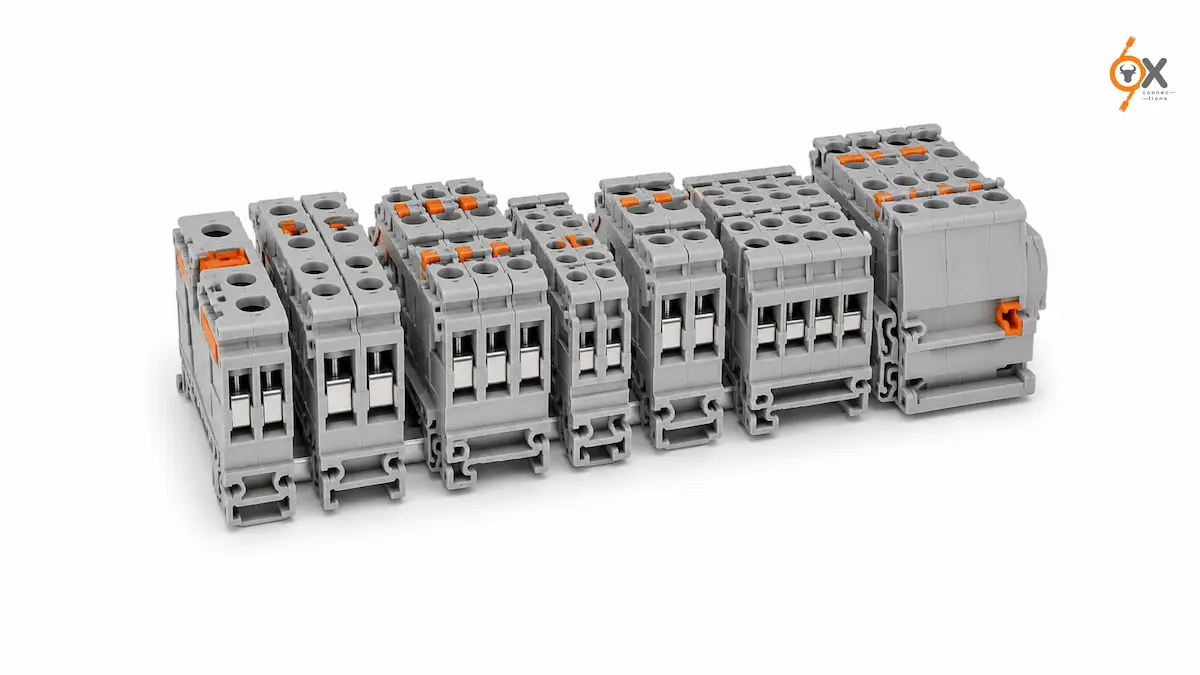
A lower unit price means little if the part sits in a container for six weeks before it reaches your line. Terminal block lead time is the cost most buyers forget to price in, and it’s often larger than the saving they were chasing in the first place.
This article isn’t about which brand is better. It’s about a simpler question that gets overlooked far too often. When your panel schedule slips because one component is stuck at customs, what did that part actually cost you?
Terminal Block Lead Time in India:
Import Lead Time vs Ready Local Stock
Premium brand terminal blocks are frequently shipped from a European warehouse into India. Under normal conditions, that route already adds shipping time before the part clears customs. Add customs clearance, inland transit to your city, and any documentation delay, and a straightforward reorder can stretch into weeks rather than days.
For a running item, a part you use on every panel, that delay is manageable if you’ve planned well ahead. But an unplanned reorder, a design change, or a sudden order spike changes that. That same delay can stall a production line with nowhere else to source the part.
Ready local stock removes that variable entirely. If the part sits in a warehouse in your own country, the wait becomes a same-week or next-day dispatch. It’s not a shipping schedule you have to track and hope holds.
Terminal Block Stock India: What Buyers Should Actually Check
When you’re evaluating a supplier’s terminal block stock India position, don’t just ask if they carry the part. Ask which warehouse it ships from, how many pieces are held at any time, and what happens to your order if that stock runs low.
A supplier with deep, well-distributed inventory across multiple locations in India can absorb a sudden order spike without pushing the wait back onto you. A supplier reordering from overseas each time a customer places a bulk order cannot.
Finding a Terminal Block Supplier Ready Stock Model Actually Supports
The real test of a terminal block supplier ready stock claim is what happens during your busiest month. Any supplier can hold a few pieces of a slow-moving part. Fewer can hold enough of your fastest-moving parts to absorb a genuine surge in demand.
Ask for specifics before you commit to a switch. What quantity of your running items do they typically hold. How quickly can they replenish once stock runs low. Those two answers tell you more about reliability than any marketing line.
Terminal Block Delivery Time: The OX Connections Story
OX Connections has spent over fifteen years supplying terminal blocks and connectors to OEMs across India. In that time, our focus has stayed on one problem specifically. How do we keep terminal block delivery time short enough that our customers’ production lines never wait on us.
Our client base is majorly OEM manufacturers, from small job shops to large systems integrators running continuous production. Their businesses depend on a predictable supply of running items, not an occasional discount that comes with a six week wait attached.
That’s why we stock deep running item inventory across warehouses in Bangalore, Mumbai, and Delhi. When a part is a running item in our range, it’s built to ship without the lead time an imported order usually carries.
Stock Availability Is Part of the Price, Not Separate From It
When you’re comparing suppliers on cost, the honest comparison includes how long you wait for the part to actually arrive. A cheaper part that sits in transit for weeks can cost you more in delayed deliveries than a slightly higher priced part that ships immediately.
If keeping your production line moving matters as much as the unit price on your purchase order, share your bill of materials with us. We’ll tell you plainly which of your running items we stock and how quickly they ship.