
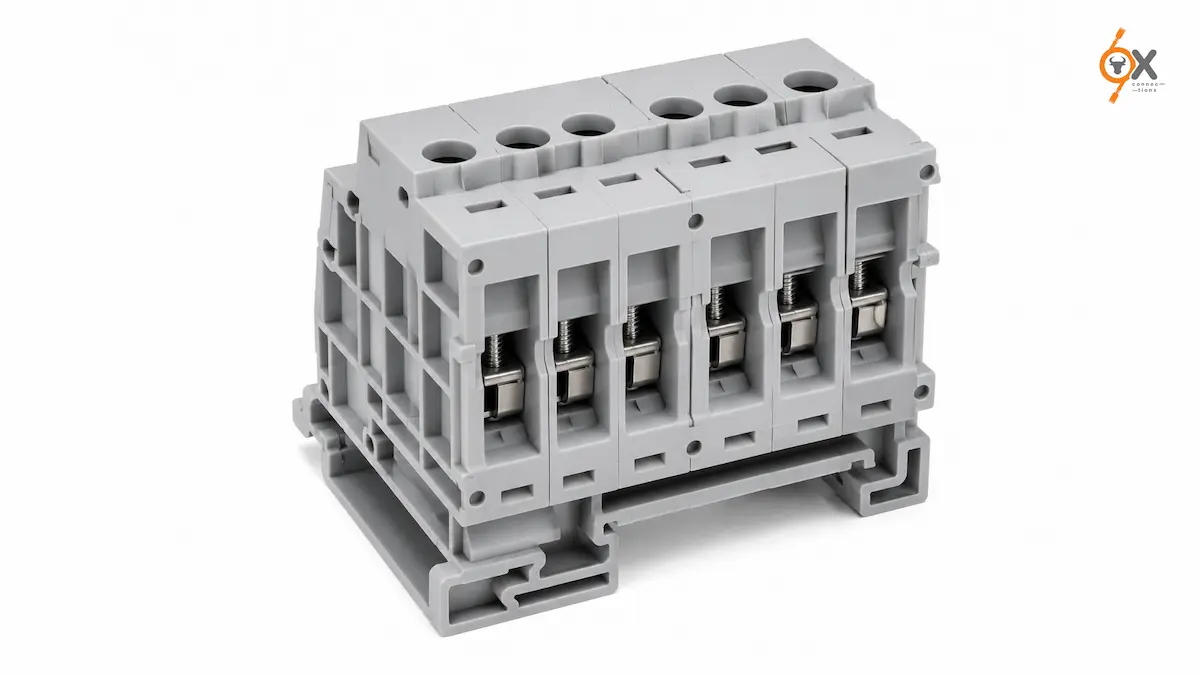
Most panels run fine on catalogue parts. But every so often, a design engineer hits a wall a standard part just can’t clear. A custom terminal block isn’t a luxury in those cases. It’s the only way the design actually works.
This article is for that moment. It walks through when customisation is genuinely worth pursuing, what a proper development process looks like, and how OX Connections supports that process from first sketch to production.
When You Actually Need a Custom Terminal Block
Customisation is easy to reach for and expensive to justify if the need isn’t real. Here are the situations where it usually is.
A non-standard pitch, when your enclosure geometry or existing tooling won’t accommodate any catalogue spacing. A current rating outside the standard range, for an application running higher or lower than typical panel loads.
Housing colour or marking requirements, often driven by a client’s internal wiring standard or a safety colour code specific to their industry. Mixed configurations, where a single terminal block needs to combine functions a standard part keeps separate, such as power and signal in one housing.
And application-specific requirements, anything from unusual vibration exposure to a chemical environment that standard housing materials aren’t rated for. If your requirement fits one of these, a catalogue part is likely to be a compromise, not a fit.
Terminal Block Development: A Typical Flow
A proper terminal block development process follows a fairly consistent path, whether the change is minor or significant. Here’s how it usually runs.
- Requirement discussion. We start with a conversation about what your application actually needs, not just what you assume a custom part should look like. Often this surfaces a simpler fix than expected.
- Drawing and specification. Once the requirement is clear, we put it into a formal drawing and specification, covering pitch, rating, materials, and any marking or colour requirements.
- Sampling. We produce initial samples against that specification for you to inspect and test-fit against your actual panel design, not just review on paper.
- Testing and reports. Samples go through relevant electrical and mechanical testing, and we generate test reports covering the ratings and certifications your project requires.
- Pilot run. A small pilot batch gets built and wired into real panels, so any issue shows up before full production, not after.
- Production. Once the pilot clears, we move to full production, with the same running-item stock discipline we apply to our standard catalogue range.
R&D Support: What It Actually Includes
Real terminal block R&D support goes further than agreeing to make something different. It means an engineering team that pushes back when a simpler standard part will do the job, and commits fully when a genuine custom build is the right call.
It also means the certification and testing capability doesn’t disappear once you leave the catalogue range. A custom part still needs to carry the same paperwork trail your quality team expects from any standard component.
Finding a Custom Terminal Block Manufacturer India Projects Can Rely On
Design engineers searching for a custom terminal block manufacturer India projects can rely on usually run into the same problem. Many suppliers can quote a custom part, but few can back it with the same certifications and test reports a standard catalogue item carries.
OX Connections has spent over fifteen years supplying terminal blocks and connectors to OEMs across India, and that experience extends directly into custom development. Every custom build follows the same certification and test-report discipline as our standard equivalent range.
Start the Conversation Before You Finalise the Design
The best time to bring in a development partner is before your drawing is locked, not after. A requirement discussed early can often be met with a smaller modification than an engineer initially assumed.
If your project has a requirement a standard catalogue part won’t meet, share your specification or bill of materials with us. We’ll walk through what’s genuinely custom and what might already exist in our range.