
Have you ever wondered what types of wiring runs behind the walls of homes, offices, factories, or commercial buildings? Every electrical system depends on proper wiring to safely distribute power and ensure smooth operation of appliances, machines, and electronic devices. Whether it’s a residential setup, industrial facility, or commercial infrastructure, selecting the right wiring system plays a major role in safety, efficiency, and long-term reliability.
As modern buildings continue to demand smarter electrical systems and higher power loads, understanding the different Types of Wiring becomes increasingly important.
From traditional wiring methods to modern concealed systems, each type of wiring is designed for specific environments and applications. Choosing the wrong wiring method can lead to electrical failures, overheating, maintenance issues, and safety risks.
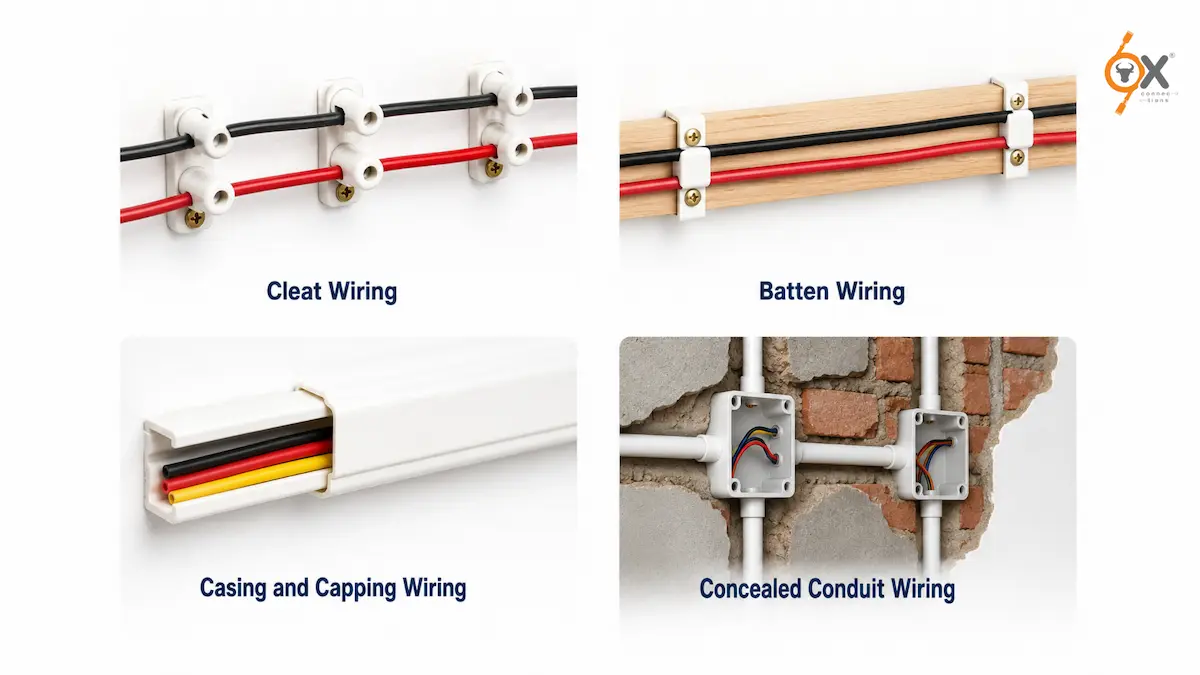
In this guide, we’ll explain the 4 Types of Wiring, their applications, advantages, disadvantages, and how they are used in modern electrical systems.
What is Electrical Wiring?
Electrical wiring refers to the network of wires, cables, switches, and associated components used to distribute electrical power within a building or system.
A wiring system helps:
- Deliver electricity safely
- Power appliances and equipment
- Support lighting systems
- Maintain stable electrical flow
- Protect systems from short circuits and overloads
Today, different Electrical Wiring Types are used depending on:
- Building structure
- Safety requirements
- Budget
- Power capacity
- Environmental conditions
Proper wiring installation is essential for ensuring electrical safety and efficient power distribution.
1. Cleat Wiring
Cleat wiring is one of the oldest and simplest wiring methods.
In this system, insulated electrical wires are supported using porcelain or plastic cleats fixed on walls or ceilings.
Common Applications:
- Temporary electrical installations
- Construction sites
- Workshops
- Outdoor events
Advantages:
- Low installation cost
- Easy to install and remove
- Simple maintenance
Disadvantages:
- Poor appearance
- Less durable
- Not suitable for permanent installations
Although cleat wiring is rarely used in modern homes today, it is still useful for temporary power setups.
2. Batten Wiring
Batten wiring is a commonly used wiring method where insulated wires are fixed onto wooden battens using clips.
This is one of the more organized and affordable House Wiring Types used in residential and small commercial spaces.
Common Applications:
- Residential buildings
- Shops
- Offices
- Small commercial spaces
Advantages:
- Cost-effective
- Easy installation
- Better appearance than cleat wiring
- Simple maintenance
Disadvantages:
- Limited protection from moisture
- Not suitable for harsh industrial environments
Batten wiring is preferred where moderate electrical loads and simple installations are required.
3. Casing and Capping Wiring
In this wiring system, wires are installed inside wooden or PVC casings and then covered with protective caps.
This method provides better protection and a cleaner appearance compared to exposed wiring systems.
Used In:
- Homes
- Offices
- Educational institutions
Advantages:
- Organized cable management
- Improved safety
- Easy wire replacement
- Better appearance
Disadvantages:
- Higher installation cost
- Less common in modern construction
Although this method was widely used earlier, modern concealed wiring systems have largely replaced it in newer buildings.
4. Concealed Conduit Wiring
Concealed conduit wiring is one of the most modern and widely used Electrical Wiring Types today.
In this system, electrical wires run through PVC or metal conduits hidden inside walls, ceilings, or floors.
Common Applications:
- Modern homes
- Commercial buildings
- Industrial facilities
- Smart buildings
Advantages:
- Excellent safety
- Clean and modern appearance
- Better protection against damage
- Long-lasting durability
- Reduced risk of fire hazards
Disadvantages:
- Higher installation cost
- Repairs may require wall work
Because of its durability, safety, and professional finish, concealed conduit wiring is now the preferred choice for most modern buildings.
Why Choosing the Right Wiring Type Matters
Electrical wiring is one of the most important parts of any infrastructure. Choosing the right wiring system helps improve:
- Electrical safety
- Power efficiency
- System reliability
- Long-term durability
- Maintenance convenience
Poor-quality or outdated wiring can lead to:
- Short circuits
- Power failures
- Electrical shocks
- Fire hazards
- Increased repair costs
This is why selecting the right wiring system and quality electrical components is extremely important.
Importance of Quality Connectors & Components in Wiring Systems
A wiring system is only as reliable as the connectors and components used within it.
Modern electrical systems require:
- Durable connectors
- Reliable terminals
- Stable cable management solutions
- Secure electrical connections
Companies like OX Connections provide dependable connectivity and connector solutions for industrial, renewable energy, home appliance, and automation applications across India.
Reliable connectors help improve:
- Electrical continuity
- System performance
- Safety
- Maintenance efficiency
As modern electrical systems become more advanced, the role of quality connectivity solutions becomes even more important.
Applications of Different Wiring Types
Different wiring systems are used depending on the building type and electrical requirements.
Residential Buildings
Homes typically use:
- Concealed conduit wiring
- Batten wiring
These systems provide safety, clean appearance, and efficient power distribution.
Commercial Spaces
Commercial offices and retail spaces prefer:
- Concealed conduit wiring
- Organized cable management systems
This helps maintain professional infrastructure and easier maintenance.
Industrial Facilities
Factories and industrial environments often require:
- Heavy-duty conduit systems
- High-capacity electrical wiring
- Industrial-grade connectors
Industrial wiring systems must handle:
- High electrical loads
- Heat
- Vibration
- Harsh operating conditions
Temporary Installations
Construction sites and temporary events commonly use:
- Cleat wiring
This allows quick installation and easy removal when needed.
Factors to Consider Before Choosing a Wiring Type
Before selecting a wiring method, consider:
Safety Requirements
Choose systems with proper insulation and protection.
Budget
Some wiring systems have higher installation costs but offer better long-term reliability.
Building Structure
The construction type affects the wiring installation process.
Environmental Conditions
Industrial or outdoor environments may require stronger protection against heat, moisture, and dust.
Future Maintenance
Easy-access wiring systems simplify upgrades and repairs.
Future of Electrical Wiring Systems
As technology evolves, wiring systems are becoming:
- Smarter
- Safer
- More energy-efficient
- More durable
Modern infrastructure now demands:
- Smart home compatibility
- Renewable energy integration
- EV charging support
- Industrial automation connectivity
This is increasing the demand for advanced electrical systems and reliable connectivity solutions.
OXConnections supports modern electrical and industrial applications with dependable connector solutions designed for evolving infrastructure needs.
Final Thoughts
Understanding the different Types of Wiring is essential for creating safe, efficient, and reliable electrical systems. From temporary cleat wiring to advanced concealed conduit systems, every wiring type serves a specific purpose based on the application and environment.
Whether it’s residential, commercial, or industrial infrastructure, choosing the right Electrical Wiring Types helps improve safety, reduce maintenance issues, and ensure long-term performance.
As buildings and industries continue moving toward smarter technologies and modern electrical systems, reliable wiring methods and quality connectivity solutions will remain more important than ever.