
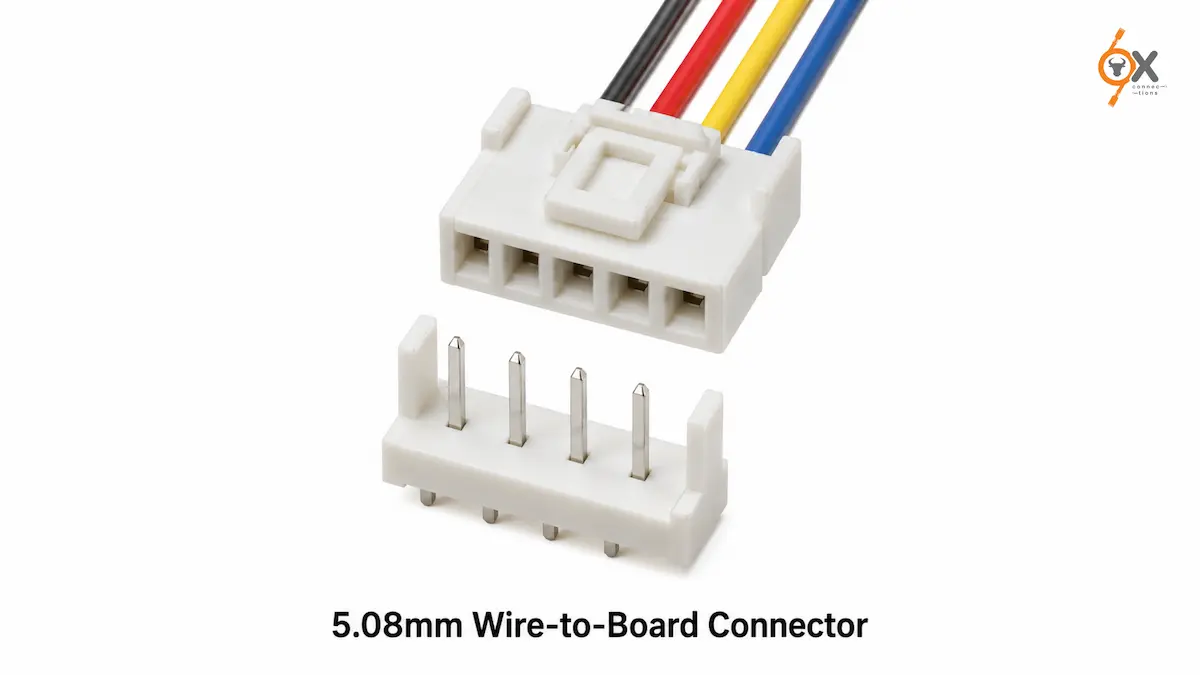
In this guide, we’ll explain what a 5.08mm wire-to-board connector is, how it works, where it is used, and what engineers and procurement teams should consider when selecting one.
When designing power electronics, industrial control systems, or appliance PCBs, connector selection often becomes one of the most overlooked decisions in the entire design process. Yet connectors are among the most critical components in ensuring reliable power and signal transmission between a PCB and the outside world.
One connector category that continues to be widely used across industrial and commercial electronics is the 5.08mm wire-to-board connector, commonly known in the Indian electronics industry as the CPU Connector or CPU5.08 Connector.
From SMPS units and solar inverters to LED drivers and battery management systems, these connectors provide a practical, serviceable, and reliable way to connect field wiring to a PCB assembly.
Understanding the 5.08mm Wire-to-Board Connector
A 5.08mm wire-to-board connector is a connector system designed to create a removable electrical connection between wires and a printed circuit board.
The term 5.08mm refers to the spacing, or pitch, between adjacent contacts. This pitch makes the connector suitable for carrying relatively higher currents compared to smaller-pitch connector families commonly found in low-power electronics.
A typical CPU Connector system consists of:
- Crimp terminals
- Wire housing
- PCB-mounted header
- Mating locking mechanism
The crimp terminals are attached to wires and inserted into the housing. The housing then mates with the PCB header mounted on the circuit board.
This design allows quick assembly, easy maintenance, and field replacement when required.
CPU Connector vs Terminal Block: Understanding the Difference
One common misconception in the market is that a CPU Connector is simply another type of terminal block.
It is not.
A terminal block typically uses screws, clamps, or spring mechanisms to secure wires directly to the board.
A CPU Connector, on the other hand, uses crimped terminals housed within a connector body that mates with a PCB header.
Key advantages of a wire-to-board connector over traditional terminal blocks include:
- Faster assembly during production
- Reduced wiring errors
- Easier maintenance and replacement
- Better consistency in high-volume manufacturing
- Improved vibration resistance in many applications
For OEMs producing hundreds or thousands of units, these advantages can significantly improve assembly efficiency and long-term reliability.
Why 5.08mm Pitch Remains Popular
The electronics industry offers connector systems in many pitch sizes, but 5.08mm continues to be one of the most commonly used for power-related PCB connections.
The reason is simple.
It strikes a practical balance between:
- Compact PCB design
- Current carrying capability
- Ease of handling
- Mechanical strength
- Cost-effectiveness
For applications requiring moderate power transfer without moving to larger industrial connectors, the 5.08mm format remains a proven solution.
Typical Construction of a CPU Connector
Most 5.08mm CPU Connector systems feature:
Contact Material
The contacts are commonly manufactured from phosphor bronze and finished with tin plating.
This combination provides:
- Good electrical conductivity
- Reliable contact performance
- Mechanical durability
- Corrosion resistance for normal operating environments
Housing Material
The housing is generally manufactured using PA66 nylon material with flame-retardant properties.
This helps provide:
- Mechanical strength
- Electrical insulation
- Dimensional stability
- Suitability for industrial electronics applications
Multiple Pin Configurations
Engineers can typically select from:
- 2 Pin
- 3 Pin
- 4 Pin
- 5 Pin
- 6 Pin
- 8 Pin
- 10 Pin
This flexibility allows the same connector family to be used across multiple product designs.
Applications of 5.08mm Wire-to-Board Connectors
One reason for the popularity of CPU Connectors is their versatility.
They are used across a wide range of industries and electronic systems.
SMPS and Power Supply Boards
Switch-mode power supplies often require reliable wire-to-board interfaces for AC input, DC output, and internal power distribution.
The connector’s removable design simplifies manufacturing and servicing.
Solar Inverters
Solar inverter manufacturers frequently use wire-to-board connectors for PCB power connections, communication circuits, and internal wiring assemblies.
Easy maintenance and dependable electrical contact make them suitable for these systems.
LED Drivers
LED driver manufacturers often need compact and reliable connectors capable of supporting power connections while allowing efficient assembly.
The 5.08mm connector format is widely used for this purpose.
Industrial Control Panels
Industrial control systems typically involve multiple PCB assemblies connected to sensors, relays, power supplies, and external devices.
Wire-to-board connectors help simplify panel assembly while maintaining organized wiring.
UPS Systems
Uninterruptible power supply systems require reliable internal connections that can withstand continuous operation.
CPU Connectors are commonly found on control and power distribution boards within UPS assemblies.
Battery Management Systems and EV Electronics
Battery management systems frequently require removable PCB connections for monitoring, control, and power circuits.
The wire-to-board format offers flexibility during manufacturing and servicing.
Home Appliance Electronics
Modern appliances increasingly rely on PCB-based control systems.
Connectors are used extensively in:
- Washing machines
- Air conditioners
- Refrigerators
- Water purifiers
- Small appliances
The ability to connect and disconnect wiring harnesses quickly makes production more efficient.
Factors to Consider When Selecting a 5.08mm PCB Connector
Not all connectors should be selected based on pitch alone.
Engineers should evaluate several factors before finalizing a connector for production.
Current Requirements
The connector must comfortably support the expected load without excessive heating.
Understanding the application’s operating conditions is essential.
Voltage Requirements
Voltage ratings should match the system requirements while maintaining appropriate safety margins.
Pin Count
Select the number of positions based on present and future circuit requirements.
Standardizing connector families across products can simplify inventory management.
Environmental Conditions
Consider factors such as:
- Temperature
- Dust
- Moisture
- Vibration
- Mechanical stress
These conditions can significantly influence long-term connector performance.
Serviceability
Products that require regular maintenance or field servicing often benefit from removable wire-to-board connector systems.
Supply Chain Stability
Connector availability can impact production schedules.
Many OEMs today evaluate not only technical specifications but also:
- Lead times
- MOQ requirements
- Local availability
- Consistent supply
Reliable sourcing helps reduce manufacturing disruptions.
Advantages of Wire-to-Board Connectors in OEM Manufacturing
For OEMs, connector selection is not only a design decision – it also impacts manufacturing efficiency, serviceability, and long-term product reliability.
One of the biggest advantages of 5.08mm wire-to-board connectors is the ability to simplify assembly processes. Instead of manually terminating wires directly onto a PCB, manufacturers can prepare wiring harnesses separately and connect them during final assembly. This helps reduce production time and improve consistency across batches.
Wire-to-board connectors also make servicing easier. In the event of a component replacement or repair, technicians can disconnect and reconnect assemblies without disturbing surrounding wiring. This is particularly valuable in applications such as industrial control panels, solar inverters, UPS systems, and appliance control boards where maintenance accessibility is important.
Another advantage is standardization. Many manufacturers use the same connector family across multiple products, reducing inventory complexity and simplifying procurement planning.
As production volumes increase, these operational benefits often become just as important as the connector’s electrical specifications.
Common Connector Issues and How Proper Selection Helps Prevent Them
Connector-related failures can lead to intermittent performance issues, unexpected downtime, and costly field service calls. While connectors are generally reliable components, improper selection can create problems over time.
One common issue is selecting a connector that is not suited for the application’s current requirements. Excessive current loads can generate heat and affect long-term reliability.
Mechanical stress is another consideration. Connectors used in environments with vibration, frequent movement, or repeated mating cycles should be selected carefully to ensure dependable contact retention.
Environmental conditions also play a role. Dust, temperature fluctuations, and exposure to moisture can influence connector performance if the application environment is not considered during the design stage.
Engineers can reduce these risks by evaluating:
- Electrical requirements
- Operating environment
- Mechanical demands
- Serviceability needs
- Connector quality and sourcing reliability
A thoughtful connector selection process helps improve product longevity and reduce maintenance concerns throughout the equipment lifecycle.
Compatibility with Popular Connector Families
The 5.08mm CPU Connector is commonly referenced as compatible with several well-known connector series used globally.
These include:
- Molex SPOX 5.08mm
- Molex 8981 Series
- Molex KK 5.08mm
This compatibility can provide engineers with flexibility when designing, maintaining, or sourcing electronic assemblies.
However, compatibility should always be verified during the design validation process.
Why Engineers Continue to Use Wire-to-Board Connectors
Despite the availability of newer connector technologies, the 5.08mm wire-to-board connector remains a preferred choice because it offers a combination of:
- Proven reliability
- Ease of assembly
- Serviceability
- Flexible pin configurations
- Cost-effective implementation
- Wide application compatibility
For many power electronics and industrial applications, it continues to be a practical and dependable connector solution.
Conclusion
The 5.08mm Wire-to-Board Connector, commonly known as the CPU Connector, remains an essential component in modern electronic equipment. Whether used in power supplies, solar inverters, industrial controls, UPS systems, LED drivers, or appliance electronics, it provides a reliable and service-friendly connection between field wiring and PCB assemblies.
For engineers, selecting the right connector is about more than just pitch size. Factors such as current requirements, environmental conditions, mechanical reliability, and long-term supply availability all play an important role.
As OEMs continue to focus on reliability, manufacturability, and supply chain resilience, the 5.08mm wire-to-board connector remains a proven choice for PCB power and signal connectivity.
At OX Connections LLP, we support OEMs, panel builders, electronics manufacturers, and design engineers with reliable connectivity solutions backed by consistent availability and technical support. Whether you’re developing a new product or looking for an alternative sourcing partner, selecting the right connector can help improve both product performance and manufacturing efficiency.
Frequently Asked Questions
1. What is a CPU Connector?
A CPU Connector is a 5.08mm pitch wire-to-board crimp connector used to connect wires to PCB-mounted headers in electronic equipment.
2. Is a CPU Connector the same as a terminal block?
No. A CPU Connector uses crimp terminals and a mating connector housing, while a terminal block secures wires using screw or clamp mechanisms.
3. Where are 5.08mm wire-to-board connectors commonly used?
They are widely used in SMPS units, solar inverters, LED drivers, industrial control panels, UPS systems, battery management systems, and home appliance control boards.
4. How do I choose the right wire-to-board connector for a PCB?
Engineers should consider factors such as current requirements, voltage requirements, pin count, operating environment, mechanical durability, and maintenance needs when selecting a wire-to-board connector.
5. Why are 5.08mm connectors commonly used in power electronics?
The 5.08mm pitch offers a practical balance between current-carrying capability, mechanical strength, ease of assembly, and PCB space utilization, making it suitable for many power and industrial electronics applications.
About OX Connections LLP
OX Connections LLP supplies a wide range of interconnect solutions for OEMs, manufacturers, panel builders, and electronics companies across India. Our portfolio includes wire-to-board connectors, board-to-board connectors, RF connectors, industrial connectors, and application-specific connectivity solutions designed to support reliable product manufacturing and long-term supply requirements.
For project enquiries, sourcing support, or connector selection assistance, contact the OXConnections team.