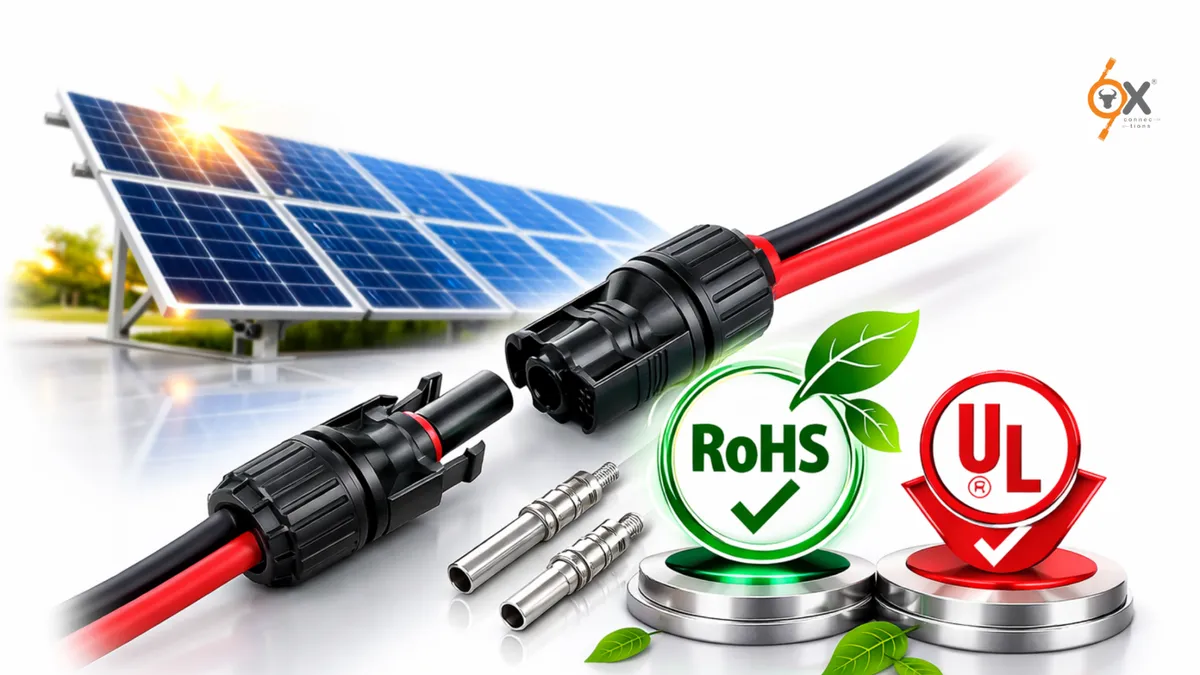
As solar energy adoption continues to grow worldwide, the reliability and safety of every component used in a photovoltaic (PV) system becomes increasingly important. While solar panels and inverters often receive most of the attention, small components like connectors play a critical role in ensuring the safe and efficient transmission of electricity. Among the most widely used connectors in solar installations is the MC4 solar connector, which has become the industry standard for connecting photovoltaic modules. However, not all connectors are created equal. Certifications such as UL certified MC4 solar connectors standards and RoHS compliant solar connector requirements are essential indicators of quality, safety, and environmental responsibility. Understanding why these certifications matter can help installers, engineers, and system owners make better decisions when designing and maintaining solar power systems.
Understanding MC4 Connectors in Solar Installations
A MC4 solar connector is a single-contact electrical connector commonly used to connect solar panels in photovoltaic systems. These connectors allow solar modules to be linked together in series or parallel, forming the strings that generate power in a solar array.
The design of MC4 connectors makes them particularly suitable for solar installations because they are built to withstand harsh outdoor environments and continuous electrical flow. Key features typically include:
- Snap-lock mechanism for secure connections
- Touch-safe design to prevent accidental electric shock
- Waterproof protection, usually rated IP67 or higher
- Compatibility with standard solar DC cables
- Resistance to UV exposure, heat, and moisture
Because solar systems operate for decades under varying weather conditions, the connectors used must be highly durable and reliable. Even a single faulty connector can lead to system inefficiencies or safety hazards.
This is why certification standards like UL certified MC4 solar connector approval and RoHS compliant solar connector requirements are extremely important when selecting components.
Why Certification Matters for Solar Connectors
Solar systems operate using high-voltage direct current (DC), which behaves differently from alternating current (AC) used in conventional electrical systems. DC power can produce stronger electrical arcs if connections fail, making reliable connectors essential for system safety.
Certifications ensure that connectors meet strict testing standards related to:
- Electrical insulation
- Mechanical durability
- Fire resistance
- Environmental protection
- Material safety
A properly tested MC4 solar connector helps reduce risks such as overheating, power loss, and electrical faults. Certification also ensures that the connectors comply with international electrical regulations, making them suitable for residential, commercial, and utility-scale solar installations.
Two of the most important certifications in this context are UL certified MC4 solar connectors standards and RoHS compliant solar connector regulations.
What Is a UL Certified MC4 Solar Connectors?
A UL certified solar connector is a connector that has been tested and approved by Underwriters Laboratories (UL), a globally recognized safety certification organization. UL testing ensures that electrical components meet rigorous safety standards and perform reliably under real-world conditions.
For solar connectors, UL certification evaluates several key performance factors, including:
- Voltage and current handling capability
- Resistance to electrical arcing
- Thermal stability under high temperatures
- Fire safety and insulation performance
- Mechanical strength and durability
Solar connectors that pass these tests are approved for safe use in photovoltaic installations. Many countries and electrical codes require UL-certified components to ensure that solar systems meet safety regulations.
Using a UL certified solar connector provides confidence that the connector has undergone comprehensive safety testing and is capable of operating reliably in demanding solar environments.
Understanding RoHS Compliance in Solar Connectors
While UL certification focuses primarily on safety and performance, environmental regulations also play an important role in modern solar technologies. This is where RoHS compliant solar connector standards come into play.
RoHS stands for “Restriction of Hazardous Substances,” a regulatory directive that limits the use of certain toxic materials in electrical and electronic products. These restricted substances typically include:
- Lead (Pb)
- Mercury (Hg)
- Cadmium (Cd)
- Hexavalent chromium
- Certain brominated flame retardants
A RoHS compliant solar connector ensures that these harmful materials are either eliminated or significantly reduced in the manufacturing process.
This compliance is particularly important for solar energy systems, which are designed to operate for 20 to 30 years. Environmentally responsible materials help reduce the long-term ecological impact of solar infrastructure and ensure that components can be safely recycled or disposed of at the end of their lifecycle.
RoHS compliance is also essential for products sold in many global markets, particularly in Europe and other regions with strict environmental regulations.
Key Benefits of Using Certified MC4 Connectors
Choosing a certified MC4 solar connector offers several advantages for both installers and system owners.
Enhanced Safety
Solar installations operate at high voltages, often reaching 1000V or even 1500V DC in large systems. A UL certified solar connector ensures that the connector can safely handle these electrical loads without overheating or failing.
Reliable insulation and secure locking mechanisms help prevent electrical arcing, which can lead to equipment damage or fire hazards.
Improved System Reliability
A solar system may include hundreds or even thousands of connector points. Each connection must remain stable for decades in outdoor conditions.
Certified connectors are tested for:
- temperature extremes
- UV exposure
- moisture resistance
- mechanical stress
Using a properly certified MC4 solar connector reduces the likelihood of connection failures and helps maintain consistent system performance over time.
Environmental Responsibility
A RoHS compliant solar connector ensures that the materials used in the connector do not contain hazardous substances that could harm the environment.
This is particularly important for renewable energy systems, which aim to promote sustainability not only through energy generation but also through responsible component manufacturing.
Compliance with International Standards
Solar projects often require compliance with various electrical codes and international standards.
Using both UL certified solar connector and RoHS compliant solar connector components helps ensure that installations meet regulatory requirements in multiple markets. This is especially important for large commercial or utility-scale projects where compliance is strictly enforced.
Risks of Using Non-Certified Connectors
Although uncertified connectors may appear similar to standard MC4 connectors, they often lack the rigorous testing required for safe solar installations.
Using low-quality connectors can lead to several serious issues, including:
- overheating connections
- increased electrical resistance
- loose or unstable contacts
- water infiltration and corrosion
- arc faults that may lead to fires
In addition, mixing incompatible or counterfeit connectors with genuine MC4 connectors can compromise system integrity and void equipment warranties.
For these reasons, solar professionals strongly recommend using certified connectors that meet recognized safety and environmental standards.
Applications of Certified Solar Connectors
Certified MC4 solar connector solutions are widely used across various types of solar installations.
Residential Solar Systems
Home rooftop installations require reliable connectors to ensure long-term performance and safety for homeowners.
Commercial Solar Projects
Office buildings, factories, and warehouses often use large rooftop solar systems that rely on UL certified solar connector components to meet safety regulations.
Utility-Scale Solar Farms
Large solar power plants may include thousands of solar modules connected through extensive wiring networks. Using a RoHS compliant solar connector ensures environmental compliance while maintaining reliable energy transmission.
Conclusion
Although they may seem like small components, connectors are essential to the performance and safety of any photovoltaic system. A high-quality MC4 solar connector ensures secure electrical connections between solar panels, enabling efficient power generation across the entire array.
Certification standards play a vital role in guaranteeing the reliability of these connectors. A UL certified MC4 solar connectors provides assurance that the connector meets strict safety and performance requirements, while a RoHS compliant solar connector ensures environmentally responsible materials and global regulatory compliance.
By selecting properly certified connectors, solar professionals can improve system safety, enhance long-term reliability, and support the sustainability goals that drive the solar energy industry.