
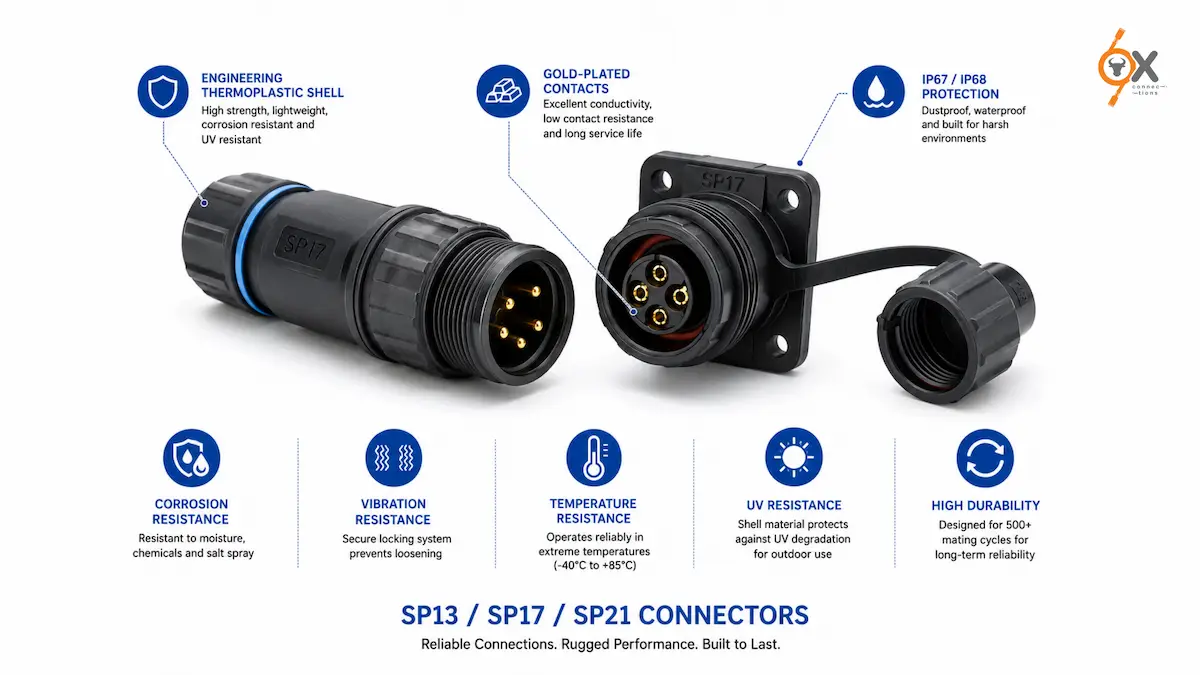
In this guide, we explore how SP connector shell materials and contact plating contribute to durability and what buyers should consider when sourcing connectors for demanding environments.
In industrial environments, connectors often work in conditions that are far from ideal. Dust, moisture, vibration, temperature fluctuations, and exposure to chemicals can all affect connector performance over time. While current ratings and voltage specifications usually get the most attention during component selection, another factor plays an equally important role in long-term reliability: the materials and plating used inside the connector.
For OEMs, design engineers, and procurement teams, understanding how shell materials and contact plating impact durability can help prevent premature failures, reduce maintenance requirements, and improve overall system performance.
This is especially true when selecting an SP Connector for applications in solar energy systems, industrial automation equipment, home appliances, renewable energy installations, medical devices, and EV-related systems.
Why Connector Materials Matter
A connector is much more than a simple electrical interface.
Every connector consists of multiple components that must work together to ensure:
- Reliable electrical conductivity
- Mechanical stability
- Environmental resistance
- Long service life
- Safe operation
Even when two connectors appear identical externally, differences in shell materials and contact plating can significantly affect performance over time.
The right material selection helps connectors withstand:
- Corrosion
- Oxidation
- Humidity
- UV exposure
- Vibration
- Repeated mating cycles
- Temperature extremes
For industrial applications where downtime is costly, these factors become critical.
Understanding the Connector Shell
The shell is the outer body of the connector that provides structural protection.
Its primary responsibilities include:
- Protecting internal contacts
- Maintaining alignment during mating
- Withstanding mechanical stress
- Supporting environmental sealing
- Improving durability during handling and installation
Different shell materials offer different advantages depending on the application.
Common SP Connector Shell Materials
1. Engineering Thermoplastics
Many modern industrial connectors use high-performance engineering plastics.
Benefits include:
- Lightweight construction
- Corrosion resistance
- Electrical insulation
- Cost efficiency
- Good impact resistance
Engineering plastics are widely used in:
- Solar installations
- Home appliances
- LED systems
- Automation equipment
- Consumer electronics
Their resistance to moisture and chemicals makes them suitable for many industrial environments.
2. Reinforced Polymer Materials
For more demanding applications, manufacturers often use reinforced polymers.
These materials provide:
- Higher mechanical strength
- Better dimensional stability
- Improved heat resistance
- Enhanced durability under vibration
Applications include:
- Industrial machinery
- Renewable energy systems
- Power distribution equipment
These environments typically involve continuous operation and greater mechanical stress.
3. Metal Shell Construction
Certain applications require metal-shell connectors for maximum durability.
Advantages include:
- Superior mechanical protection
- High impact resistance
- Better shielding capabilities
- Excellent performance in rugged environments
Industries using metal-shell connectors include:
- Transportation
- Heavy machinery
- Outdoor industrial systems
- Defense and aerospace applications
While metal shells offer exceptional durability, they may increase overall connector cost and weight.
The Importance of Contact Plating
While the shell protects the connector, the contacts carry the electrical current.
The quality of these contacts directly impacts:
- Signal integrity
- Current transfer
- Contact resistance
- Connector lifespan
Even high-quality contact materials can degrade if exposed to moisture, oxygen, contaminants, or repeated mating cycles.
This is where connector plating becomes essential.
Plating creates a protective surface layer that improves conductivity while helping the contact resist wear and corrosion.
Why Contacts Need Plating
Without proper plating, contact surfaces may experience:
- Oxidation
- Corrosion
- Increased resistance
- Signal degradation
- Premature failure
Over time, these issues can cause intermittent electrical connections, overheating, or complete system failure.
The right plating helps maintain reliable electrical performance throughout the connector’s service life.
Common Connector Plating Options
Tin Plating
Tin remains one of the most commonly used connector finishes.
Benefits include:
- Cost effectiveness
- Good conductivity
- Reliable performance in many industrial applications
- Easy manufacturability
Tin-plated contacts are often used in:
- Power connectors
- Home appliances
- Industrial control systems
- General-purpose equipment
For many applications, tin plating offers an excellent balance between performance and affordability.
Gold Plating
Gold is often selected when superior conductivity and corrosion resistance are required.
Advantages include:
- Excellent conductivity
- Outstanding corrosion resistance
- Stable electrical performance
- Low contact resistance
Gold-plated contacts are commonly found in:
- Medical equipment
- Communication systems
- Precision electronics
- Critical signal applications
Gold plating is especially valuable where low-voltage signals must remain stable over long periods.
Nickel Plating
Nickel is frequently used either as a standalone finish or as an underlayer beneath other plating materials.
Benefits include:
- Enhanced wear resistance
- Improved corrosion protection
- Increased hardness
- Better durability
Nickel contributes significantly to long-term connector reliability in industrial environments.
How Harsh Environments Affect Connectors
Different environmental conditions place different stresses on connectors.
Understanding these conditions helps engineers choose appropriate shell materials and plating finishes.
Moisture and Humidity
Moisture is one of the most common causes of connector degradation.
Potential issues include:
- Corrosion
- Oxidation
- Increased resistance
- Reduced contact performance
Connectors operating outdoors or in humid facilities require materials and plating that resist moisture-related damage.
Applications include:
- Solar power installations
- Renewable energy systems
- Agricultural equipment
- Outdoor lighting
Dust and Contaminants
Industrial facilities often expose connectors to:
- Dust
- Dirt
- Oil
- Chemical residues
Over time, contaminants can interfere with electrical contact surfaces and affect performance.
Proper sealing combined with durable contact finishes helps minimize these risks.
Vibration and Mechanical Stress
Many industrial systems experience constant movement or vibration.
Examples include:
- Manufacturing equipment
- EV systems
- Motors
- Pumps
- Industrial automation machinery
Repeated vibration can increase wear on connector interfaces.
Strong shell materials and durable plating help maintain reliable connections under these conditions.
Temperature Extremes
Temperature fluctuations can impact both mechanical and electrical performance.
Connectors may encounter:
- High operating temperatures
- Outdoor heat exposure
- Cold weather conditions
- Thermal cycling
Material selection becomes critical when equipment must operate reliably throughout changing environmental conditions.
Choosing the Right SP Connector for Industrial Applications
When evaluating an SP Connector, engineers and buyers should consider more than just current and voltage ratings.
Important questions include:
What Environment Will the Connector Operate In?
Environmental factors determine the required level of protection.
Consider:
- Indoor vs outdoor installation
- Moisture exposure
- Dust levels
- Chemical exposure
- UV exposure
How Frequently Will Connections Be Mated?
Applications involving regular maintenance may require connectors capable of handling numerous mating cycles without significant wear.
In these cases, contact plating becomes particularly important.
Is Mechanical Stress Expected?
Equipment exposed to vibration or movement benefits from:
- Durable shell materials
- Reliable contact retention
- Robust connector construction
What Is the Expected Product Lifecycle?
Industrial equipment is often designed for years of operation.
Selecting high-quality connector materials can reduce maintenance costs and improve reliability throughout the product’s lifespan.
Why OEMs Focus on Connector Quality
For OEMs, connector failures can have consequences far beyond the cost of the component itself.
Failures may lead to:
- Production downtime
- Service calls
- Warranty claims
- Equipment damage
- Customer dissatisfaction
As a result, many procurement teams now evaluate connector quality based on:
- Material selection
- Contact plating
- Manufacturing consistency
- Supply reliability
- Certifications and compliance
The goal is not simply to source a connector but to source a connector that can consistently perform throughout the life of the equipment.
OX Connections: Reliable SP Connectors for Industrial Applications
At OX Connections, we understand that connector durability is critical for modern OEMs and manufacturers.
Our range of SP Connectors is designed to support demanding applications across:
- Solar energy systems
- Home appliances
- Industrial automation
- Renewable energy projects
- Medical equipment
- EV-related applications
We focus on delivering dependable connectivity solutions backed by consistent quality, competitive pricing, and reliable availability.
Unlike many global connector brands that often involve long lead times and high minimum order quantities, OX Connections helps manufacturers access quality connector solutions with faster availability and procurement flexibility.
Conclusion
Connector durability is influenced by far more than electrical specifications alone.
Shell materials determine how well a connector withstands physical and environmental challenges, while contact plating plays a major role in maintaining electrical performance over time.
Whether facing moisture, vibration, contamination, or temperature fluctuations, selecting the right combination of materials and plating can significantly improve reliability and service life.
For OEMs and procurement teams, understanding these factors helps reduce maintenance costs, improve product performance, and avoid costly failures in the field.
When selecting an SP Connector for industrial applications, paying attention to shell materials and connector plating can make the difference between a connector that merely works and one that continues performing reliably for years.
Frequently Asked Questions
1. Why is connector plating important in industrial connectors?
Connector plating helps protect contact surfaces from corrosion, oxidation, and wear while maintaining reliable electrical conductivity over time.
2. Which plating is commonly used in SP Connectors?
Common plating options include tin, gold, and nickel. The best choice depends on the application’s electrical, environmental, and durability requirements.
3. How do harsh environments affect connector performance?
Moisture, dust, vibration, chemicals, and temperature fluctuations can degrade connector materials and contacts, potentially reducing reliability if appropriate materials and plating are not used.
Disclaimer
The information provided in this article is intended for general educational purposes only. Connector specifications, material selections, plating types, environmental ratings, and application suitability may vary by product design and manufacturer. Engineers and procurement teams should always consult official product documentation and technical specifications when selecting connectors for specific applications.
For SP Connector solutions and industrial connectivity requirements, contact OXConnections to discuss the most suitable option for your application.