
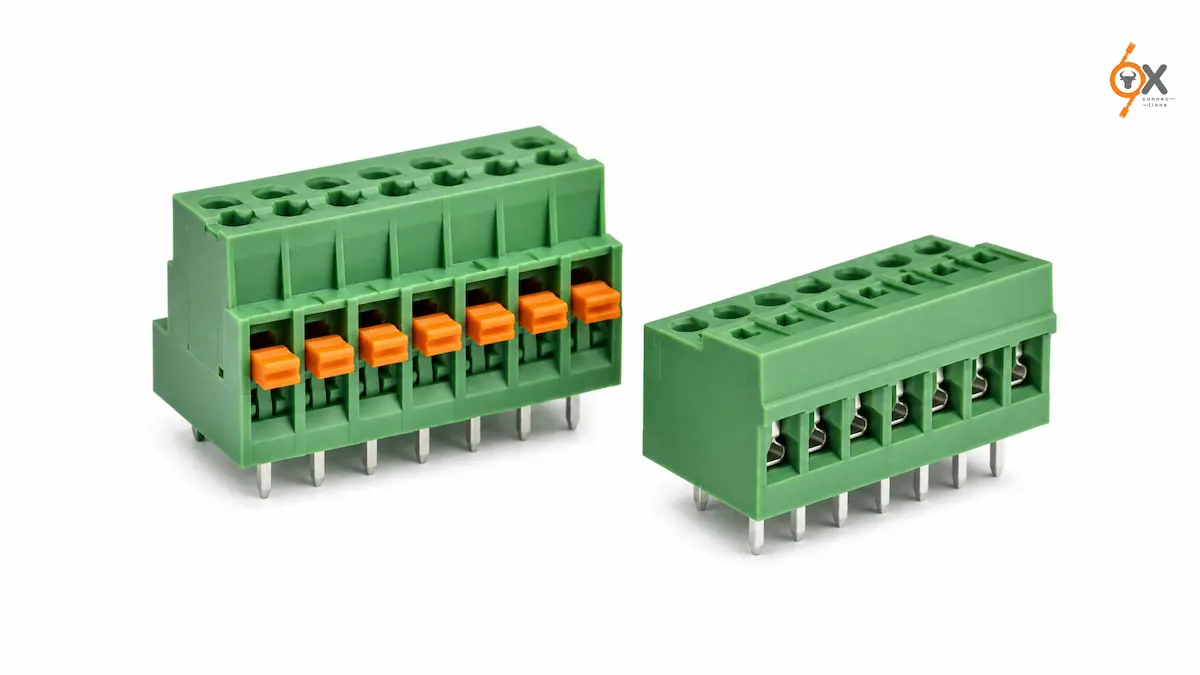
This guide explains everything you need to know before selecting a spring type PCB terminal blocks equivalent.
Are you looking for a dependable spring type PCB terminal block equivalent that delivers secure electrical connections without compromising on performance or reliability?
As industrial automation, renewable energy, and electronics manufacturing continue to grow across India, the demand for high-quality PCB connectivity solutions has increased significantly. At the same time, procurement teams and design engineers are increasingly evaluating equivalent connector solutions to reduce lead times, optimise sourcing, and maintain uninterrupted production.
Spring type PCB terminal blocks have become a preferred choice for many modern electrical and electronic applications because they provide consistent contact pressure, vibration resistance, and tool-free or simplified wire installation. However, when the preferred brand is unavailable or procurement timelines become challenging, selecting the right equivalent becomes essential.
For manufacturers and OEMs across Mumbai and other industrial hubs in India, choosing a compatible spring type PCB terminal block requires more than matching physical dimensions. Electrical performance, mechanical compatibility, and long-term reliability should all be carefully considered.
What Are Spring Type PCB Terminal Blocks?
Spring type PCB terminal blocks are connectors that establish electrical connections between printed circuit boards and external wiring using a spring-clamp mechanism instead of conventional screw terminals.
Unlike screw-clamp connectors that rely on tightening torque, spring terminals maintain constant clamping force through an internal spring mechanism. This helps ensure reliable electrical contact, even in environments exposed to vibration or temperature fluctuations.
Spring clamp technology has become increasingly popular because it reduces installation time while providing consistent connection quality throughout the product’s service life.
These connectors are commonly used in:
- Industrial automation
- Building automation
- Renewable energy systems
- HVAC equipment
- Medical electronics
- Process control systems
- Instrumentation
- Power supplies
Why Are Engineers Looking for Spring Type PCB Terminal Block Equivalents?
Selecting an equivalent connector is often part of a broader sourcing strategy rather than a response to product performance.
Some of the most common reasons include:
Better Component Availability
Electronic manufacturing depends on timely component availability. Equivalent connector solutions can help minimise production delays caused by extended procurement timelines.
Multi-Supplier Procurement
Many OEMs avoid depending on a single connector supplier. Maintaining approved equivalent components creates greater supply chain flexibility.
Cost Optimisation
When multiple connectors are used within a product, evaluating technically compatible alternatives may help improve overall procurement efficiency.
Supporting Existing Designs
When servicing legacy equipment or continuing long-running production programs, compatible equivalents can simplify sourcing while maintaining design consistency.
Key Factors to Compare Before Selecting an Equivalent
Choosing a spring type PCB terminal block requires careful comparison of several technical specifications.
Pitch
Pitch refers to the spacing between adjacent terminals.
Common pitches include:
- 5 mm
- 5 mm
- 81 mm
- 0 mm
- 08 mm
- 5 mm
- 62 mm
Even small variations may prevent proper PCB installation.
Number of Positions
The replacement should provide the same number of poles as the original connector to ensure compatibility with the PCB layout.
Current Rating
Every terminal block has a specified current-carrying capacity.
Selecting a connector with insufficient current capability may result in overheating and reduced long-term reliability.
Always ensure the equivalent meets the application’s electrical requirements.
Voltage Rating
The voltage rating should match the original connector specification to maintain safe insulation performance.
Wire Size Compatibility
Verify that the replacement supports the conductor size used in the application.
Proper wire compatibility ensures reliable contact and simplifies installation.
Mounting Style
Spring type PCB terminal blocks are available in multiple mounting configurations, including:
- Vertical
- Horizontal
- Angled entry
Selecting the correct mounting style ensures compatibility with both the PCB and enclosure design.
Housing Material
Quality engineering thermoplastics help improve:
- Mechanical strength
- Heat resistance
- Dimensional stability
- Long-term durability
Spring Mechanism Quality
The spring mechanism is the defining feature of these connectors.
A well-designed spring clamp maintains consistent contact pressure over repeated installation cycles while reducing the possibility of loose electrical connections caused by vibration.
Advantages of Spring Type PCB Terminal Blocks
These connectors offer several practical advantages compared to conventional connection methods.
Faster Installation
Spring-clamp technology simplifies wire insertion and reduces assembly time during production.
Reliable Electrical Contact
Constant spring pressure helps maintain consistent electrical performance throughout the connector’s operating life.
Better Vibration Resistance
Unlike screw-based connections that may require periodic inspection in certain environments, spring-clamp connectors are designed to maintain contact pressure during normal operating conditions.
Reduced Maintenance
Consistent clamping force reduces the need for routine retightening associated with some screw-based connections.
Space-Efficient Design
Many spring type terminal blocks provide high connection density while maintaining reliable performance.
Typical Industrial Applications
Spring type PCB terminal blocks are widely used across industries that demand dependable electrical connections.
Industrial Automation
PLCs, motor drives, sensors, control panels, and automation equipment commonly use spring-clamp connectors.
Renewable Energy
Solar inverters and battery management systems benefit from reliable field wiring connections.
Building Management Systems
Lighting controls, security systems, and building automation equipment frequently incorporate spring terminal blocks.
Medical Equipment
Medical electronics require secure, dependable electrical connections for long-term operational reliability.
Industrial Instrumentation
Measurement and monitoring equipment often use spring-clamp connectors for dependable signal transmission.
Common Mistakes to Avoid
When selecting a spring type PCB terminal block equivalent, avoid these common errors.
Choosing Based Only on Physical Appearance
Two connectors may appear identical while differing in pitch, mounting dimensions, or electrical ratings.
Always compare technical specifications.
Ignoring Operating Environment
Applications exposed to vibration, dust, humidity, or elevated temperatures require connectors suitable for those conditions.
Overlooking PCB Compatibility
Even slight dimensional differences can create assembly issues or require PCB modifications.
Selecting Based Solely on Price
Reliable connector performance contributes to overall system reliability.
Evaluating quality, availability, and technical compatibility is generally more beneficial than considering purchase price alone.
Why Work with a Reliable Connector Distributor?
A dependable distributor offers more than product availability.
They can assist with:
- Technical product selection
- Equivalent connector identification
- Consistent inventory availability
- Reduced procurement lead times
- Support for OEM and industrial applications
For manufacturers across Mumbai and other industrial regions of India, working with an experienced connector distributor helps simplify sourcing while maintaining production continuity.
Conclusion
Selecting the right Spring Type PCB Terminal Blocks Equivalent requires careful evaluation of both electrical and mechanical specifications. Factors such as pitch, current rating, voltage capacity, wire compatibility, mounting configuration, and spring-clamp quality all contribute to reliable long-term performance.
When chosen correctly, an equivalent connector can improve sourcing flexibility, support uninterrupted production, and maintain dependable electrical connections across a wide range of industrial applications.
OXConnections is a trusted distributor of electronic connectors, offering a comprehensive portfolio of connectivity solutions for industrial automation, automotive, renewable energy, medical equipment, consumer electronics, and other industrial applications. With ready inventory, products that meet applicable industry standards, and dedicated technical support, OX Connections helps OEMs and manufacturers across India source reliable connector solutions with reduced lead times and consistent availability.
Frequently Asked Questions
1. Can a spring type PCB terminal block be replaced with an equivalent?
Yes. An equivalent can be used provided it matches the original connector’s pitch, current rating, voltage rating, mounting style, wire compatibility, and PCB footprint.
2. What are the advantages of spring type PCB terminal blocks over screw terminals?
Spring type PCB terminal blocks provide consistent contact pressure, excellent vibration resistance, faster installation, and reduced maintenance compared to conventional screw-clamp connections in many applications.
3. Where can manufacturers in India source spring type PCB terminal block equivalents?
Manufacturers and OEMs across India, including Mumbai, commonly source spring type PCB terminal block equivalents through specialised electronic connector distributors that offer ready inventory, technical guidance, and reliable supply support.