
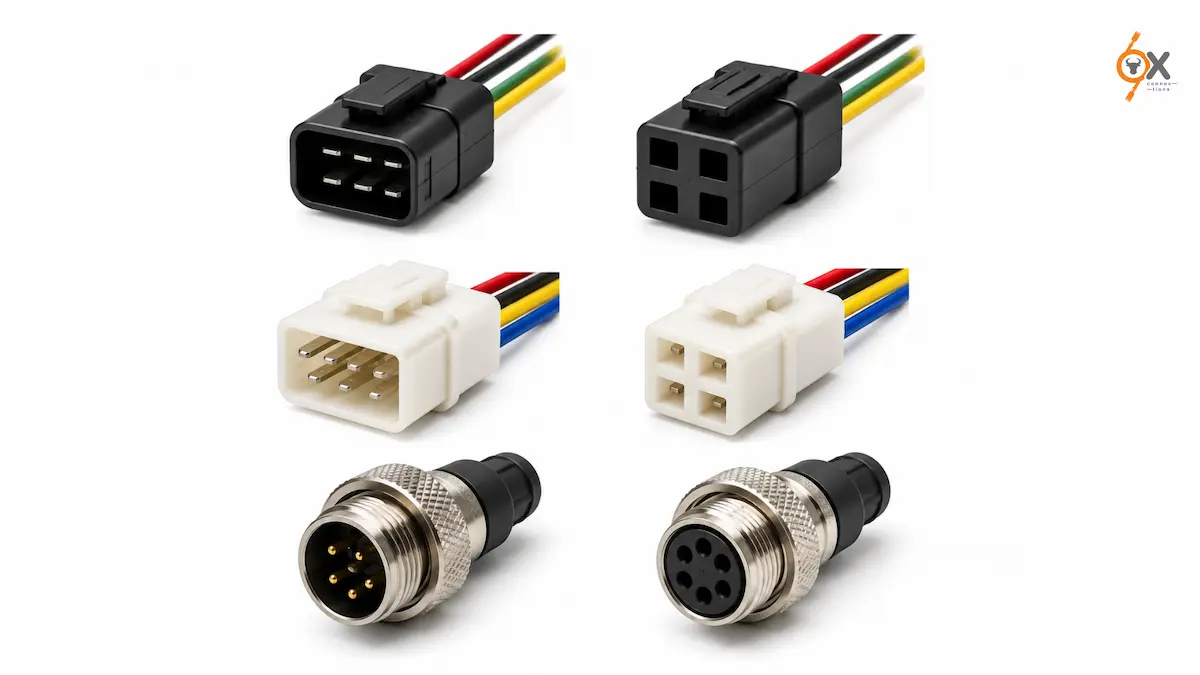
Learn how to choose the right male-female connector for your electrical project. Compare connector types, safety tips, IP ratings, and selection factors.
Ordered the wrong connector once and had to explain it to a site supervisor who’s already three days behind? Most procurement teams have. And usually it’s not because anyone was careless. It’s because there are more electrical connector types than most spec sheets list. Choosing the right one isn’t always obvious.
This is less a technical explainer and more a practical checklist. It’s the kind of guide we run through with panel builders and facility teams before an order goes out. That way, nobody discovers a mismatch after the crate has already been opened.
Start With Load, Not With Habit
The first mistake we see is teams reordering whatever they used last time. They often skip checking whether the electrical load is still the same. Voltage and current rating should always be the first filter in any connector selection guide, not the third or fourth. A connector rated for a 10A signal line should never carry a 32A motor feed. It may work briefly, but it will eventually fail, usually at the worst possible moment.
If you’re unsure of the actual load, check the equipment nameplate instead of the panel drawing. Drawings become outdated, but nameplates usually don’t.
Match the Connector to Where It’s Actually Going
A connector inside a clean, climate-controlled control room has very different requirements from one mounted on outdoor plant equipment. Outdoor equipment may face months of monsoon rain, dust, and vibration. Industrial connectors used near rooftop units, outdoor junction boxes, or compressors need the correct IP rating. This is just as important as the current rating. A connector that looks suitable on paper but lacks proper sealing can corrode or loosen long before its expected lifespan. That often means replacing it within a year instead of five.
Decide the Direction Before You Decide the Gender
This is where even experienced buyers make mistakes when learning how to choose the right male-female connector for an electrical project. Connector gender should follow function, not convenience. First identify the source side and the load side. Once that’s clear, you can determine which half needs pins and which needs sockets.
If you’re retrofitting into an existing harness, match the connector that’s already installed. Don’t choose whichever half happens to be available. A harness with two male ends because of a rushed purchase becomes a recurring maintenance problem.
For polarity-sensitive circuits, such as DC systems, sensors, or phase-critical equipment, specify keyed or polarized connectors. Doing this during the design stage is much cheaper than correcting wiring mistakes later.
Check the Standards Before You Check the Price
It’s tempting to compare connectors by price first, especially when several suppliers are quoting for the same project. However, connectors without the required certifications can delay compliance approval. This includes fire-retardant ratings for panel enclosures and applicable IS or IEC standards. A small saving on the purchase price can easily become a much larger cost if installation approval is delayed.
Don’t Underestimate Supplier Reliability
The final check is supplier consistency. Make sure your supplier can provide both connector halves with the exact rating and finish you need. They should also deliver the same quality across every order.
Many project delays aren’t caused by connector design. They’re caused by inconsistent supply. One batch matches perfectly, while the next contains a slightly different variant. Sometimes suppliers substitute a “close enough” alternative without informing the customer.
Getting connector selection right isn’t difficult. It simply requires a few extra minutes before the purchase order is placed. Those few minutes are far better than spending hours troubleshooting after installation.
At Ox Connections, we’ve built our catalogue around these real-world challenges. We offer consistent ratings, reliable keying options, and dependable stock that matches from one project to the next.
FAQs
Can a male connector be swapped for a female one if the rating matches?
Not safely. Matching the voltage and current rating only solves part of the problem. Connector gender depends on which side is the source and which is the load. Swapping genders usually requires changing the housing or the crimp, not just the pin.
Do I need a keyed or polarised connector for every application?
Not for every application. However, DC circuits, phase-sensitive systems, and safety-critical equipment should always use keyed or polarized connectors. It’s a small addition during ordering and helps prevent incorrect connections later.
What’s the biggest reason connector orders go wrong on industrial projects?
In many cases, the supplier is the issue rather than the connector itself. A second batch may differ from the first, or a substitute may be supplied without notice. Checking supplier consistency is just as important as checking the connector specification.