
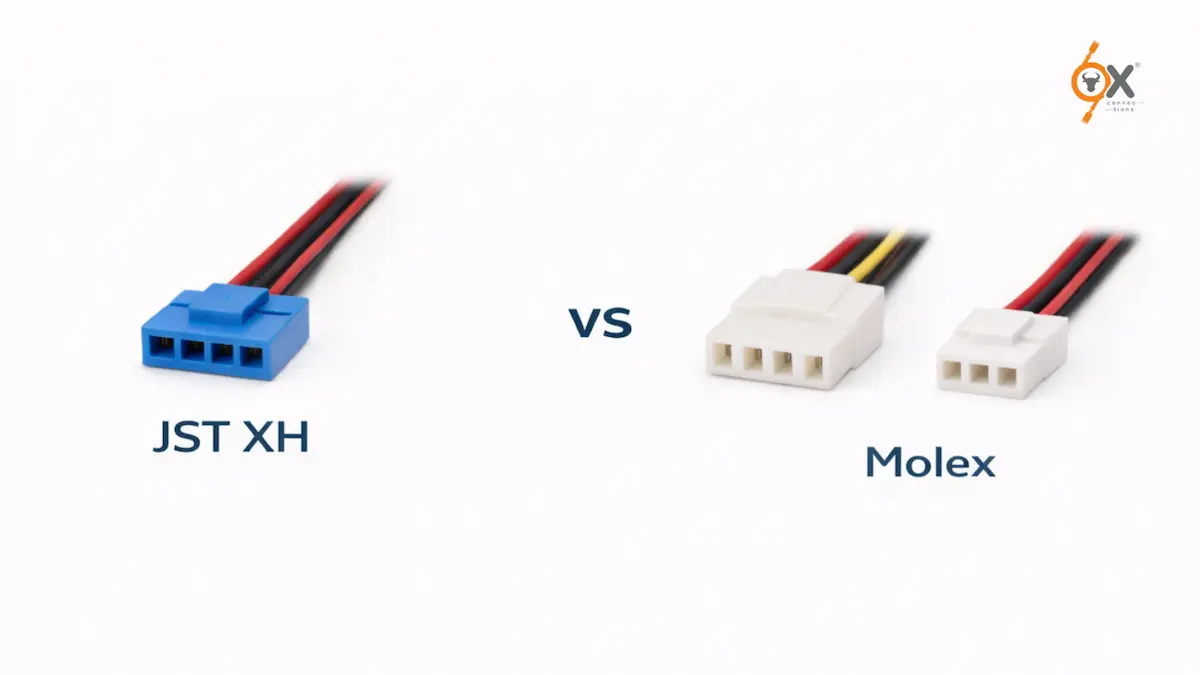
In today’s fast-evolving electronics and manufacturing ecosystem, selecting the right connector is not just a technical decision – it directly impacts performance, cost, and scalability. Whether you’re an OEM in India working on solar systems, EV components, or home appliances, the debate between JST XH vs Molex connectors options is one you’ll likely face.
Both connector types are widely used across industries, but they differ significantly in design, application, availability, and cost efficiency. This guide breaks down the comparison in a practical, India-focused context – helping you make the right choice while also exploring smarter alternatives available in the market.
Understanding the Basics: What Are These Connectors?
Before diving into the comparison, it’s important to understand the fundamentals.
The JST XH connector specifications typically include a 2.5mm pitch, compact design, and reliable locking mechanism. These connectors are commonly used in consumer electronics, battery packs, LED lighting, and compact PCBs.
On the other hand, when we talk about Molex connector types, we’re referring to a wide range of connectors used across industries – from wire-to-board and board-to-board systems to power connectors in high-load applications. Molex has a broader portfolio, making it more versatile but also more complex in selection.
JST XH vs Molex Connectors: Key Differences
When evaluating JST vs Molex connectors, several factors come into play:
1. Design & Size
JST XH connectors are compact and optimized for space-constrained applications. Molex connectors, depending on the type, can range from similarly compact to significantly larger and more robust.
2. Application Scope
The JST XH connector specifications make it ideal for low to medium power applications. In contrast, Molex connector types are often preferred in high-power, industrial-grade environments.
3. Availability in India
This is where things get interesting. While both connectors are globally recognized, OEMs in India often face challenges with availability, long lead times, and high minimum order quantities – especially with Molex.
This is where OXconnection steps in, offering compatible, high-quality alternatives that match performance requirements without the operational bottlenecks.
Performance & Specifications Comparison
Let’s take a closer look at how JST XH vs Molex connector options compare in terms of performance:
- Current Rating:
JST XH connectors typically support up to 3A per pin, making them suitable for lighter applications. Many Molex connector types support higher current ratings, depending on the series. - Voltage Rating:
Both connectors offer reliable voltage handling, but Molex connectors often have an edge in heavy-duty applications. - Durability:
Molex connectors are generally designed for rugged environments, while JST XH connectors are more suited for controlled environments.
Despite these differences, many OEMs are now shifting towards OX equivalents that replicate JST XH connector specifications and even match select Molex connector types, offering a balanced mix of performance and cost-efficiency.
Cost & Supply Chain Reality in India
Here’s the part most blogs ignore – but matters the most.
In India, sourcing original JST or Molex connectors often comes with:
- High pricing
- Long lead times
- Large MOQ requirements
For growing OEMs and manufacturers, this creates unnecessary pressure on both budgets and timelines.
This is exactly why many businesses are rethinking the traditional JST vs Molex connectors decision. Instead of choosing between two expensive options, they are turning to OX for:
- Equivalent connectors at nearly half the cost
- Immediate availability (no lead time)
- Certifications like UL, RoHS, and CE
- Flexibility in order quantities
This shift is especially visible in sectors like solar, EV, medical devices, and home appliances.
Applications: Where Each Connector Works Best
Understanding use cases is key when comparing JST XH vs Molex connector options.
JST XH Connectors
Based on JST XH connector specifications, these are best suited for:
- Consumer electronics
- LED lighting systems
- Battery connections
- Compact PCB designs
Molex Connectors
Looking at various Molex connector types, they are commonly used in:
- Automotive systems
- Industrial machinery
- Power supply units
- Data and communication equipment
However, many of these applications don’t necessarily require premium-priced connectors. OX provides reliable alternatives that align with both JST vs Molex connectors performance standards – without overengineering or overspending.
Why OEMs Are Switching to OX Alternatives
The Indian manufacturing ecosystem is evolving rapidly, and OEMs are becoming more cost-conscious without compromising on quality.
Instead of being locked into traditional brands, businesses are now evaluating connectors based on:
- Real performance needs
- Supply chain efficiency
- Cost optimization
OX connectors are designed to meet these expectations by offering:
- Compatibility with JST XH connector specifications
- Alternatives to commonly used Molex connector types
- Faster procurement cycles
- Consistent quality backed by certifications
This makes OX a practical choice for manufacturers looking to scale without delays or inflated costs.
Final Verdict: Which One Should You Choose?
So, when it comes to JST XH vs Molex connector, the answer isn’t one-size-fits-all.
- Choose JST XH if you need compact, reliable connectors for low to mid-power applications.
- Choose Molex if your application demands higher durability and broader configuration options.
But if you’re an OEM in India looking for:
- Cost efficiency
- Faster availability
- Scalable sourcing
Then it’s worth considering OX equivalents that deliver the best of both worlds.
Conclusion: Smarter Choices for Modern Manufacturing
The comparison of JST vs Molex connectors goes beyond just technical specs – it’s about making smarter business decisions.
In a competitive market like India, where timelines and margins matter, relying solely on traditional brands may not always be the most efficient approach. By exploring high-quality alternatives like OX, manufacturers can achieve the same performance standards defined by JST XH connector specifications and leading Molex connector types, while gaining a significant edge in cost and supply chain agility.
The future of manufacturing belongs to those who choose not just the best components – but the smartest ones.