
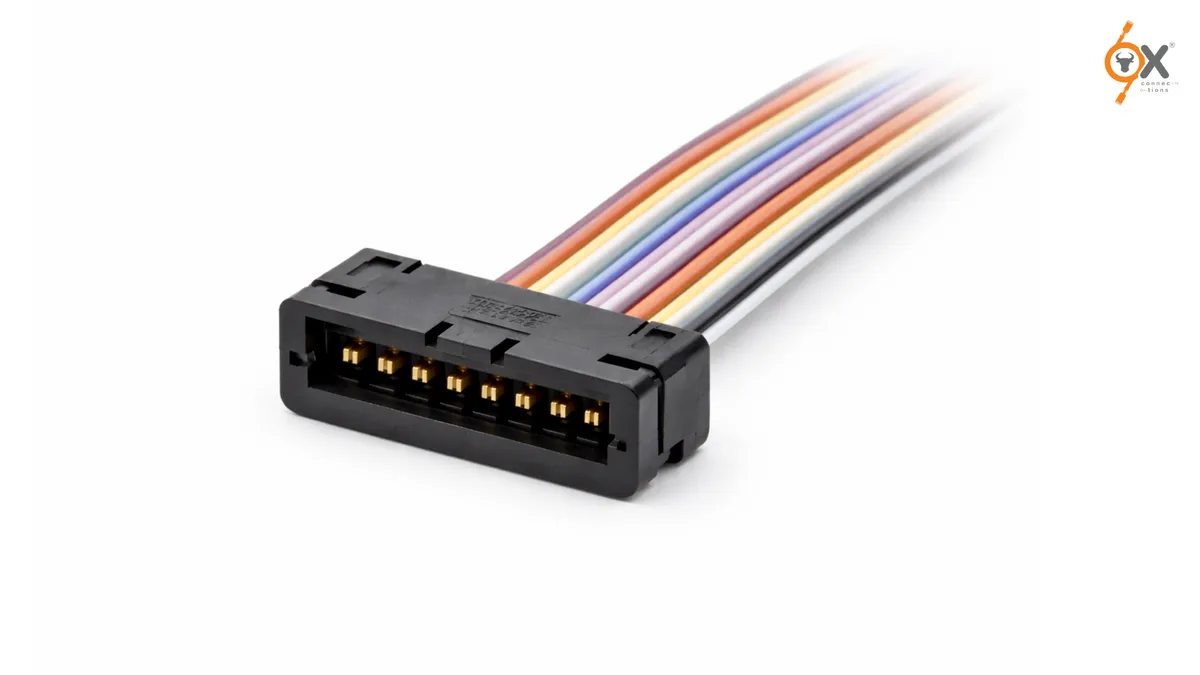
This article explores everything you need to know about the 10 Pin IDC Connector, including its working principle, pin configuration, benefits, applications, and selection considerations. Whether you are an engineer, electronics student, OEM buyer, or industry professional, this guide will help you understand why IDC technology remains a preferred choice across industries.
In today’s electronics-driven world, efficient and reliable connectivity is essential for everything from industrial automation systems to consumer electronics. Whether signals are being transmitted between printed circuit boards (PCBs), sensors, controllers, or communication modules, the quality of the connector often determines the reliability of the entire system.
Among the many connectivity solutions available, the 10 Pin IDC Connector stands out for its simplicity, durability, and ease of installation. Designed to work with flat ribbon cables, this connector allows multiple conductors to be terminated simultaneously without stripping or soldering individual wires. The result is faster assembly, lower manufacturing costs, and dependable electrical performance.
What Is a 10 Pin IDC Connector?
A 10 Pin IDC Connector is a type of IDC Connector (Insulation Displacement Connector) specifically designed to terminate a ribbon cable containing ten conductors. Unlike traditional connectors that require wires to be stripped before termination, IDC technology allows electrical contact to be established by piercing the insulation and making direct contact with the conductor underneath.
The connector contains precision metal contacts that cut through the insulation when pressure is applied during assembly. This creates a secure electrical connection without the need for soldering or additional preparation.
Because of its efficiency and reliability, the IDC Ribbon Cable Connector has become a standard connectivity solution in industrial equipment, telecommunications devices, embedded electronics, testing systems, and PCB assemblies.
How Does an IDC Connector Work?
The working principle behind an IDC Connector is straightforward but highly effective.
Inside the connector housing are specially engineered metal contacts with sharp edges. When the ribbon cable is inserted and crimped into place, these contacts penetrate the insulation surrounding each conductor. The metal then grips the conductor firmly, establishing a reliable electrical pathway.
This process offers several advantages:
- Eliminates wire stripping
- Reduces assembly time
- Improves manufacturing consistency
- Minimizes wiring errors
- Enhances long-term reliability
Because all conductors are terminated simultaneously, IDC technology is especially valuable in applications where speed and repeatability are critical.
Understanding the Pin Configuration of a 10 Pin IDC Connector
A standard 10 Pin IDC Connector contains ten contacts arranged in two parallel rows.
The pin arrangement typically follows this format:
| Row 1 | Row 2 |
| Pin 1 | Pin 2 |
| Pin 3 | Pin 4 |
| Pin 5 | Pin 6 |
| Pin 7 | Pin 8 |
| Pin 9 | Pin 10 |
Most connectors include a polarization or keying feature that prevents incorrect insertion into the mating header. Additionally, Pin 1 is usually identified by a marking on the connector body.
Ribbon cables often feature a colored stripe – commonly red – along one edge. This stripe corresponds to Pin 1 and helps ensure correct orientation during installation.
Proper pin alignment is crucial because incorrect positioning can result in communication failures, signal loss, or equipment malfunction.
Key Features of a 10 Pin IDC Connector
Several characteristics make the 10 Pin IDC Connector a preferred choice across electronics and industrial applications.
Quick and Easy Installation
IDC technology eliminates the need for stripping and soldering individual wires, significantly reducing assembly time.
Compact Design
The connector occupies minimal space, making it suitable for densely packed electronic systems and control panels.
Reliable Electrical Performance
Precision contacts provide stable conductivity and low contact resistance, ensuring consistent signal transmission.
Cost-Effective Assembly
Reduced labor requirements and simplified installation help lower manufacturing costs.
Organized Cable Management
Ribbon cables create neat wiring layouts that simplify assembly, inspection, and maintenance.
High Repeatability
Because IDC termination follows a standardized process, manufacturers can achieve consistent results across large production runs.
Advantages of Using IDC Ribbon Cable Connectors
The popularity of the IDC Ribbon Cable Connector stems from its ability to improve both manufacturing efficiency and system reliability.
Faster Production Processes
Manufacturers can terminate multiple conductors simultaneously, dramatically reducing assembly time.
Lower Risk of Wiring Errors
Ribbon cables maintain conductor spacing and orientation, reducing the possibility of incorrect wiring.
Improved Reliability
The insulation displacement process creates secure and repeatable electrical connections.
Simplified Maintenance
IDC cable assemblies can often be disconnected and replaced quickly, minimizing equipment downtime.
Flexible Design Integration
IDC technology supports various pin counts and connector styles, allowing engineers to adapt designs easily.
Common Applications of a 10 Pin IDC Connector
The versatility of the 10 Pin IDC Connector makes it suitable for a broad range of applications.
PCB-to-PCB Connectivity
Electronic devices frequently use IDC ribbon cable assemblies to connect multiple circuit boards efficiently and reliably.
Industrial Automation Systems
PLCs, industrial controllers, sensor networks, and machine interfaces often rely on IDC Connectors for signal transmission and internal wiring.
Control Panels
Industrial control cabinets require organized and dependable cable management. IDC ribbon cable assemblies simplify internal connections while maintaining serviceability.
Embedded Electronics
Development boards, microcontroller systems, and embedded applications commonly use IDC connectivity for programming, debugging, and signal routing.
Telecommunications Equipment
Communication systems require reliable internal interconnections, making IDC technology a practical solution for signal integrity and compact installation.
Testing and Measurement Equipment
Laboratory instruments and testing systems frequently incorporate IDC Ribbon Cable Connectors for modular internal wiring arrangements.
Computer and Peripheral Systems
IDC ribbon cable technology has long been used in computer hardware and peripheral devices due to its reliability and ease of assembly.
Factors to Consider When Choosing a 10 Pin IDC Connector
Selecting the right connector helps ensure optimal performance and long-term reliability.
Cable Compatibility
Verify that the connector matches the ribbon cable’s pitch, conductor count, and dimensions.
Current and Voltage Requirements
Choose a connector with electrical ratings suitable for the intended application.
Environmental Conditions
Consider operating temperature, humidity exposure, dust levels, and vibration requirements.
Mating Header Compatibility
Ensure the connector aligns correctly with the corresponding PCB header or socket.
Locking and Retention Features
Applications exposed to vibration may require connectors with enhanced retention mechanisms.
Material Quality
High-quality contact materials and durable housings contribute to longer service life and stable electrical performance.
As industries move toward greater automation and smarter electronic systems, connector reliability has become more important than ever. When sourcing a 10 Pin IDC Connector, buyers should evaluate not only technical specifications but also supplier consistency, product quality, and availability. OXConnections offers a range of connectivity solutions designed for OEMs, electronics manufacturers, automation companies, and industrial equipment builders looking for dependable connector options with reliable supply support.
Installation Best Practices
Although IDC connectors are designed for ease of use, following proper installation procedures helps maximize performance.
- Use the correct crimping tool recommended for the connector.
- Ensure the ribbon cable is properly aligned before termination.
- Verify Pin 1 orientation prior to assembly.
- Avoid excessive cable bending near the connector body.
- Inspect the completed termination for proper contact engagement.
- Conduct continuity testing before final deployment.
These simple practices can significantly improve connection reliability and reduce maintenance requirements.
Why IDC Connectors Remain Popular in Modern Industry
Despite the emergence of new connector technologies, IDC Connectors continue to play a significant role in electronics manufacturing and industrial automation.
Their combination of fast installation, reliable electrical performance, organized cable management, and cost efficiency makes them attractive for both high-volume manufacturing and specialized engineering projects. Engineers appreciate their ease of integration, while production teams value the reduction in assembly time and labor costs.
India’s electronics manufacturing sector is expanding rapidly, driven by industrial automation, consumer electronics, telecommunications infrastructure, renewable energy systems, and smart devices. As production volumes increase, manufacturers require efficient interconnect solutions that can reduce assembly time while maintaining consistent performance. This growing demand continues to strengthen the adoption of IDC Connectors and ribbon cable assemblies across a wide range of industries.
As industries continue to prioritize efficiency and reliability, IDC technology remains a practical solution for connecting multiple conductors quickly and consistently.
Conclusion
The 10 Pin IDC Connector remains one of the most efficient and reliable solutions for terminating ribbon cables in electronic and industrial applications. Its insulation displacement technology eliminates the need for wire stripping and soldering, simplifying assembly while maintaining dependable electrical performance.
From PCB assemblies and embedded systems to industrial automation and telecommunications equipment, the IDC Ribbon Cable Connector continues to support a wide range of connectivity requirements. Its combination of speed, reliability, compact design, and cost-effectiveness makes it an ideal choice for manufacturers and engineers alike.
Whether you are developing a prototype, designing an industrial control system, or manufacturing electronic equipment at scale, selecting the right IDC Ribbon Cable Connector can improve reliability, simplify assembly, and support long-term performance. For businesses seeking dependable connectivity solutions, OX Connections provides connector products that support the evolving requirements of modern electronics and industrial applications.
FAQs
1. What is a 10 Pin IDC Connector used for?
A 10 Pin IDC Connector is used to connect a 10-conductor ribbon cable to a PCB, controller, sensor, or electronic device without stripping or soldering wires. It is commonly used in industrial automation, electronics manufacturing, and communication systems.
2. What are the advantages of an IDC Ribbon Cable Connector?
A IDC Ribbon Cable Connector offers faster installation, reduced wiring errors, improved assembly consistency, compact cable management, and reliable electrical performance compared to traditional wiring methods.
3. How do I identify Pin 1 on a 10 Pin IDC Connector?
Most connectors feature a molded marking, arrow, or triangle indicating Pin 1. Ribbon cables also commonly include a colored stripe, typically red, which corresponds to Pin 1 for proper orientation during installation.
4. Are IDC Connectors suitable for industrial applications?
Yes. IDC Connectors are widely used in industrial automation systems, control panels, testing equipment, telecommunications devices, and embedded electronics due to their durability, reliability, and ease of assembly.