
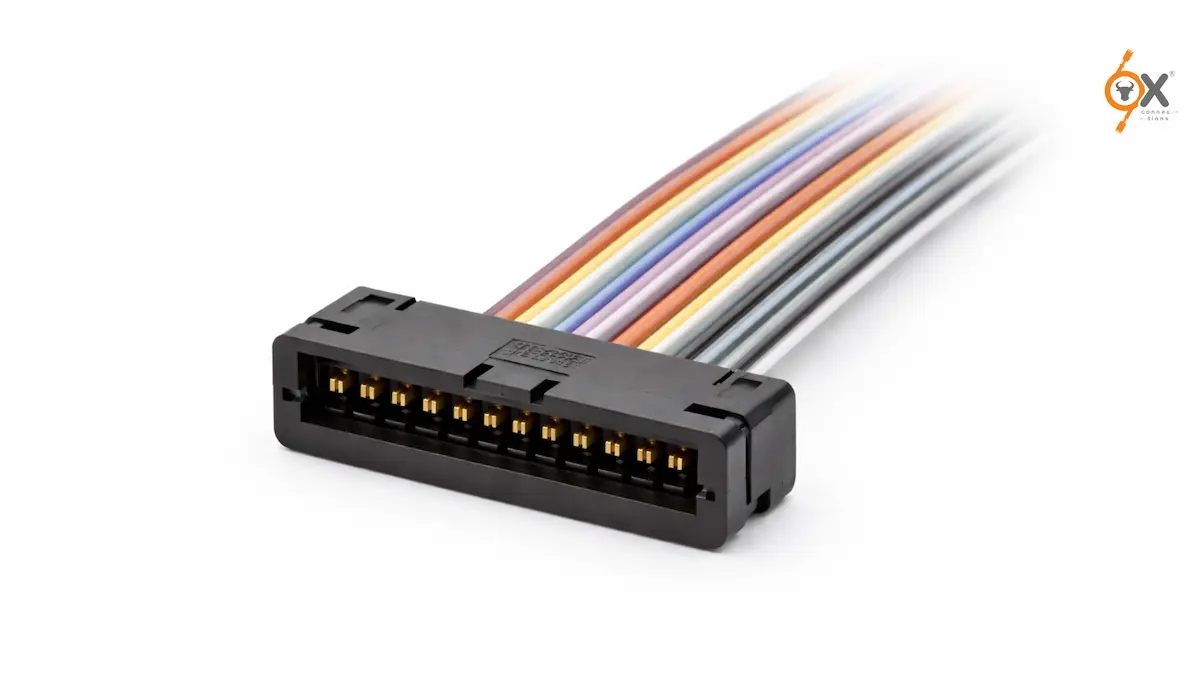
Why Is the 14 Pin IDC FRC Connector Still Widely Used in Modern Electronics? As electronic devices become more compact and sophisticated, the need for efficient internal connectivity continues to grow. Whether it is an industrial automation controller, a medical instrument, a communication device, or a consumer electronic product, reliable signal transmission between components is essential for smooth operation.
While wireless technologies receive much of the attention, wired interconnect solutions remain the backbone of electronic systems. Among these solutions, the 14 Pin IDC FRC Connector has maintained its relevance for decades because of its simplicity, reliability, and cost-effectiveness. Designed to connect multiple signal lines through a flat ribbon cable, it enables organized wiring while reducing assembly complexity.
Engineers and manufacturers often prefer this connector because it provides a dependable connection without requiring time-consuming soldering or complicated wiring processes. The use of IDC technology further simplifies installation, making it a practical choice for both high-volume manufacturing and custom electronic assemblies.
In this article, we will explore the construction, working principle, applications, advantages, and selection considerations of the 14 Pin IDC FRC Connector, helping engineers, buyers, and electronics enthusiasts understand why it continues to be an important component in modern electronic design.
What Is a 14 Pin IDC FRC Connector?
A 14 Pin IDC FRC Connector is a connector specifically designed to terminate and connect a 14-conductor flat ribbon cable. The term “IDC” stands for Insulation Displacement Contact, while “FRC” refers to Flat Ribbon Cable. Together, they form a connection system that allows multiple conductors to be connected simultaneously in a compact and organized manner.
Unlike conventional wire termination methods where insulation must be stripped before making a connection, IDC technology allows specially designed contacts to penetrate the insulation and establish direct electrical contact with the conductor underneath. This process significantly reduces assembly time while ensuring consistent termination quality.
The connector is commonly used wherever multiple low-current signals need to be transmitted between circuit boards, modules, or subsystems. Because ribbon cables keep conductors aligned in parallel, they help maintain organized wiring and simplify installation within electronic equipment.
In many electronic assemblies, the FRC Connector serves as a reliable bridge between PCBs, displays, interface modules, controllers, sensors, and communication devices. Its versatility makes it suitable for both industrial and commercial applications.
Understanding the Pin Configuration
The 14 Pin IDC FRC Connector contains fourteen electrical contacts arranged in a standardized configuration. Most versions feature a dual-row layout consisting of seven contacts on each side, commonly referred to as a 2×7 arrangement.
| Specification | Typical Value |
| Number of Contacts | 14 |
| Contact Arrangement | 2 × 7 |
| Common Pitch | 2.54 mm |
| Cable Type | Flat Ribbon Cable |
| Termination Method | IDC |
| Contact Material | Copper Alloy |
| Housing Material | Engineering Thermoplastic |
Pin numbering follows industry standards and typically begins with Pin 1, which is identified through markings on the connector housing. Most ribbon cables also include a colored edge stripe that corresponds to Pin 1, helping technicians maintain proper orientation during installation.
Correct pin alignment is critical because even a minor wiring mistake can lead to signal errors, communication failures, or equipment malfunction. For this reason, many connectors include polarization features and keying mechanisms that prevent incorrect insertion.
How Does an IDC Ribbon Cable Connector Work?
The working principle of an IDC Ribbon Cable Connector is remarkably straightforward. During assembly, the flat ribbon cable is positioned within the connector housing and pressure is applied using a dedicated press tool or assembly fixture. As the connector closes, sharp metal contacts pierce the cable insulation and establish electrical contact with each conductor.
Because all conductors are terminated simultaneously, the process is significantly faster than individually preparing and connecting wires. This not only improves manufacturing efficiency but also reduces the risk of inconsistent terminations.
Once assembled, the connector mates with a compatible PCB header, allowing signals to travel between electronic circuits. The resulting connection is secure, compact, and suitable for a wide range of signal transmission applications.
One reason the 14 Pin IDC FRC Connector remains popular is that it combines simplicity with reliability. There are fewer assembly steps compared to traditional wiring methods, which helps reduce production costs while maintaining dependable electrical performance.
Key Features of a 14 Pin IDC FRC Connector
The popularity of the 14 Pin IDC FRC Connector can be attributed to several design characteristics that make it practical across numerous applications.
One of its most significant features is its compact construction. Because the conductors are arranged in a flat ribbon format, the cable occupies minimal space within an enclosure. This is particularly valuable in electronic products where internal space is limited and efficient cable routing is essential.
Another important feature is rapid installation. Since IDC technology eliminates the need for wire stripping and soldering, assembly can be completed much faster than conventional connection methods. Manufacturers benefit from shorter production times and improved consistency across assemblies.
The connector also supports organized cable management. Ribbon cables keep conductors aligned and easy to identify, simplifying maintenance and troubleshooting. In complex electronic systems, this organized structure can significantly reduce service time.
Additionally, high-quality contact materials provide stable conductivity and dependable signal transmission throughout the product’s operating life. This reliability makes the FRC Connector suitable for applications where uninterrupted performance is critical.
Advantages of Using a 14 Pin IDC FRC Connector
When evaluating connector solutions, engineers often prioritize reliability, ease of installation, and cost efficiency. The 14 Pin IDC FRC Connector performs well in all three areas.
The most obvious advantage is reduced assembly time. Because all fourteen conductors can be terminated simultaneously, manufacturing becomes faster and more efficient. This advantage is especially valuable in large-scale production environments where even small reductions in assembly time can generate significant cost savings.
Another benefit is improved consistency. Manual wiring introduces opportunities for human error, particularly when multiple conductors must be connected individually. IDC technology dhelpss eliminate these inconsistencies by creating uniform electrical connections across all conductors.
Maintenance is also simplified. Ribbon cable assemblies can be disconnected and reconnected quickly, allowing technicians to inspect or replace components without extensive disassembly. This convenience helps reduce equipment downtime and service costs.
Furthermore, organized cable routing improves airflow and accessibility inside equipment enclosures. Cleaner internal layouts often translate into easier maintenance and improved system reliability
Common Applications of 14 Pin IDC FRC Connectors
The versatility of the IDC Ribbon Cable Connector allows it to serve a broad range of industries and electronic systems.
In industrial automation environments, these connectors are commonly used to connect PLCs, I/O modules, relay boards, sensors, and control panels. Their reliability and ease of installation make them well suited for manufacturing facilities where system uptime is a priority.
Consumer electronics also rely heavily on ribbon cable connectivity. Devices such as printers, scanners, audio systems, displays, and home appliances often use ribbon cable assemblies to connect internal electronic modules while minimizing space requirements.
In embedded systems, engineers frequently utilize FRC Connectors to connect development boards, communication modules, display interfaces, and peripheral devices. Their plug-and-play nature accelerates product development and simplifies testing procedures.
Telecommunications equipment represents another important application area. Network hardware, communication controllers, signal processing units, and testing instruments frequently use ribbon cable connectors to establish reliable signal paths between electronic assemblies.
Medical electronics similarly benefit from organized and dependable connectivity. Monitoring systems, laboratory instruments, diagnostic devices, and imaging equipment often incorporate ribbon cable assemblies to maintain reliable communication between internal modules.
How to Select the Right 14 Pin IDC FRC Connector
Selecting the appropriate connector involves more than simply matching the pin count. Engineers must evaluate several technical factors to ensure compatibility and long-term performance.
The first consideration is pitch compatibility. Most 14 Pin IDC FRC Connectors use a standard 2.54 mm pitch, but alternative configurations may exist depending on application requirements. The connector, cable, and PCB header must all share compatible dimensions.
Cable compatibility is equally important. Ribbon cable thickness, insulation characteristics, and conductor count should match the connector specifications to ensure proper IDC termination.
Environmental conditions should also be considered. Applications exposed to vibration, humidity, dust, or temperature fluctuations may require connectors with enhanced durability and protective features.
Electrical ratings represent another key factor. Although these connectors are primarily used for signal transmission, designers should always verify voltage and current specifications before deployment.
Finally, expected mating cycles should be evaluated. Systems that require frequent connection and disconnection may benefit from connectors designed for extended mechanical durability.
Installation Best Practices
Proper installation is essential for maximizing connector performance and service life. Even a high-quality connector can experience problems if assembled incorrectly.
Before terminating the ribbon cable, technicians should carefully verify orientation and identify Pin 1. Correct alignment prevents wiring errors that could compromise system functionality.
Uniform pressure should be applied during assembly to ensure all contacts penetrate the insulation correctly. Uneven termination may result in intermittent signals or increased contact resistance.
After assembly, a visual inspection should be performed to confirm proper conductor alignment and complete contact engagement. Electrical continuity testing provides additional verification that all connections have been established correctly.
Care should also be taken to avoid excessive cable bending or pulling forces. Maintaining appropriate bend radii helps preserve conductor integrity and extend cable life.
Why Connector Quality Matters
Although connectors are relatively small components, their influence on overall system performance should never be underestimated. A poorly manufactured connector can introduce signal instability, maintenance issues, and unexpected downtime.
High-quality IDC Ribbon Cable Connectors provide superior contact retention, lower contact resistance, and greater durability during repeated mating cycles. These characteristics contribute directly to improved reliability and longer equipment lifespan.
At OXConnections, we understand that dependable connectivity is critical for modern electronic systems. That is why we focus on providing connector solutions that meet stringent quality requirements while helping manufacturers achieve efficient and reliable product designs.
For OEMs, industrial manufacturers, and electronics designers, investing in quality connectors often results in lower maintenance costs and improved long-term performance.
Conclusion
The 14 Pin IDC FRC Connector continues to play a vital role in electronic connectivity because it offers an effective combination of reliability, simplicity, and cost efficiency. Its ability to connect multiple conductors through a single ribbon cable assembly makes it ideal for industrial automation, embedded systems, telecommunications equipment, medical devices, and consumer electronics.
By utilizing IDC technology, these connectors simplify installation while maintaining dependable electrical performance. Their compact design improves cable management, reduces assembly complexity, and supports efficient product development.
Whether you are designing a new electronic product or sourcing components for industrial equipment, choosing the right FRC Connector can have a significant impact on reliability and long-term system performance. Understanding the connector’s features, applications, and selection criteria will help ensure successful implementation across a wide range of electronic systems.
FAQs
1. What is a 14 Pin IDC FRC Connector used for?
A 14 Pin IDC FRC Connector is used to connect a 14-conductor ribbon cable to PCBs, controllers, displays, sensors, and other electronic modules for reliable signal transmission.
2. What does IDC mean in an IDC Ribbon Cable Connector?
IDC stands for Insulation Displacement Contact, a termination method that allows connector contacts to pierce cable insulation and establish direct electrical contact without stripping wires.
3. What industries commonly use FRC Connectors?
FRC Connectors are widely used in industrial automation, consumer electronics, telecommunications, medical equipment, embedded systems, and instrumentation applications.
4. Why are ribbon cable connectors preferred in compact electronic devices?
Ribbon cable connectors provide organized cable routing, reduce wiring clutter, save internal space, and simplify assembly, making them ideal for compact electronic products.
5. How do I choose the right 14 Pin IDC FRC Connector?
Consider factors such as pin count, pitch compatibility, cable specifications, environmental conditions, electrical ratings, and mating cycle requirements when selecting a connector.