
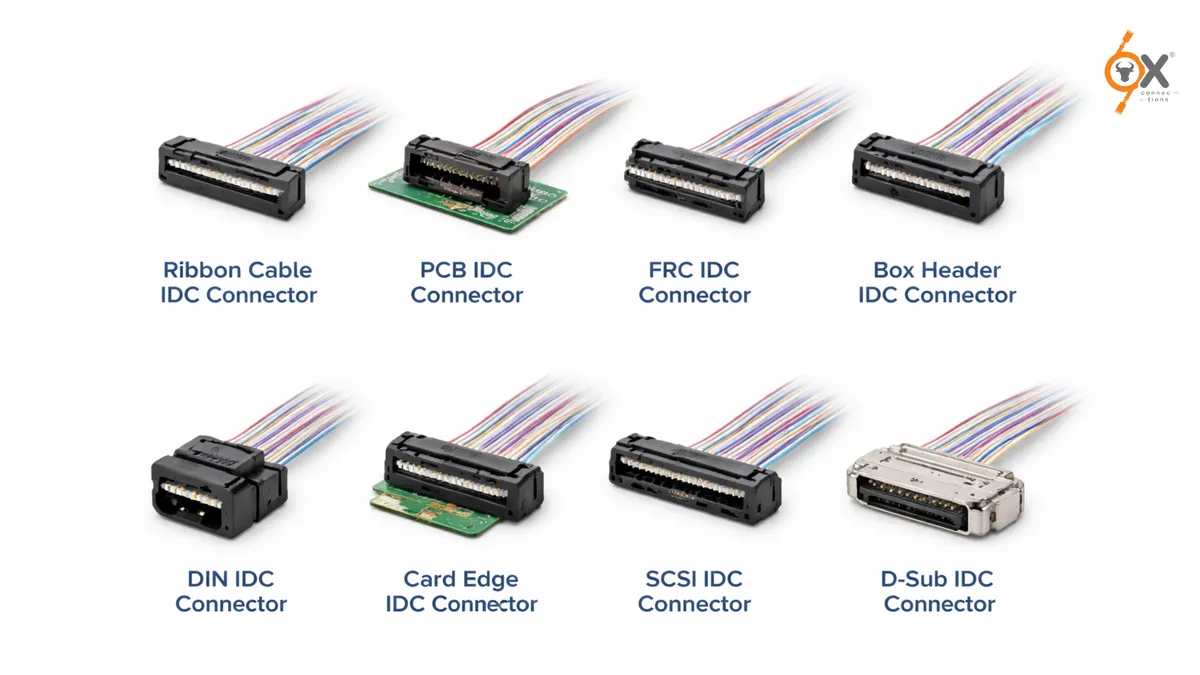
In this guide, we’ll explore the various types of IDC connector solutions, their benefits, industrial applications, and why they continue to remain an important part of modern electronic systems.
In today’s fast-moving electronics and industrial manufacturing industry, reliable connectivity plays a major role in ensuring stable performance and efficient signal transmission. From consumer electronics and automation systems to medical devices and renewable energy equipment, connectors are the backbone of modern electrical systems.
Among the many connector solutions available today, the IDC connector has become one of the most widely used options for quick, efficient, and reliable wire termination. Known for its compact design, ease of installation, and cost-effectiveness, the IDC connector is commonly used across industries that require organized wiring and dependable electrical connections.
But with multiple connector variants available in the market, understanding the different IDC connector types becomes important for engineers, OEMs, manufacturers, and buyers looking for the right solution for their application.
What Is an IDC Connector?
An IDC connector, short for Insulation Displacement Connector, is an electrical connector designed to connect conductors without the need to strip wire insulation manually.
Instead of removing insulation beforehand, the connector uses specially designed metal blades that cut through the insulation and establish electrical contact directly with the conductor.
This design makes installation:
- faster
- more efficient
- less labor-intensive
- highly reliable
Because of these advantages, industrial IDC connectors are commonly used in mass production environments where speed and consistency are important.
Why IDC Connectors Are Widely Used
The popularity of the IDC connector comes from its ability to simplify wiring processes while maintaining stable electrical performance.
Some major benefits include:
Faster Assembly
IDC technology significantly reduces installation time because wires do not require separate stripping before termination.
Consistent Connections
The design ensures uniform contact pressure, helping maintain reliable electrical performance.
Compact Design
Most IDC cable connector solutions are compact, making them ideal for applications with limited space.
Cost-Effective Wiring Solution
Reduced assembly time and simplified installation lower overall production costs.
Suitable for High-Density Applications
IDC connectors support organized multi-wire configurations, especially in ribbon cable assemblies and PCB systems.
Different Types of IDC Connectors
There are several IDC connector types available depending on cable structure, application, and mounting requirements.
Let’s understand the most commonly used variants.
Ribbon Cable IDC Connectors
Ribbon cable connectors are among the most widely recognized IDC solutions in the electronics industry.
These connectors are designed for flat ribbon cables where multiple conductors are arranged parallel to each other.
Common Applications
- computer systems
- internal device wiring
- industrial control systems
- telecom equipment
- PCB interconnections
Ribbon cable IDC connector solutions are preferred because they provide organized cable management and allow multiple wire connections within a compact space.
PCB IDC Connectors
PCB IDC connectors are specifically designed for direct mounting onto printed circuit boards.
They are commonly used where quick and secure board-to-cable connections are required.
Benefits
- easy PCB integration
- stable electrical connection
- compact structure
- faster assembly
Applications
- industrial electronics
- automation systems
- consumer electronics
- instrumentation devices
Many manufacturers prefer PCB-based industrial IDC connectors because they help simplify production workflows while maintaining reliability.
FRC IDC Connectors
FRC (Flat Ribbon Cable) connectors are a highly popular category within IDC connector types.
These connectors are designed to terminate flat ribbon cables efficiently while supporting high-density signal transmission.
Features
- multiple pin configurations
- compact design
- quick cable assembly
- reliable signal transfer
Industries Using FRC IDC Connectors
- automotive electronics
- robotics
- telecom systems
- industrial automation
- computer peripherals
FRC connectors are especially useful in applications where organized multi-wire connectivity is essential.
Box Header IDC Connectors
Box header connectors are commonly paired with ribbon cable IDC assemblies.
They are designed with protective housings that improve alignment and reduce incorrect insertion during assembly.
Advantages
- polarized design
- secure mating connection
- improved durability
- enhanced cable organization
Applications
- motherboard connections
- embedded systems
- data communication equipment
- industrial control units
Because of their secure structure, box header IDC cable connector systems are widely used in environments where stable connectivity is critical.
DIN IDC Connectors
DIN-style IDC connectors are designed according to DIN standards and are commonly used in industrial communication systems.
Key Features
- standardized design
- high reliability
- compact configuration
- industrial-grade performance
Applications
- industrial machinery
- automation systems
- signal communication systems
- control panels
DIN connectors are highly preferred in industrial settings that require organized and durable wiring systems.
Card Edge IDC Connectors
Card edge connectors establish connections directly with PCB edge contacts without requiring additional wiring interfaces.
Benefits
- simplified PCB connectivity
- reduced assembly complexity
- compact design
- efficient signal transfer
Common Uses
- industrial control boards
- embedded electronics
- communication systems
- instrumentation equipment
These connectors help reduce space requirements while maintaining stable electrical contact.
Applications of Industrial IDC Connectors
The demand for industrial IDC connectors continues to grow across various sectors because of their versatility and reliability.
Industrial Automation
IDC connectors are widely used in PLC systems, automation panels, and industrial machinery where organized signal wiring is essential.
Consumer Electronics
From printers and display systems to internal device wiring, IDC technology supports compact electronic assembly.
Renewable Energy
Solar systems and energy management devices often use IDC connector solutions for efficient signal transmission and organized cable layouts.
Medical Equipment
Medical electronics require compact, stable, and reliable connectivity solutions, making IDC connectors suitable for many medical applications.
Automotive Electronics
Automotive systems increasingly depend on organized and space-saving electrical connectivity, especially in modern electronic modules.
How to Choose the Right IDC Connector
Selecting the correct IDC connector types depends on several important factors.
Cable Type
Ensure the connector matches the ribbon cable or conductor configuration being used.
Pitch Size
Pitch compatibility is critical for proper alignment and connectivity.
Current Rating
The connector must support the electrical load requirements of the application.
Mounting Style
Different applications may require PCB mount, cable mount, or panel mount configurations.
Environment
Industrial applications may require connectors resistant to vibration, heat, or moisture.
Choosing the right connector improves system efficiency, reliability, and long-term performance.
Growing Demand for IDC Connectors in India
India’s growing electronics manufacturing and industrial automation sectors are driving strong demand for reliable connector solutions.
OEMs and manufacturers are increasingly searching for:
- faster procurement
- cost-effective alternatives
- reduced lead times
- certified industrial-grade connectors
This is where suppliers like OXConnections are helping industries access high-quality connector solutions suitable for multiple industrial applications.
With growing demand across renewable energy, home appliances, industrial automation, medical equipment, and also EV sectors, reliable connector sourcing has become more important than ever.
Why IDC Connectors Continue to Be Important
As industries continue moving toward compact, high-density, and faster electronic assembly systems, the importance of the IDC connector will continue growing.
Their ability to provide:
- quick assembly
- reliable performance
- organized cable management
- cost-efficient connectivity
makes them a preferred choice across multiple industries.
Whether used in PCB systems, ribbon cable assemblies, industrial automation, or communication devices, IDC connectors remain a practical and efficient connectivity solution for modern electronic systems.
Final Thoughts
Understanding different IDC connector types is essential for selecting the right connectivity solution for industrial and electronic applications.
From ribbon cable connectors and FRC assemblies to PCB-mounted and DIN-style variants, each connector type serves a specific purpose based on system requirements and wiring needs.
As industries continue demanding compact, reliable, and efficient connectivity systems, the role of industrial IDC connectors will only become more significant in modern manufacturing and electronics.
Choosing high-quality connectors not only improves electrical performance but also enhances system reliability, assembly efficiency, and long-term durability.
FAQs
1. What is an IDC connector used for?
An IDC connector is used for connecting wires without stripping insulation manually. It is commonly used in ribbon cable assemblies, PCB systems, industrial automation, telecom equipment, and consumer electronics.
2. What are the advantages of IDC connectors?
Some major advantages of IDC cable connector solutions include faster installation, compact design, reliable electrical connections, reduced assembly time, and cost-effective wiring.
3. Which industries commonly use industrial IDC connectors?
Industrial IDC connectors are widely used in industrial automation, renewable energy, automotive electronics, medical equipment, consumer electronics, and communication systems.